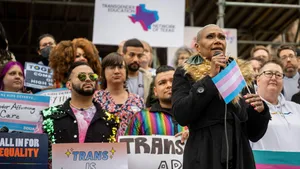
Justice for Heklina protest in London over the death of San Francisco drag star Heklina on March 31, 2025.
Matthew Chattle/Future Publishing via Getty Images
After two years with little progress in the case, supporters and friends of the late drag queen Heklina are demanding justice from the London Metropolitan Police, who they are accusing of homophobia in the investigation into her death.
Heklina — whose birth name was Stefan Grygelko — was found dead by close friends and fellow drag queen Peaches Christ (Joshua Grannell) in London on April 3, 2023, but The Met has yet to reveal the cause of death, although they have said labeled her death as “unexpected,” the BBC reports.
On March 31, protesters carrying signs reading, “We Deserve Justice, Not Discrimination,” “Queer Safety Over Police Power,” “End Met Police Homophobia Now!” and blown-up photos of Heklina walked along the Thames River Embankment and gathered outside of New Scotland Yard, accusing investigators of shirking their responsibilities in the case due to ”homophobic bias.”
Peaches Christ, LGBTQ+ activist Peter Tatchell, drag queens Cheddar Gorgeous, and Crystal all spoke at the rally that was held in tandem with an event at The Stud in San Francisco where drag queens perfumed and then protestors participated in a candlelit march to nightclub Oasis, which Heklina helped transform into a drag and cabaret club.
“We feel your sisterly love here in London and we super appreciate it,” Peaches Christ told the crowd in London, per the San Francisco Chronicle. “This sunshine, this weather today, I feel Heklina is with us… and she will be in San Francisco later today.”
The police said it apologized to Heklina’s family and was working to establish any “missed opportunities” in the case after reviewing the investigation.
The Met has also been accused of keeping information from the family and for taking until January of this year to release the CCTV footage that showed three men leaving the flat where Heklina was found dead and was living at with Peaches Christ at the time of her death.
“When Heklina died, there was no public appeal for witnesses and it's taken them two years to release the CCTV footage,” Tatchell told the BBC. Tatchell joined the rally outside The Met in an attempt to hold the police’s feet to the fire.
"That is an abject betrayal of trust and confidence, and I think the police have to answer those questions and have to start getting serious about finding out how Heklina died,” he said, adding that the case was proof that The Met is “institutionally homophobic.”
"They're not treating the death of a significant member of our community seriously, they've not done the basics of any proper investigation,” Tatchell continued.
Drag Race star Crystal (Colin Seymour) echoed this frustration with the police, telling the publication that the handling of the case has been “disgraceful.”
”It seems very clear that homophobic bias has influenced the investigation in this case," she said.
When Heklina’s body was found by Peaches Christ, she was still in drag and found in a compromising position, potentially leading to internal bias coloring the investigation into her death.
"It paints a very clear picture that if you're a queer person, especially if you're gender non-conforming, and you die unexplained, then the police don't care. It seems to be only through the threat of public action that anything's been getting done with this case,” Crystal explained.
Detective Chief Superintendent Christina Jessah told the BBC The Met is aware that there is "frustration with the pace of the police investigation.”
"We continue to examine all lines of inquiry in relation to Steven's death and remain steadfast in our determination to establish the facts,” she said.
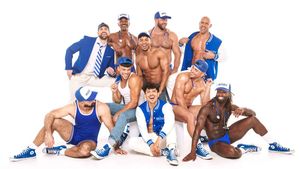
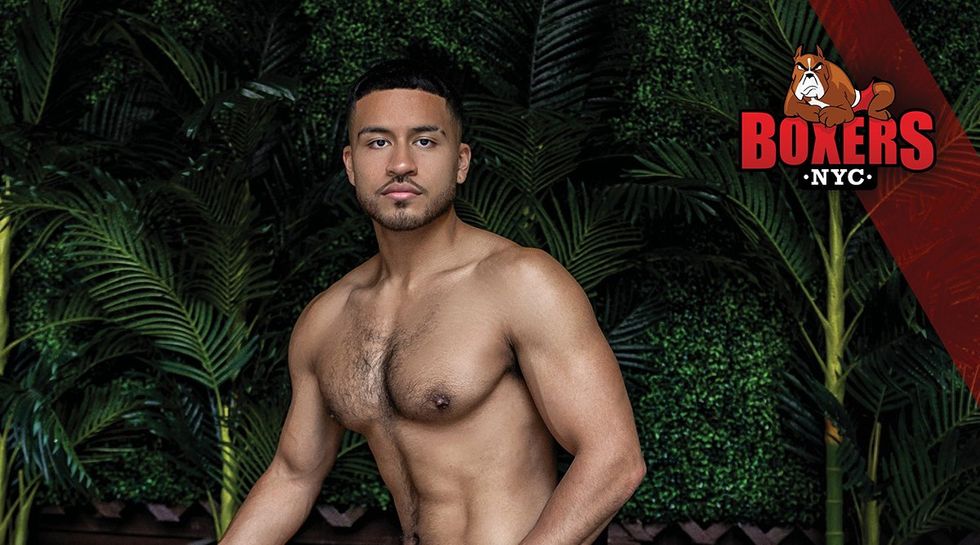
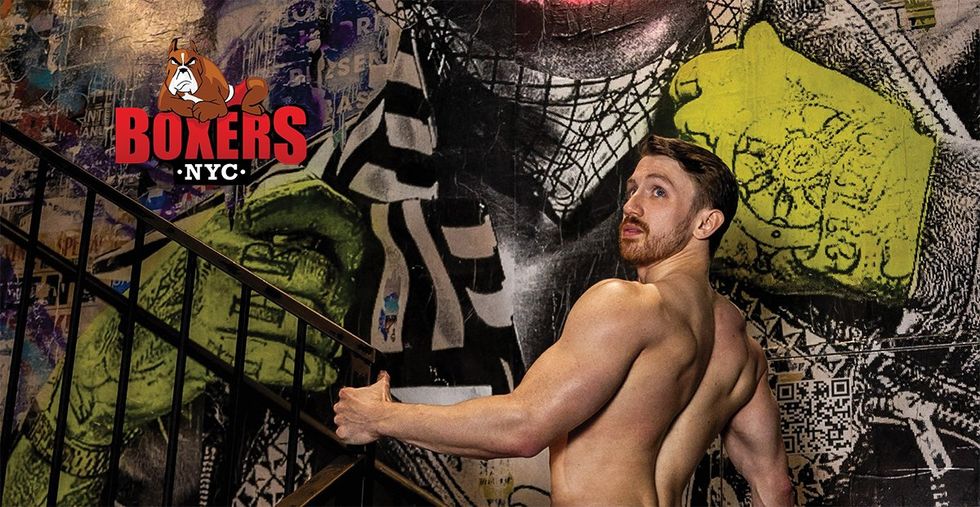
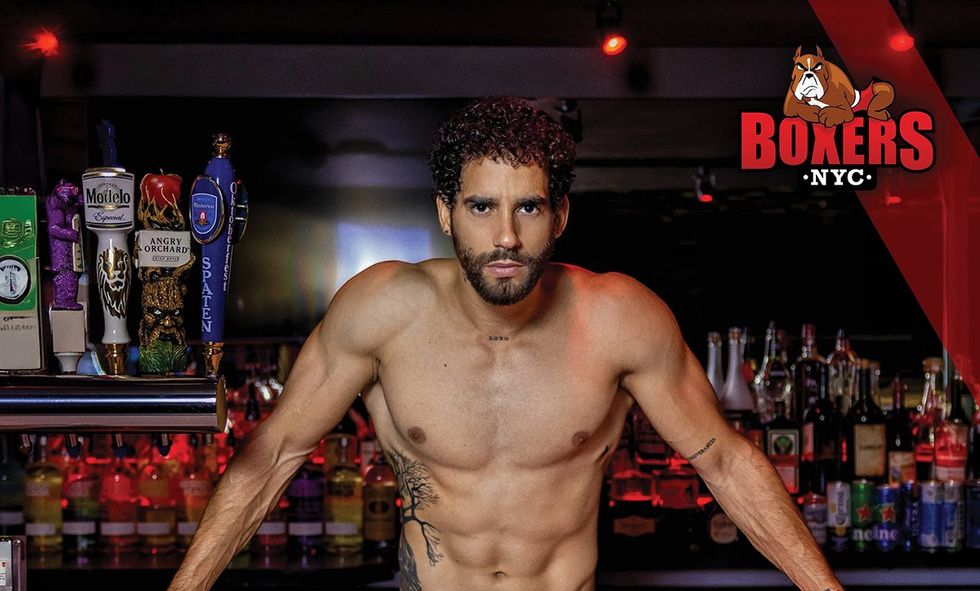
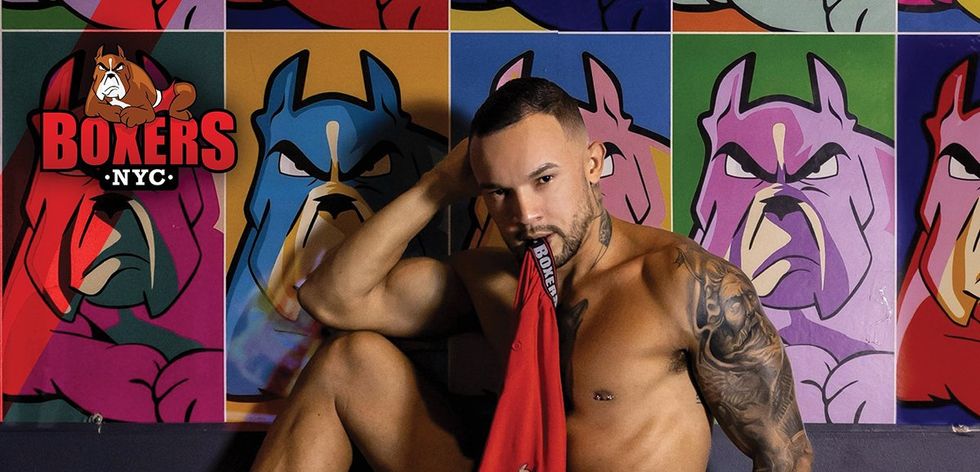
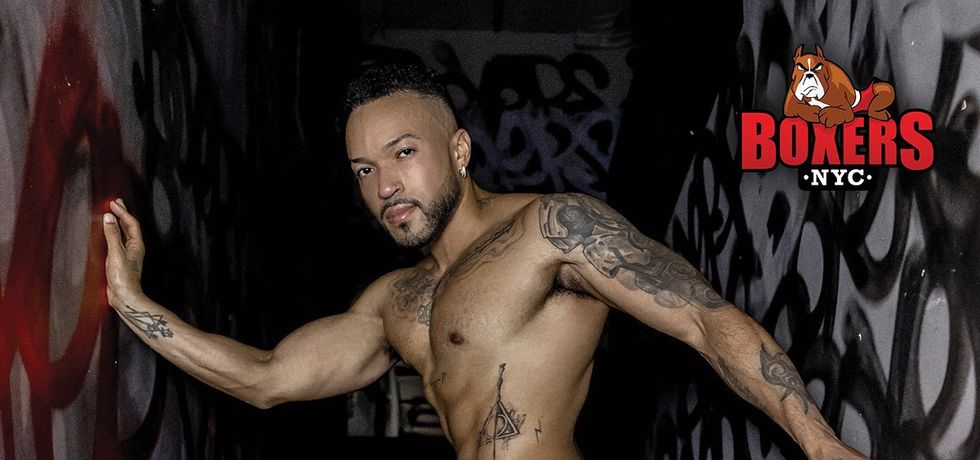
Boxers NYC, the ultimate LGBTQ+ sports bar, is ringing in the New Year with the release of its daring, artistic, and meaningful Boxers NYC Bartender Calendar for 2025.
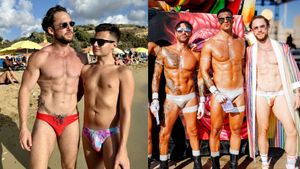
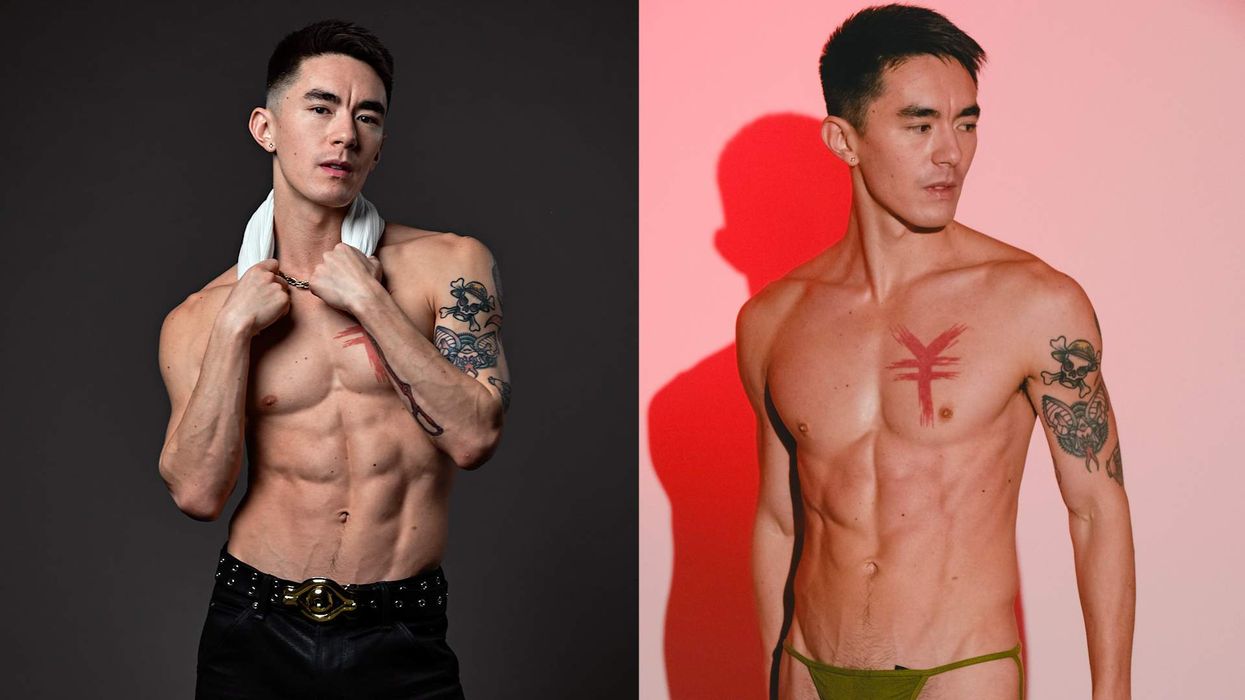
This calendar is so daring, artistic, and meaningful that we had to crop out the truly daring, artistic, and meaningful parts. But don't worry, we have the links to where you can see these bold and buff bartenders in their full glory.
This is the 15th anniversary of the Boxers NYC Bartender Calendar, and this year’s edition benefits Out My Closet, a nonprofit organization dedicated to addressing the urgent needs of under-resourced and unhoused LGBTQIA+ youth and adults. You can learn more at www.outmycloset.org.
“At Boxers NYC, we are incredibly proud to partner once again with Out My Closet,” says owner Bob Fluet, who opened the first Boxers NYC location in Chelsea in 2010 with Rob Hynds. “This year’s calendar is a bold step forward, not only artistically but in its mission to raise awareness and funds for a cause we deeply care about. By leveraging the power of this provocative initiative, we hope to make a meaningful impact in the lives of LGBTQ+ youth.”
Billed as America’s Gay Sports Bar, Boxers NYC offers pool tables, beer on tap, 2-for-1 happy hours, large outdoor spaces, and sporting events broadcast on the big screen, but also shirtless bartenders, diverse theme and club nights, and some of the biggest stars from the LGBTQ+ community.
Lucky for us, those shirtless bartenders were kind enough to drop their trousers and more for a good cause in the Boxers NYC Bartender Calendar for 2025, and we have the ultimate sneak peek.
The Boxers NYC Bartender Calendar for 2025 is available for purchase at both New York City locations and online at boxersnyc.com, but keep scrolling to get those juices flowing with our sneak peek of the Boxers NYC Bartender Calendar for 2025.
Follow Boxers NYC on X Twitter and Facebook @boxersnyc. Purchase the Boxers NYC Bartender Calendar for 2025 and learn more at boxersnyc.com. And see more photography from @btscenesbody ahead.
Focus on Sport/Getty Images; David Wharry/BIPs/Getty Images; Public Domain via Digital Transgender Archive
Focus on Sport/Getty Images; David Wharry/BIPs/Getty Images; Public Domain via Digital Transgender Archive
While those interested in LGBTQ+ history are becoming more aware of important figures in transgender history (like Marsha P. Johnson, Sylvia Rivera, and Lili Elbe) through films that chronicle their lives, there were so many trans women who fought for their rights and happiness but who were never covered in history class. Here are ten women who broke major ground and deserve a spot in the curriculum.
Today we are correcting this oversight by highlighting 10 such trans women.
Lucy Hicks Anderson
Lucy Hicks Anderson hosted elaborate parties for the rich and ran a brothel that provided liquor during Prohibition. Her connections to wealthy and powerful residents helped her skirt the law. When residents found out she was a trans woman, her marriage was challenged, and Anderson became an early pioneer in the fight for marriage equality when she became the first trans person to go to court to fight for her rights. In a time when trans people were nearly invisible, Anderson came out in childhood, and her parents raised her as a girl.
Jacqueline Charlotte Dufresnoy (Coccinelle)
David Wharry/BIPs/Getty Images
Best known by her stage name, Coccinelle, Jaqueline Charlotte Dufresnoy was a French actress, club singer, and activist. Her transition was one of the first widely publicized gender confirmation cases in Europe. After a career as an entertainer and appearing in the films Los Viciosos in 1962, and Días de Viejo Color in 1968, Coccinelle became an activist and founded “Devenir Femme” (To Become Woman), which provided support for those seeking gender confirmation surgery, and helped establish the Center for Aid, Research, and Information for Transsexuality and Gender Identity.
Tracy "Africa" Norman
Tracey Norman, who often went by Tracey Africa, is best known for being the first Black trans model. Norman appeared on a box of Clairol hair dye in the 1970s and landed a contract with Avon for a skincare line. In 1971, renowned photographer Irving Penn photographed Norman for Italian Vogue. She was also photographed for Essence in 1980, but when her transgender identity was discovered she was blacklisted in the United States.
She then moved to Paris and signed a six-month contract with Balenciaga. When it became more difficult to find modeling work, Norman began appearing in a burlesque peep show for trans women and became active in the ball community.
Reneé Richards
This professional US tennis player was breaking ground for trans rights in the 1970s. Richards, who prefers the label transsexual to transgender, was ranked sixth out of the top 20 male tennis players over 35 before she transitioned in 1975. When she was denied entry into the 1976 U.S. Open by the United States Tennis Association, she took her case to the New York Supreme Court, which ruled in her favor. After Judge Alfred M. Ascione ruled in Richards’ favor, she went on to the finals in doubles in her first U.S. Open in 1977. Richards also defeated Nancy Richey for the 35 and over singles title at the 1979 U.S. Open.
In addition to being a success on the court, Richards was a doctor who returned to her medical practice after retiring from tennis. She became the surgery director of ophthalmology and head of the eye-muscle clinic at the Manhattan Eye, Ear, and Throat Hospital. She also published two autobiographies. Her first autobiography, Second Serve, became the basis for the documentary film Renée.
Miss Major
Miss Major is a trans activist who has done everything from participating in the 1969 Stonewall riots to serving as the Executive Director for the Transgender Gender Variant Intersex Justice Project, which helps transgender people who are disproportionately incarcerated.
Miss Major was born in Chicago and became involved in the drag ball scene. She came out as a teenager in the 1950s. Miss Major also worked as an activist and caretaker in the San Francisco Bay Area during the AIDS epidemic, and later went on to work at the TGIJP.
Elegabulus
Shutterstock Creative
Elagabalus, Roman emperor and high priest of the sun god Elagabal, is one of history's earliest recorded trans women. Known for their love of makeup, jewelry, and feminine attire, they reportedly sought gender-affirming surgeries, asking physicians if it was possible to transition physically. Only recently, in 2023, a British museum reclassified the Roman emperor as a trans woman, updating pronouns and reflecting on the ancient ruler’s unapologetic queerness that makes them compelling in the conversation on historical trans identities.
A Jewish philosopher and poet of the Middle Ages, Kalonymus ben Kalonymus left a poignant account of gender dysphoria in the poem Even Boḥan ("The Touchstone"). In this deeply personal text, they lament being born male and expressing a yearning to live as a woman. While societal constraints of the era prevented them from transitioning, Kalonymus's words resonate as an early testament to the existence of trans experiences.
Eleanor Rykener
Eleanor Ryekener, a trans woman in 14th-century England, is one of the few individuals whose gender identity is documented in medieval court records. Arrested in 1395 for "cross-dressing" and sex work, Eleanor's testimony revealed her adeptness at navigating life as a woman in a society hostile to her existence. Her story highlights the resilience of medieval trans people and offers a rare glimpse into a trans life lived centuries ago.
Chevalier d'Eon
API/Gamma Rapho via Getty Images
The Chevalier d’Éon, a French diplomat, soldier, and spy, lived openly as a woman for the latter half of their life. D’Éon’s gender identity caused a sensation in 18th-century Europe, challenging societal norms of gender and performance. While some viewed their identity as a strategic disguise, d’Éon consistently asserted themselves as female, even securing royal recognition of their womanhood.
Mary Jones
Public Domain via Digital Transgender Archive
Mary Jones, a Black trans woman in 19th-century New York, lived unapologetically true to herself despite systemic racism and transphobia. Her story became public attention in 1836 when she was arrested for alleged theft while living as a woman. The press sensationalized her case, describing her attire and gender expression in lurid detail, but Mary proudly defended her identity. Mary’s resilience in the face of hostility marks her as a powerful figure in trans history.
Public Domain via Making Queer History; Public Domain via Abraham Lincoln Presidential Library; Hulton Archive
Public Domain via Making Queer History; Public Domain via Abraham Lincoln Presidential Library; Hulton Archive
Transgender people have always existed, but from the average history class, you wouldn’t know it. These ten pioneers are just a handful of trans men in history who made waves—from a revolutionary tuberculosis researcher to a powerful gospel singer.
Billy Tipton
American jazz musician and bandleader Billy Tipton started his career as the leader of a band playing on KFXR. He went on to tour the Midwest, play a two-year run at Joplin’s Cotton Club with George Meyer’s band, and tour the Pacific Northwest with George Meyer. In Longview, Washington, Tipton started the Billy Tipton Trio. Tipton was scouted by a talent agent in Santa Barbara, Calif. from Tops Records, and the Trio recorded two albums of jazz standards, which sold well for an independent record label. Tipton also performed skits on the vaudeville circuit, imitating celebrities like Liberace and Elvis Presley.
He also had several long-term relationships, including one with Kitty Kelly, a nightclub dancer. Though Kitty was lacking in the parenting department (she abused her adopted sons), Tipton was an involved father who loved to go on Boy Scout camping trips with his sons. Tipton died at age 74, and while paramedics were trying to revive Tipton, one of his sons learned he was transgender.
Alan Hart
Propeller Books
Alan L. Hart was an American radiologist, physician, and tuberculosis researcher who pioneered the use of x-ray photography in tuberculosis detection. The tuberculosis screening programs he implemented saved countless lives. Hart was also one of the first documented transgender men to undergo surgical transition in the United States at the University of Oregon Medical School. Hart married Inez Stark, but when a medical school classmate outed him, the resulting blow to his career and financial strain took a toll on their marriage and she left him in 1923.
His second marriage to Edna Ruddick in 1925 lasted until the end of Hart’s life. After obtaining a master’s in public health from Yale, Hart moved with Edna to Connecticut, and she became a professor at the University of Hartford as he continued his work to fight TB. In addition to his medical research, Hart was a prolific writer. He published four novels and a number of short stories.
Willmer "Little Axe" Broadnax
Willmer Broadnax was a gospel quartet singer, known for his powerful tenor voice. He performed as a lead singer of Five Trumpets alongside future Soul Stirrer Paul Foster. Broadnax later joined the Spirit of Memphis Quartet, which recorded for King Records. He also worked with the Fairfield Four, and the Five Blind Boys of Mississippi. He headed a quartet called Little Axe and the Golden Echoes which released singles on Peacock Records. After his death in 1992, it was discovered Broadnax was transgender. Broadnax’s older brother, "Big Axe" Broadnax, was aware and stood by and sang with his brother.
Charley Parkhurst
Santa Cruz Museum of Art & History
Also known as One-Eyed Charley, Charley Parkhurst was an American farmer, rancher, and stagecoach driver in California. He was born in New England and raised in an orphanage, but ran away and took the name Charley. He followed the Gold Rush out west and built a reputation as one of the finest stage coach drivers on the West Coast. Parker was only outed after death.
Lou Sullivan
American author and activist Lou Sullivan is known for his trans rights activism, and for identifying as gay and trans. Sullivan was the editor of The Gateway newsletter produced by the Golden Gate Girls/Guys (later the Gateway Gender Alliance). He also wrote several guides for trans men, lobbied the American Psychiatric Association and World Professional Association for Transgender Health to remove sexual orientation from the criteria for gender identity disorder, and was a founding member of the GLBT Historical Society in San Francisco.
Dr. James Barry
Hulton Archive
A trailblazing physician and military surgeon, James Barry is renowned for being the first European recorded to perform a successful C-section in Africa, which both mother and child survived. Born in Ireland, Barry graduated from medical school in Edinburgh before serving in the British Army. His career was marked by his fierce advocacy for public health reforms, particularly in sanitation and care for marginalized groups. Though it wasn’t until after his death that it was discovered Barry was transgender, Barry’s life is a testament to resilience, brilliance, and the pursuit of justice in medicine.
Albert D.J. Cashier
Public Domain via Abraham Lincoln Presidential Library
Albert D.J. Cashier, a true Civil War hero, lived authentically despite societal constraints. Born in Ireland, Albert immigrated to the U.S. and enlisted in the Union Army, serving valiantly in several battles, including the Battle of Shiloh and the Siege of Vicksburg. Post-war, he continued living, working, and maintaining his identity until his passing. Albert's legacy highlights the courage to live one's truth, even in the harshest times.
Harry Allen
Public Domain via Cascade Public Media
Known as “Harry Livingstone,” Harry Allen was a bold and unapologetic figure in early 20th-century Washington state. A trans man, Harry gained notoriety for run-ins with the law, including bar fights and drunkenness. He was also a notorious ladies' man, with several of his paramours reportedly ending their lives themselves following the heartbreak by Allen.
Arrested in 1911 in Spokane, Washington, the chief of the police tried to force Harry to wear feminine clothing, going so far as to threaten Harry with solitary confinement. He refused, choosing to wear his male garbs throughout his stay. Allen’s story is a powerful reminder of the resilience of trans men in history who dared to live as themselves despite societal backlash.
Karl M. Baer
Public Domain via Making Queer History
A pioneering activist and trailblazer, Karl M. Baer was one of the first to undergo gender-affirming surgery in the early 20th century. Though born intersex and assigned female at birth, Karl came out as a trans man at the age of 19. Two years later, in 1906, he underwent surgery and later received gender recognition after having a new birth certificate issued.
Michael Dillon
Courtesy St Anne's College Library, University of Oxford, UK
Michael Dillon made history as the first trans man to transition using testosterone and phalloplasty procedures medically. A British physician and author, he wrote Self: A Study in Endocrinology and Ethics, advocating for compassionate care for trans individuals. Dillon’s journey from a deeply closeted life to a groundbreaking transition story inspires trans communities worldwide.
Now that the pandemic is done and dusted, we're so excited that people are getting out there and serving -- and we absolutely live for the "I hate gay Halloween" trend.
We're huge fans of any chance to dress up in big, over-the-top, fabulous costumes, but there's one thing you always have to remember when picking out what to wear: DON'T BE OFFENSIVE. It's really not that hard. Unless you want to look like a complete jerk, these 15 problematic costume ideas should be avoided at all costs.
Jeffrey Dahmer
Netflix
Please, for the love of all things good, DO NOT EVER dress up as Jeffrey Dahmer! If you're a fan of the Dahmer series with Evan Peters and that's your inspiration, just choose to go as either Evan Peters himself or another character. At least eBay is smart enough to ban this from happening, but just... don't. While we're at it, avoid dressing up like any other serial killer, either.
The Menendez Brothers
Netflix
While you're at it, you should also avoid dressing up as the Menendez brothers, which seems to be the new trend after the popularity of the Monsters show that focused on them released on Netflix. They may wind up getting released from prison, and it may be a riveting story that's captivated our interest for years, but you should avoid dressing up as someone who murdered their parents.
Gypsy Rose Blanchard
Gotham/Getty Images
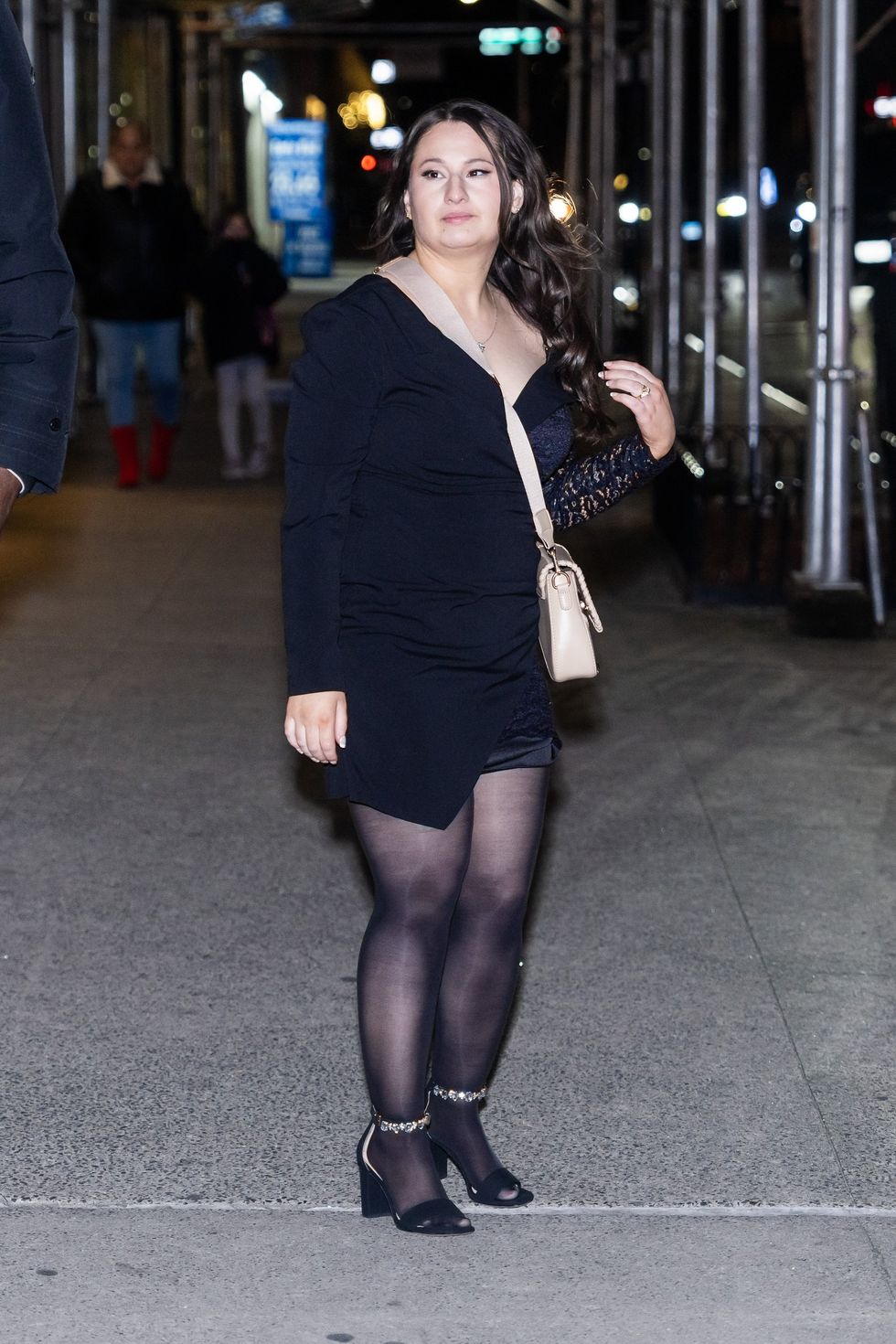
It's almost disturbing that we have to caution people away from people who offed their parents, but the glorification and glamification of criminals is getting out of whack. Gypsy Rose Blanchard was released from prison after years serving as the accomplice for her mother's death, and she shot to superstardom with constant coverage in People and multiple reality shows on Lifetime. I've seen people dress up as Blanchard and her mother, and all of that is just a no.
A bloody tampon
Amazon
Why? Just... why? Yes, there's a shock factor to it, and yes it can be funny at a party, it just seems like a very disturbing idea to envision yourself as an object that soaks up blood. Plus, the way that Republicans have turned access to tampons into a partisan anti-trans issue is weird and gross and you don't want any part of that.
Donald Trump
Amazon
Unless you're Alec Baldwin or you're doing a great job making fun of the guy, please never go as Donald Trump. The amount of MAGA who idolize him, the fact this even exists, it all just hurts. May the Trump train end in peace sooner rather than later.
The COVID Vaccine
Walmart
I mean, but seriously, just don't. No one wants COVID to be a main topic anymore. It still exists, we've sort of gone back to normal, but we don't need the constant reminders, and we certainly don't need to the tacky costumes to boot. Please, just don't.
A mentally ill person
Halloweencostumes.com
Mental health is really not something to poke fun of or make light of. Suicide is a real issue, and dressing up as any type of mentally ill person may be triggering to someone who is dealing with some serious internal problems.
Blackface
It's 2023 Mary, do we really have to say this? You should already know by now that blackface (the act of a non-Black person putting on dark face makeup to caricaturize a Black person) is an extremely offensive and racist act that harkens back to 19th-century minstrel shows that used awful racial stereotypes when portraying Black people.
Anything that's fat shaming/body shaming
VH1
Making light of and poking fun at someone's body size is not just inconsiderate, it's also really lazy and unfunny. Bodies come in all different shapes and sizes, so why are the bigger ones the ones that mostly get made fun of?
Anything that's sexist
Amazon
It's amazing how gendered and sexist seemingly innocent Halloween costumes can be. Take this hospital-themed couple's costume set from Party City, for example. Why is the male doctor not sexualized and objectified like the female nurse is? And since when do nurses wear short dresses, fishnet stockings, and high heels?
Anything that uses stereotypes
Shutterstock
Don't use dumb stereotypes to make a costume. More often than not, those stereotypes have real life consequences. There's nothing cute or quirky about a white girl dressing up in clothing she thinks is "gangster" or "urban" or "thuggish," especially when you consider how different Black men are viewed and treated for wearing the same things.
Cultural appropriation
Amazon
Don't wear something that has special (and sometimes sacred) meaning to a culture that isn't your own. See! So simple to remember!
Anything that's sexualizing/fetishizing
Halloweencostumes.com
One of the few things worse than cultural appropriation is sexualized cultural appropriation. Reducing a culture and their unique traditions/garments to a singular, fetishized image? That's just plain gross.
A trans person's gender identity and their appearance (no matter where they are in their transition) should never be the subject of a Halloween costume.