








































This story originally appeared on Them.
Since Johannes Gutenberg invented the printing press in 1440, the erotic written word, otherwise known as smut, has been a vital part of queer life.
Though smut of all varieties has long-been considered taboo, erotic fiction has provided a unique outlet for queer self-expression and desire. Today, it’s a more popular-than-ever way for LGBTQ+ people to see themselves reflected on the page or, more often, the computer screen.
“I do think that it's becoming a reclaiming,” Mr. Bitch, a Miami-based DJ who films his own erotic content, tells Them of the cultural reshaping smut has undergone over the last several years.
Even through times of intense scrutiny and censorship, smut provided an escape for queer and transgender people looking to understand themselves and their desires.. In the 1950s and ’60s, following the landmark Supreme Court case One, Inc. v. Olesen, which reversed gay obscenity laws that had limited queer media, LGBTQ+ people flocked to the curtained back corners of adult book stores in search gay nudie magazines and lesbian erotica. As the AIDS crisis wrecked havoc on queer communities in the 1980s, DIY zines showcased queer and trans erotica when no one else would.
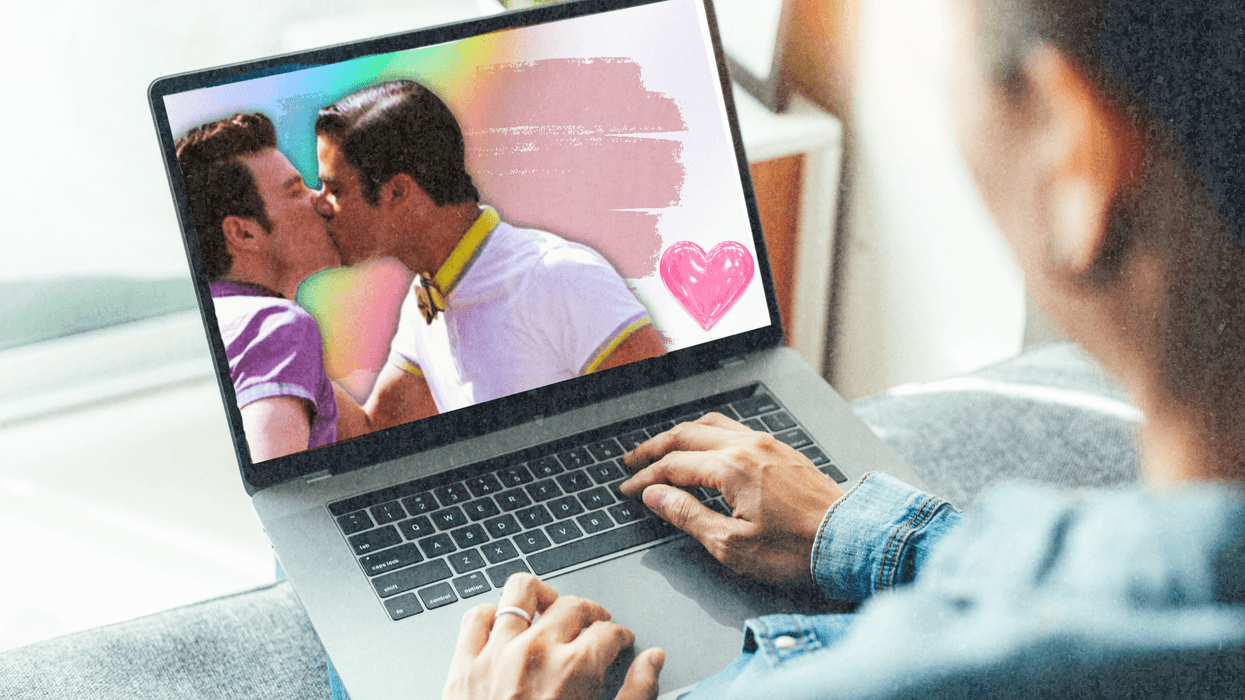
That cultural salience lives on today. For those of us who came of age online in the aughties and late 2010s, internet smut on platforms like Wattpad, Archive of Our Own, DeviantArt, and pre-2018 Tumblr ushered an entire generation into sexual exploration. Queer fanfiction written about characters like Glee’s Kurt and Blaine or actual celebrities like members of British boyband One Direction frequently had entire erotic subgenres of smut with massive followings.
Given the quickly shifting landscape that is the internet, queer smut the 2020s looks radically different than it did even a decade ago. Queer erotic fiction has simultaneously broken into the mainstream through mass success via literary influencers on TikTok, dubbed “BookTok.” Shows like Heated Rivalry, a television series based on erotic fiction, are exhibiting in theaters. And all this is happening as a massive wave of AI-generated smut makes platforms difficult to navigate and human-made smut hard to find. But despite the shifts, queer people continue to not only consume smut, but also produce it when they don’t see themselves on the page.
“There really is this space for people to get into the interesting spaces of kink and sexuality and representation — like I never thought I would see so much plus-sized specific smut, which has been really really nice,” Megan, known to her followers as @mmsgigggles, a social media strategist who has been speaking about sexuality online for over a decade, tells Them. “I feel like it’s a landscape where so many identities can see themselves reflected without judgment.”
What about the unique representation found in smut continues to hold such a strong grip on queer and trans people today? In this series, we’ll be digging into the origins of smut, what it means to queer people, and how LGBTQ+ people are using it as a tool of reclamation.
What is smut?
Perhaps fitting, given the birthplace of mass modern printing, the term “smut” originates from 1660s Germany, derived from the Middle High German word “smotzen,” which translates to “to make dirty.” When the modern usage of smut came about in late-17th century Germany, it originally held a negative connotation, referring to “indecent or obscene language.” Eventually smut became a catchall term for the erotic written word that we see today, first referring to scandalous Victorian novels such as My Secret Life and later to the tantalizing fandom stories that dot internet forums today.
Though queer smut has existed as long as heterosexual erotica, the 1970s marked a significant turning part. As The Maudern, the weekly newsletter of sex toy company Maude, noted in its history of smut, that decade marked a renaissance period for queer publishing, especially erotic content. Because a series of obscenity laws that censored queer and trans media were overturned in the 1950s, LGBTQ+ printed content was able to flourish, and queer smut along with it. On Our Backs, a lesbian magazine, was the first publication to regularly publish lesbian erotica for a queer audience in the 1980s, and ran through the early 2000s.
The queer smut of the late-20th century, published in DIY publications and indie magazines, has since gone on to serve as inspiration for the genre’s next chapter, birthing modern Instagram accounts and Tumblr pages dedicated to the queer history of erotic fiction. Today, queer smut is more accessible than ever.
How is smut significant to queer people today?
To consume content is to look for your reflection in the world. For many queer people, this is especially true of smut, as erotic fiction tends to be more reflective of LGBTQ+ people than mainstream media representation.
For Megan, who has been reading smut online since she discovered it at age 12, erotica served as a space for her to discover her bisexuality in private. Some of the earliest erotica she consumed were queer fanfictions about Frodo and Sam in Lord of the Rings on early Tumblr. Now as an adult, her taste has shifted to include more refined options, like romantasy — a blend of fantasy and romance genres — in both written and audiobook form.. She says what has remained special through her years of reading smut is the setting for erotic exploration it provides.
“The beauty of smut is it actually feels more inclusive and also more exploratory and less judgmental,” Megan tells Them. “It’s this really nice pocket of space where there is no yucking of the yum, so to say.”
Though smut is more expansive than other forms of media representation, it can still leave much to be desired for some queer and trans people. Rey Reséndez, a trans storyteller who uses she/they/he pronouns, tells Them that he has been consuming online smut since they were 14. For them, smut has played a significant role in helping to explore their transness and feel less shame about just existing.
“It basically helps me unlearn the shame associated with being trans — and that I could be in a fulfilling relationship, and also experiment creatively through sex with my partner, and know that that’s possible for me when I came out as trans,” he says, summarizing the personal impact of the form. “Like yes, I can live life, but what does romance and you know engaging in sex look like?”
Of course, every form of representation has its limits and areas that leave much to be desired. In part due to the lack of trans representation anywhere, including in existing erotica, Reséndez has been inspired to write his own smut as part of their creative practice. Beyond merely including trans people in smut, they want to read and write stories that go beyond the trauma of coming out and do not reduce trans people to their bodies.
“It’s more about the human experience of having intimacy or sex or romance and also including someone who is trans versus just focusing on someone’s transness,” they say of their work. “Yes, the coming out is beautiful, but I want to expand on that. I don’t want it to be just talking about coming out all the time. I would also not like it to be trauma.”
Ultimately, erotica serves as an art form in which queer and trans people can discover their desires and see their own humanity.
“I think anything that explores human creativity, no matter the subject, is art and art is subjective,” Megan says. “You know, whether or not you like something is a completely different conversation, but whether or not something is art, I think is open to interpretation, but somebody creating something of their own fruition is going to be art.”
Next week, in our smut series, we’ll be diving into how queer people are making their own erotic fiction.
Get the best of what’s queer. Sign up for Them’s newsletters.













 What can you do to avoid strap burn? alvarogonzalez/Envato
