









































This story originally appeared on Out.
Although the internet is full of information about bottoming — from prep tips to advice on fiber intake to techniques for loosening up — it can be hard to know what information is worth your time and what isn’t.
And because U.S. sex education definitely failed to prepare anyone for anal sex, it certainly didn’t cover what to do if you’re a bottom and also have irritable bowel syndrome (IBS).
For people struggling with IBS, things can be a lot more complicated — and messy — if you don’t know what you’re doing.
IBS is a chronic condition of the stomach and intestines that affects 5 to 10% of the global population and causes “cramping, belly pain, bloating, gas, and diarrhea or constipation, or both,” according to the Mayo Clinic. These symptoms can make bottoming more challenging, but not impossible.
So don’t let IBS get you down or ruin your sex life because we gathered together a group of anal health experts with tips for changing your diet, prepping effectively, and making bottoming more pleasurable, all while dealing with IBS.
If you have IBS, how do you prep for bottoming?

If you have IBS, how do you prep for bottoming?
Vlad Orlov/Shutterstock
Before you think about douching or diet changes, the first step is to make an appointment with a health care provider, says Dr. Carmen Fong, a colorectal surgeon and the chief medical officer at Bummed, a telehealth platform that makes prescription creams to treat hemorrhoids and anal fissures.
“If you're self-diagnosed with IBS, get an official diagnosis from a medical provider,” Fong tells Out. “This means ruling out other possible etiologies. IBS is a criteria-based diagnosis, but other conditions such as IBD, bacterial infections, and STIs should be ruled out through stool studies, colonoscopy, and bloodwork.”
Many people feel more comfortable and confident bottoming if they’ve douched beforehand. If you fall into that camp, you’ll want to avoid overdoing it, according to Dr. Evan Goldstein, a leading anal health expert who founded Future Method, a sexual wellness brand dedicated to revolutionizing anal sex prep.
Goldstein also recommends “gentle anal dilation exercises” with a dilator set because it will not only help with a tight pelvic floor that often accompanies IBS, but it’s also a way to check if you’re actually cleaned out. “Not only are they great for training the muscles and skin, but they also help you figure out if you’re ready or not to bottom that day,” he says. “In the end, the goal is to find a prep routine that works with your body. This may take some trial and error, but it’ll be so helpful in the long run.”
What else can you do to get ready?
Rather than risk irritation by douching frequently, Dr. Carl Streed, the research director for the GenderCare Center at Boston Medical Center and associate professor of medicine at Boston University, says it’s “best to stay ready than have to get ready.”
“This means addressing symptoms proactively,” he says. “It may be boring, but we must continue to talk about fiber (soluble NOT insoluble); so psyllium husk is a mainstay of reducing symptoms and is excellent for helping cleaning before bottoming.”
According to Fong, a “well-formed stool leaves much less residue in the rectum, which makes bottoming more comfortable,” so shoot for “a daily soft, formed stool, ideally a Bristol Stool Scale Type 4."
Should you change your diet or lifestyle?

Should you change your diet or lifestyle?
Rimma Bondarenko/Shutterstock
Everyone’s IBS symptoms are a little different, and what diet works for one person may not work for another. Figuring out what foods trigger your IBS symptoms is going to be your best bet if you want the option to bottom frequently. “Keeping a food and symptom journal can help identify foods, drinks, or even stressful situations that lead to flare-ups,” Goldstein says. “If you know you're planning to bottom, it's a good idea to avoid your known triggers in the day or two leading up to sex whenever possible.”
Streed also recommends following the Cleveland Clinic’s low-FODMAP diet (fermentable oligosaccharides, disaccharides, monosaccharides, and polyols), which involves avoiding a specific class of carbohydrates. “Peppermint oil has also been found to reduce GI symptoms (including spasms) and there are prescription medications for GI symptoms to reduce severity and frequency of symptoms,” he says.
Beyond changing your diet, if you want more consistent bowel movements, you need to prioritize regular exercise, staying hydrated, getting enough sleep, and incorporating a fiber supplement when appropriate for your IBS type. “The more predictable your bowel movements are, the more confident you'll feel bottoming,” Fong says.
How can you make bottoming with IBS more comfortable?

How can you make bottoming with IBS more comfortable?
Krakenimages.com/Shutterstock
Streed advises using more lube than you think you need and loosening up your muscles with foreplay that can include rimming, gentle fingering, and toys. “Most importantly, communicate with your partner about what feels good (or doesn't) and provide feedback,” he says. “Ensuring you're getting what you want out of the experience is key.”
It’s going to take some trial and error, but you can absolutely plan when you’re going to bottom around your IBS flare-ups. "Comfort starts with listening to your body,” Goldstein says. "If your IBS is flaring or you're experiencing pain, diarrhea, or significant discomfort, bottoming should be off the table. It's absolutely okay to wait until your symptoms are under better control. In fact, it’s better.”
And if you need a break from bottoming, take a page out of the side’s handbook and switch to frotting, oral sex, and handjobs when you’re having a flare-up. “Pain during bottoming is not something that comes with the territory, nor is it something you should simply push through,” Goldstein says. “It’s your body's way of telling you something isn't right, and if you’ve tried to address it without success, I recommend seeing a specialist who can help you find the root of the issue.”
Will IBS stop you from bottoming as often as you want?

Will IBS stop you from bottoming as often as you want?
KOTOIMAGES/Shutterstock
As long as your symptoms are well managed, there is no reason why you can’t bottom as frequently as someone without the condition, Goldstein says. “IBS affects everyone differently — and everyone has a different appetite for sex regardless if they have IBS or not — so there's no universal rule for how frequently someone can engage in receptive anal sex,” he explains.
According to Goldstein, “there's no reason you can't have regular, spontaneous sex” once you’ve learned what your triggers are, have made changes to your diet and lifestyle, and figured out how to clean yourself out beforehand without aggravating your symptoms.
“On the other hand, if you're experiencing an active flare-up with pain, diarrhea, or significant discomfort, it's best to give your body time to recover before bottoming,” he recommends.
Are people with IBS more likely to get anal fissures or hemorrhoids from bottoming?
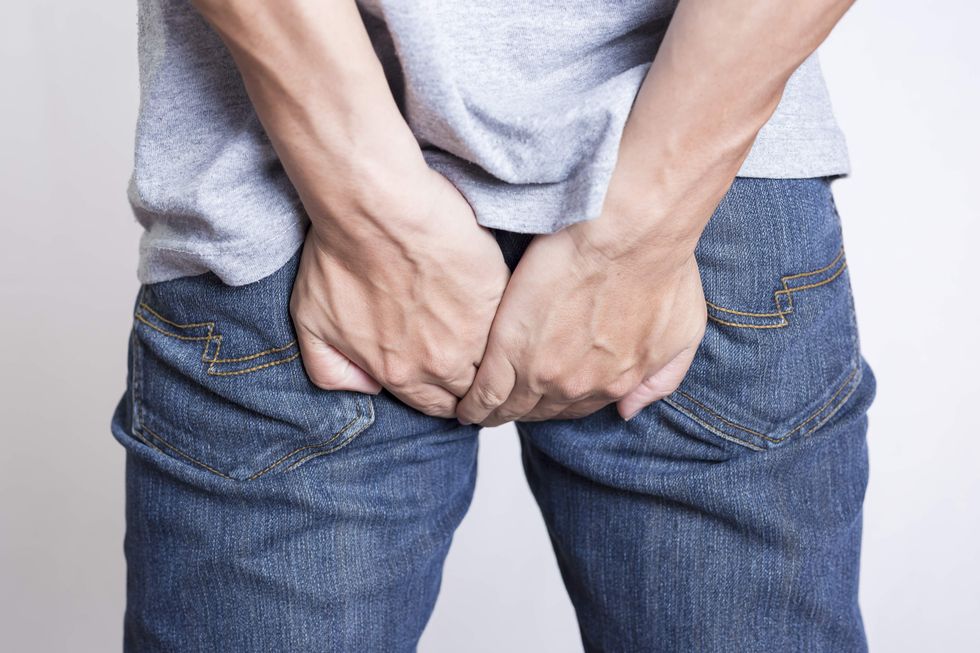
Are people with IBS more likely to get anal fissures or hemorrhoids from bottoming?
CHAJAMP/Shuttrestock
People with IBS are more likely to get anal fissures or hemorrhoids, but bottoming itself is not to blame. The constipation and diarrhea caused by IBS are the real culprit.
“This comes down to frequency: more trips to the bathroom, more wiping, and alternating between watery stools during diarrhea and hard stools during constipation, all of which increase irritation and trauma to the area,” Fong says.
Once you have an anal fissure or hemorrhoid, you’re going to need to take a hiatus from bottoming until you heal. “If you already have a fissure or a painful hemorrhoid, receptive anal intercourse can worsen symptoms or delay healing, so it's important to let those conditions resolve before bottoming,” Goldstein says. “Keeping bowel movements regular, avoiding excessive friction, and using adequate lubrication during sex can all help reduce your risk. If you're experiencing persistent pain or bleeding, it's worth seeing a specialist to identify and treat the underlying issue before resuming anal sex.”
What should you do if you’re bottoming and a mess happens?

What should you do if you’re bottoming and a mess happens?
alvarog1970/Shutterstock
First of all, don’t panic. This happens to everyone at least once, even without IBS being an issue. “Someone once told me, if you stick your hand down enough rabbit holes, eventually you’re going to find a rabbit,” Goldstein jokes. “We’re all adults here and there's no reason to feel embarrassed or ashamed.”
So clean up, move on, and remember that knowing your body and communicating your needs means this will be a rarity. “If you're having an IBS flare-up or experiencing diarrhea, it's usually a sign that your body isn't in the right place for receptive anal sex that day,” Goldstein says. “Having open communication with your partner and approaching the situation with a sense of maturity and compassion is what we should all be doing. Sex should never feel stressful, so if it means taking a rain check, do it.”
When sex gets a little messy, Streed says your best bet is to be an adult and talk it out. “Communicate when it happens, clean up, and decide how you want to proceed; don't let anyone shame you. Shit happens,” he says.
Fong’s recommendation is simple: “Laugh it off, say ‘I have IBS,’ and clean it up.”
Sources cited:
Dr. Carmen Fong is a colorectal surgeon and the chief medical officer at Bummed.
Dr. Evan Goldstein is a leading anal health expert in the United States who founded Future Method.
Dr. Carl Streed is the research director for the GenderCare Center at Boston Medical Center and an associate professor of medicine at Boston University.