
































This story originally appeared on Them.
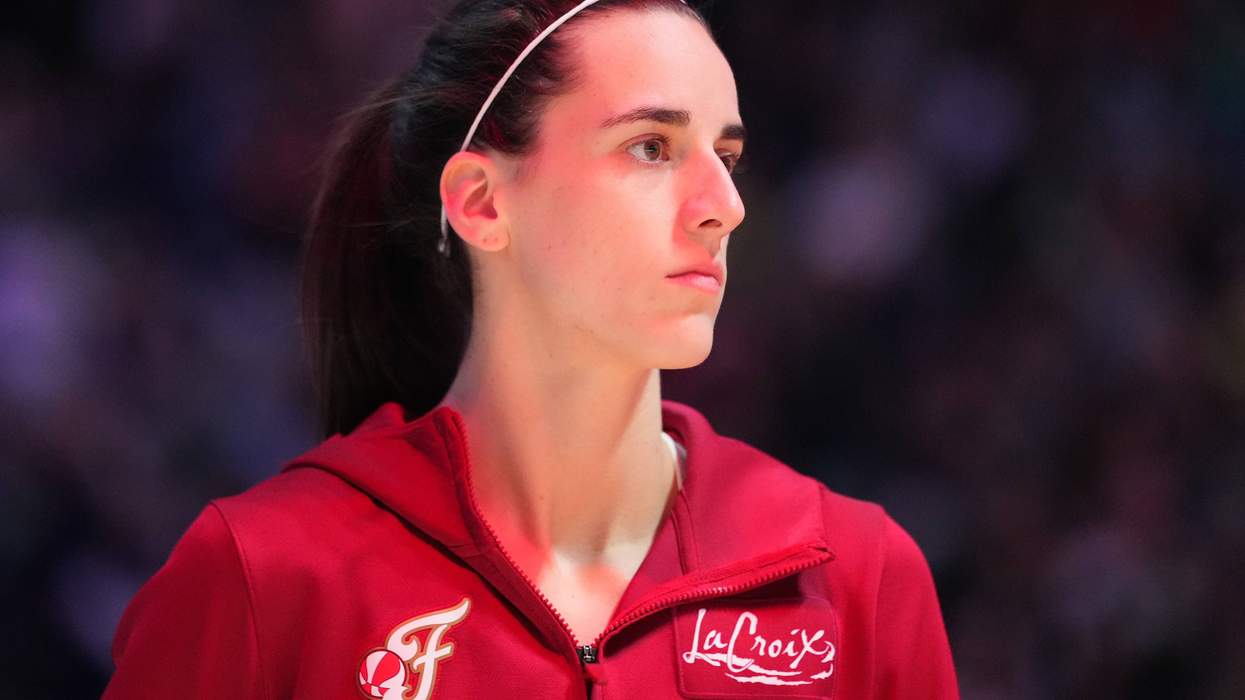
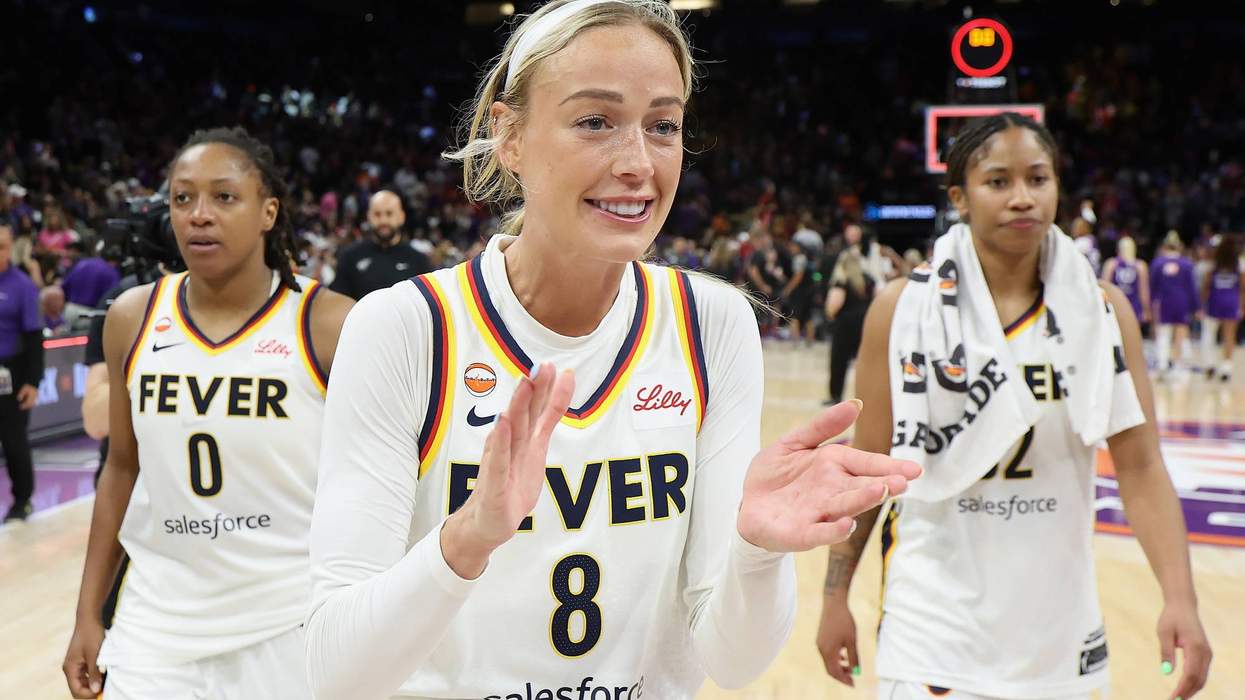
After being asked about the month-long national controversy that has followed her July 21 ESPN profile in which she expressed opposition to transgender participation in sports, WNBA player Sophie Cunningham deflected, telling people to instead look at her stats.
“Look at my stats… I don’t know why people think this is such a big distraction… Great time to be a Fever,” the Indiana Fever guard told reporters before her August 22 match against the New York Liberty — which the Indiana Fever lost, by the way.
Sophie Cunningham says political discourse hasn’t affected her play:
“Look at my stats…I don’t know why people think this is such a big distraction…great time to be a Fever” pic.twitter.com/0keTohgDH5
— Kris Pursiainen (@krispursiainen) August 22, 2026
So we did!
Them ran the numbers and when stacked up against a comparable period immediately prior to the ESPN profile, Cunningham’s average points per game (PPG) have dropped 32.8% since saying that she wants “to protect young girls in a locker room, or young girls in sports” from “biological males” — common anti-trans dog whistles used by conservatives.
After comparing the 13 games played prior to her July 21 feature and the 13 games she has played since making these statements and doubling down on them, even posing with Riley Gaines, her PPG average has dropped from 9.85 to 6.6. Now, look. We’re not scientists at Them. Correlation is not causation and all that. We can’t definitively state that endorsing transphobic viewpoints makes you a worse basketball player, but… we can point at a nearly 33% drop-off in scoring and allow you to draw your own conclusions.
Beyond not helping her score more points or become a better player, Cunningham’s comments have become the catalyst for a full-force anti-trans push against the WNBA — largely supported, it seems, by people who do not follow women’s sports despite claiming to want to protect them from trans players. (It should be reiterated that the WNBA currently has no trans players since the 2024 retirement of Layshia Clarendon, who came out as trans and nonbinary in 202o following seven WNBA seasons.)
In the month following Cunningham’s statements, the WNBA has seen an uptick in anti-trans demonstration both inside and outside of the arena, especially at Indiana Fever games. Two former NBA players, Enes Kanter Freedom and Royce White, have also said they are declaring for the WNBA draft in an obvious attempt to exploit the league’s eligibility language, prompting a meeting of leadership.
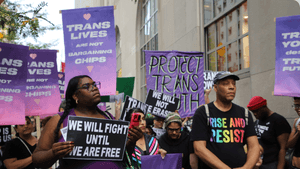
At a particularly intense flashpoint in the controversy at the August 22 match between the Indiana Fever and New York Liberty in Brooklyn, swarms of competing protestors crowded outside the Barclays Center. At the Indiana Fever and the Chicago Sky game the following day, Freedom was ejected after spending the game engaged in transphobic trolling, which included a confrontation with Sky player Natasha Cloud.
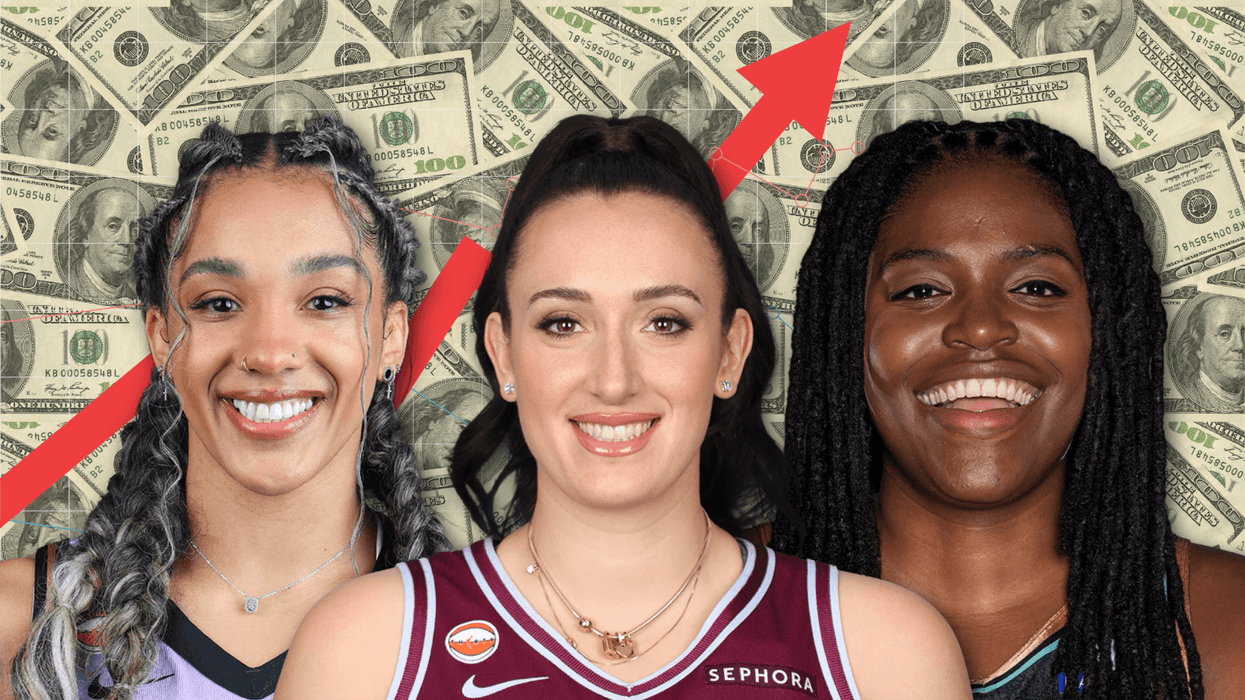
But famously, the WNBA and its fans are incredibly queer and broadly protective of trans people. Anti-trans protestors were met with large crowds of counterprotestors in support of trans rights at the August 22 game — and several WNBA players including Stefanie Dolson and Gabby Williamshave made it clear they support trans inclusion.
“I would welcome a trans athlete on my team or against my team, anytime,” Williams said in a May interview. “I don’t think it’s a problem in the world. It’s just another way to kind of attack trans people. We’ve seen players like Layshia Clarendon, who stepped into that forefront, and have been brave enough, and courageous enough, to step up.”
Get the best of what’s queer. Sign up for Them’s newsletters.