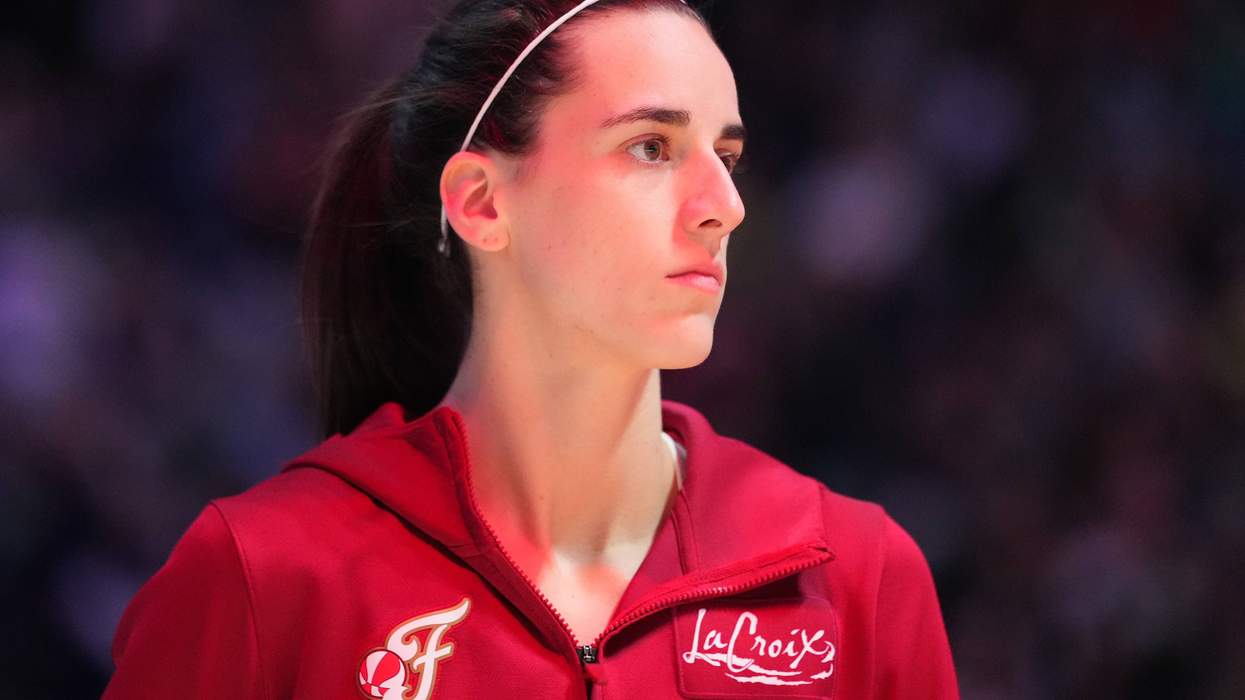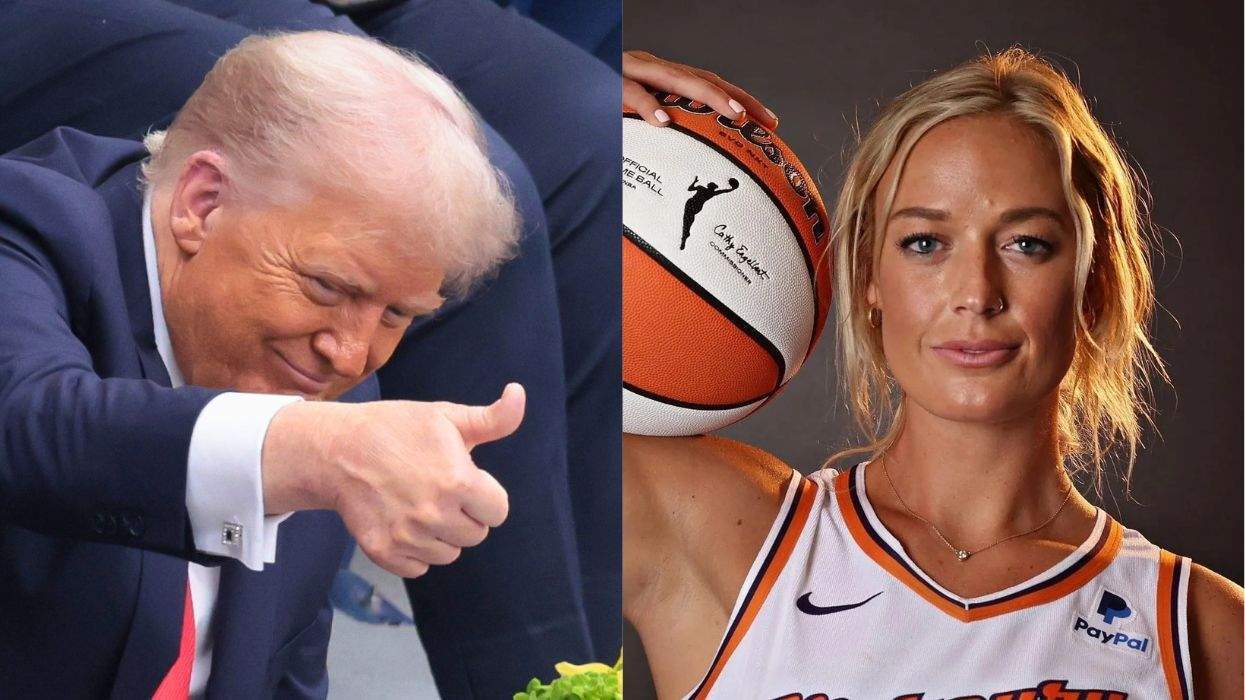

















The attempt to turn the WNBA into the site of the next anti-trans culture war is going about as well as you’d expect. The most recent obstacle? They want Caitlin Clark to parrot her Indiana Fever teammate Sophie Cunningham’s transphobic commentary on participation in sports — and Clark won’t do it.
So far, what is easily one of the most progressive and queerest professional sports leagues on the planet has so far largely rejected Cunningham’s recent transformation into the Riley Gaines of women’s basketball. After the Indiana Fever guard told ESPN earlier this month that “young girls in sport… shouldn’t have to go against biological men” — a fairly flagrant transphobic dogwhistle — she has since doubled down on those comments, drawing both protesters and supporters at upcoming games.
But it’s clear where the organic sentiment lies: two courtside pro-Sophie attendees at one Seattle Storm game reportedly had their tickets paid for by a “generous donor,” meanwhile everyone from fans to coaches like Cheryl Reeve are making it clear through signage and T-shirts that the W is not a place for hate.
That hasn’t stopped right-wing commentators from pressuring Clark — herself long wielded by bad-faith actors as a culture war bludgeon to criticize Black queer players — to echo Cunningham’s comments.
Asked at a press conference after Sunday’s Indiana Fever loss against the Minnesota Lynx about Cunningham’s position, Clark took a fairly neutral position, in comments reported by People. “I think it’s for leagues and governing bodies to work with their athletes to find solutions,” Clark said, adding, “Our focus is on basketball. That’s what we talk about and how we can get wins and obviously we didn’t do that tonight. So we need to find an area to improve in that way.”
That, apparently, though, wasn’t good enough for former Fox News host Megyn Kelly, who called Clark “cowardly” in comments reported by Mediaite, going on to falsely claim that “little girls are getting the shit kicked out of them in their sport.”
“[Y]ou are the most famous woman in women’s basketball, and you’re directly asked as the issue rears its head in your sport, and you punt on it,” Kelly added.
But that’s just the tip of the iceberg, as a quick glance through the cesspool that is X will reveal, in posts that aren’t even worth resharing here. Suffice it to say, it’s so nasty that even Dave Portnoy — not exactly an avatar of progressivism — called Kelly an “idiot” for going after Clark.
“1st of all you don’t even know how she feels on this issue and more importantly she doesn’t owe it to you or anybody else to be your political talking point,” Portnoy wrote in a quote-response to Kelly on X. “She just wants to play ball. Total coward cheap shot to call her a coward for not being your puppet.”
Lost in all of this is the fact that there are no transgender women playing basketball in the WNBA and, as of February 2025, are banned from NCAA competition. Which means this is currently a complete non-issue within American professional women’s basketball.
The ire directed at Clark also reveals just how desperate people are to make the player into an avatar for their own worst impulses. But it turns out that some people have more on their minds than just frothing-at-the-mouth transphobia. As The Bulwark’s White House correspondent Andrew Egger wrote on X, “It’s been weird watching for years as right-wing influencers try to draft Caitlin Clark into the culture war and it’s weird today watching them ritually denounce her for not participating. She’s never participated! She wants to shut up and dribble!”
It's been weird watching for years as right-wing influencers try to draft Caitlin Clark into the culture war and it's weird today watching them ritually denounce her for not participating. She's never participated! She wants to shut up and dribble! pic.twitter.com/qSpLK77oRi — Andrew Egger (@EggerDC) August 3, 2026
Can you imagine? Actually caring about playing your sport instead of being a puppet for someone else’s cause cause du jour? Wild!
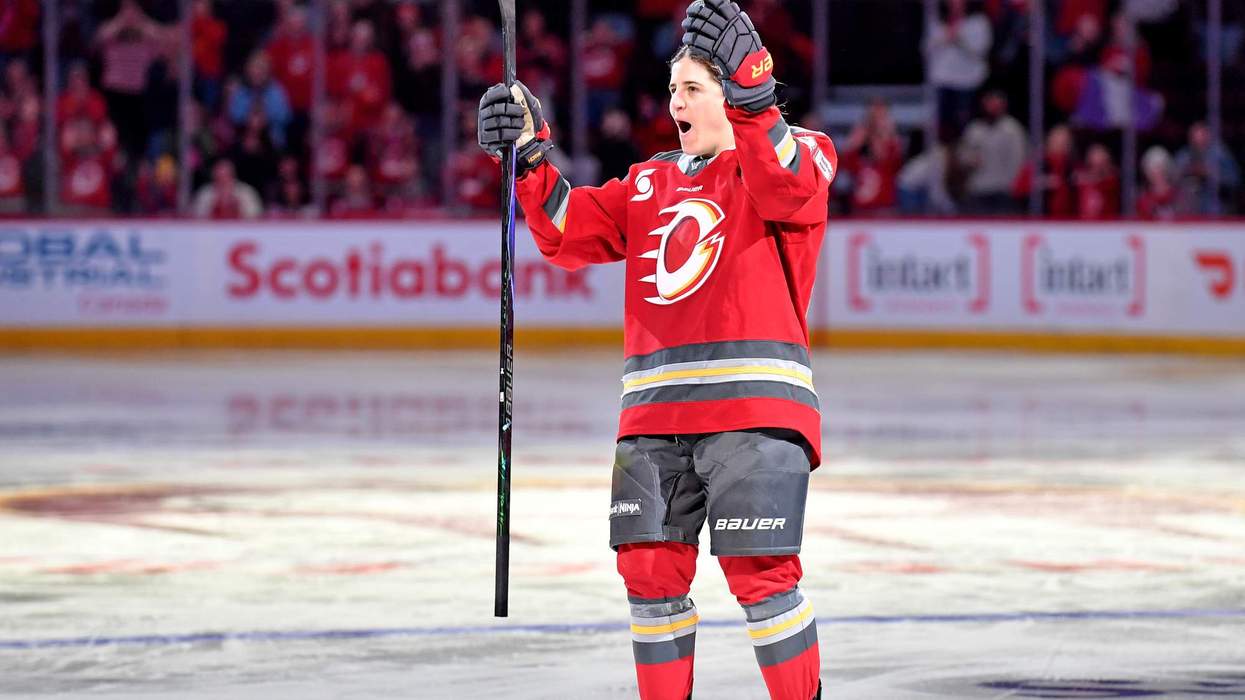
This week, the Women’s Pro Baseball League revealed the official details of its first four teams: the Boston Hunters, the Los Angeles Queens, the New York Heights, and the San Francisco Firebells.
Founded in 2024, the league had announced the first four host cities last October, but began rolling out names, logos, and jersey designs on July 8. In addition, each team is named after an important figure in women’s history from their respective cities — including the cigar-smoking, pants-wearing firefighter Lillie Hitchock Coit, a.k.a. “Firebell Lil,” who sometimes dressed as a man to gamble at men’s-only stores.
While Coit serves as the namesake for the San Francisco team, Boston’s club is named in honor of Harriot Hunt, a trailblazing female physician who was the first woman to apply to Harvard Medical School in 1847, nearly a century before the school admitted its first female students. The New York Heights draws its name from civil rights activist Dorothy Height, who received a Presidential Medal of Freedom in 1994 honoring her decades of advocacy, and the Los Angeles Queens pay tribute to baseball player Lizzie Murphy, known as the “Queen of the Diamond,” who played in women’s leagues — and even competed against men —in the early 20th century.
The league also rolled out designs for jerseys and fan replica jerseys on social media, and while I hate to pick favorites, I have to say that the osprey on the Boston Hunters kit is particularly fetching.
As you might expect from a professional women’s sports league — given the queerness of the WNBA — the WPBL is also remarkably gay. According to our sapphic social media detective friends at Autostraddle, the inaugural WPBL roster has at least 18 out LGBTQ+ players, with representation on every team. That’s nearly a third of the entire league, which closely compares to the WNBA, where roughly a quarter of players are out.
The league, which is independent from Major League Baseball, will play its games in Springfield, Illinois, beginning in early August and extending through September. According to Boston.com, this marks the first time a professional women’s baseball league has been founded since the 1954 end of the All-American Girls Professional Baseball League featured in A League of Their Own.
The WPBL has a media partnership with production company Fremantle but broadcasting deals have not yet been announced.
Over the weekend, gymnast Ben Letvin led his University of Minnesota team to another Eastern conference title in the run-up to GymACT league nationals. The collegiate athlete put up impressive scores on the floor and rings, but his high marks on the vault helped edge out the competition, securing him an all-around title to go with the Gophers’ fifth conference victory.
But the weekend didn’t just mark a win for Letvin’s club teammates and personal trophy collection: The openly gay gymnast’s success is helping move the needle forward in a sport known for its rigid idea of what it means to be a top-tier male athlete.
Letvin joined Minnesota gymnastics, which is part of the league open to schools without NCAA programs, in 2023. Initially, he told Outsports in a 2025 interview, he was hesitant to open up to his teammates about his sexuality, given the hyper-masculine environment fostered by the sport. But two other gay gymnasts, Jude Norris and Charlie Larson, gave him the confidence to stop worrying about fitting in and be himself.
Not long after, the three tightly bonded former teammates started collaborating on videos to promote the club on Instagram and, early on, it was clear they had found their niche. Norris, who joined the Gopher staff after being burned out by competition, was initially behind the camera, but things really took off when he joined his teammates onscreen. And thus, “The Powerpuff Girls,” as the group calls themselves, were born.
Since 2024, the threesome, who took their name from the iconic animated supergirl trio, has specialized in videos demonstrating high-level stunts with lots of sass. (Their collaboration has also taken on other forms, like a fashion-forward photo shoot, now that Larson has transferred to the University of Michigan.) And it’s not just gymnastics fans tuning into their content, with everyone from general sports enthusiasts to followers of campy queer influencers finding something to enjoy in their out-and-proud acrobatics.
Letvin’s latest victory on the mat puts the spotlight back on the group and their efforts to bring much-needed visibility to queer athletes competing in elite men’s sports. Whether he takes the podium at nationals next month or not, that already makes him an all-star in our book. Though, he will be hoping for a repeat of last year, when he took home the top prize for vault with a noteworthy 14.2.
Former professional soccer player Megan Rapinoe shared her thoughts about media coverage of the WNBA on her podcast.
Alika Jenner/Getty Images
On a new episode of the podcast A Touch More, soccer icon Megan Rapinoe addressed a reporter’s controversial question to WNBA draft pick Azzi Fudd about the status of her relationship with teammate Paige Bueckers, calling for the media ecosystem to “evolve and grow in a way that allows for these women to be in the relationships they want to be in.”
While stopping short of outright condemning the question, posed by Dallas Morning News reporter Kevin Sherrington at a Dallas Wings presser last week, Rapinoe noted that “traditional media around women’s sports is just inherently sexist and racist and misogynist.”
Rapinoe attributed the awkwardness of the question to a collision between traditional sports media and the increasing popularity of a women’s sports league in which a majority of players are Black and over a quarter are openly LGBTQ+.
“As it continues to grow, as it continues to become more a part of mainstream culture and media, I do think we are watching legacy or establishment media come in and sort of do business as usual,” she said. “It just feels like it needs more understanding and nuance.”
One part of the answer, per Rapinoe? “That’s going to need to include PR teams and managers and agents and media members that can understand queer culture and have an imagination around how to give these players media platforms that work for them,” she said, noting that the league itself has undergone a long and slow process of embracing its own LGBTQ+ players and fandom.
The comments predictably drew some right-wing ire, but it’s true that covering the modern-day WNBA requires more knowledge of queer culture than ever before, especially as more players come out — and often begin dating each other — within the league. Centering the sport while also acknowledging the unique culture of the WNBA may indeed require a more finely tuned approach than asking for a sapphic relationship update in a press conference rather than, say, a closed-door interview.
“It just feels like it needs more understanding and nuance,” Rapinoe said of the current media environment. “Like, it’s not quite hitting.”
Rapinoe’s thoughts on the subject came at the top of an episode released shortly after she announced her own breakup from retired WNBA legend Sue Bird, with whom she co-hosts A Touch More. In the couple’s split announcement, they shared that they would be releasing six more special episodes of the podcast, trading off hosting duties.