











































This story originally appeared on Out.
If your anal fissures and hemorrhoids make your butt cheeks clench every time you so much as think about having sex, you may be missing out on an unusual cure.
When over-the-counter creams, prescription compounds, and anal Botox (also called HoleTox) aren’t enough, your doctor could give you a strange prescription: Go home and have sex.
People suffering from anal fissures and hemorrhoids may opt out of bottoming for fear that they’ll make the problem worse, but according to anal health experts, being a bottom could actually help.
This treatment option has a lot of benefits, but it can also be risky if done incorrectly, which is why Out talked to medical experts who know how to heal your tush by having amazing sex.
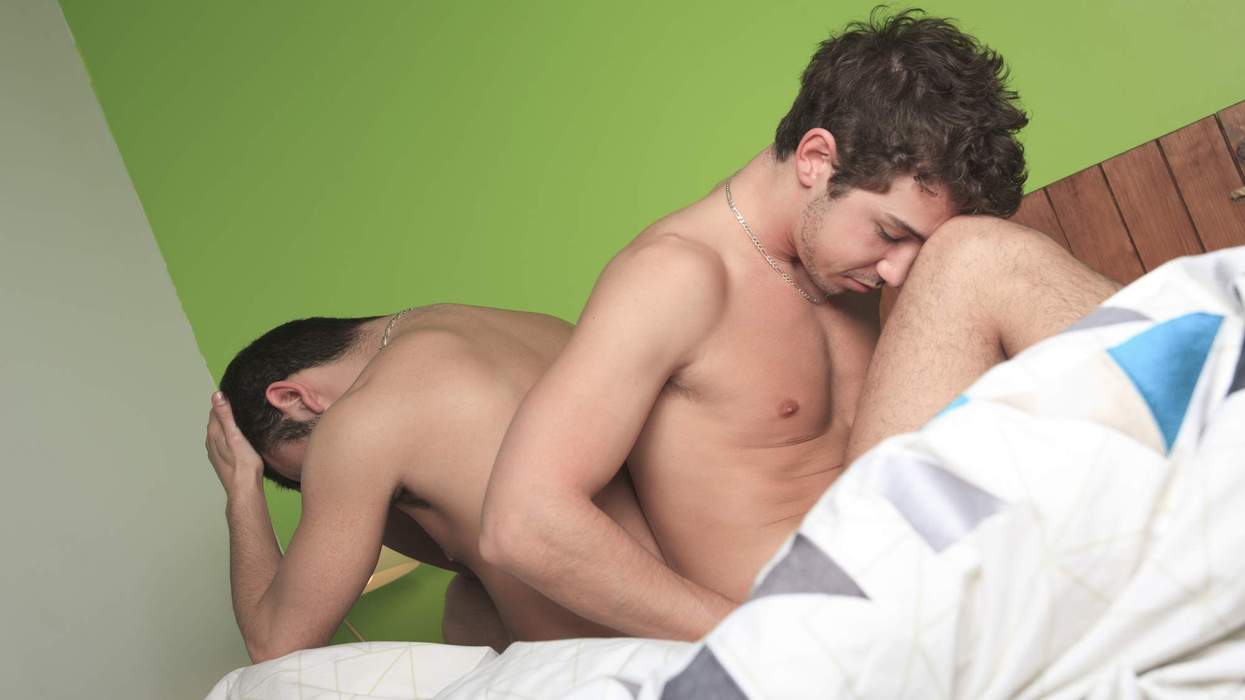
Can you heal anal fissures and hemorrhoids by bottoming?

Can you heal anal fissures and hemorrhoids by bottoming?
VladOrlov/Shutterstock
Recommending bottoming as a treatment option would likely surprise a doctor who doesn’t work with the queer community, but it can really help certain patients who have gotten anal fissures or hemorrhoids from “pushing too much, constipation, not enough lube, big dick, not enough muscle relaxation," says Dr. Goldstein. Goldstein is a leading anal surgeon and author of Butt Seriously: The Definitive Guide to Anal Health, Pleasure, and Everything In Between, who focuses most of his practice on LGBTQ+ sexual health as well as healing anal fissures and hemorrhoids.
Anal fissures are tears in the lining of the anal canal, while hemorrhoids are swollen or enlarged veins in the anus or lower rectum that can be either internal or external. These can often feel like they will never heal, but anal dilation from bottoming can treat the underlying causes and prevent future issues, Goldstein tells Out.
“With most assholes, the muscles are too tight,” he says. “We sit all day. We work out with crazy squats. Most people shit incorrectly and spend so much time on the toilet doomscrolling that they create so much pressure in the area. Also, at the gym, we are trained to contract one muscle one day and then stretch it the next. When do we ever stretch our ass or our pelvic floor? Most people don’t. And that elevated pressure or inability to truly control relaxation leads to anal issues like hemorrhoids and fissures.”
Dr. Carmen Fong, a colorectal surgeon and the chief medical officer at Bummed, a telehealth platform that makes prescription creams to treat hemorrhoids and anal fissures, says “anal dilation can technically be a treatment for chronic anal fissures,” although she wouldn’t suggest it as the first option you turn to.
If you decide to go this route, Fong says bottoming can help you heal and prevent future issues, so long as you take things slowly and don’t try to take a porn-star-size penis right out of the gate. “I will say bottoming as dilation can be good for prevention, when done carefully and with lots of lube, foreplay starting with smaller sizes, and not going mega size all at once,” she says.
Why does bottoming help?

Why does bottoming help?
Krakenimages.com/Shutterstock
Since hemorrhoids are “just swollen veins caused by a concentration of elevated pressures,” Goldstein says bottoming can be used in a similar way to anal Botox, where “slow, well-lubricated penetration can redistribute pressure away from the hemorrhoid, which is why some people describe real relief.”
According to Goldstein, anal fissures can also be helped by bottoming because it stretches and relaxes the area and “creates controlled friction against the tear and scar,” which “strengthens the overlying tissue” so that you can get back to having sex pain-free.
“Think of it like developing a callus that becomes protective,” Goldstein says. “The key is to make sure your fissure is as optimized as possible or in the cycle of it not being irritated. By testing the waters with the small glass dilator and then progressing from there, you can see if this is a viable option to improve your quality of life.”
Fong sees bottoming as less helpful for hemorrhoids, but “anecdotally and physiologically,” she’s seen it help correct anal fissures and prevent future ones. “Possibly for chronic anal fissures because the underlying physiology is that there is a hypertonic anal sphincter — literal 'tight ass’ — and obviously, bottoming will stretch the skin and muscles that eventually help improve blood flow that heals the fissure, similar to anal dilators or Botox injection,” she explains. “But I would not do it with an acute fissure (it would hurt and not heal), and hemorrhoids is usually the opposite issue, too much loose mucosa.”
And the science backs them up. While there haven’t been any studies on bottoming as a treatment, there have been studies exploring dilator use for anal fissures. According to a 2023 study by the Journal of the Anus, Rectum and Colon, controlled anal dilatation is “the preferred procedure for patients with chronic anal fissures who do not respond to conservative treatments.”
Who is a good candidate?

Who is a good candidate?
VladOrlov/Shutterstock
“Someone who does not have active hemorrhoids or fissures, without recent anorectal surgery” is the best candidate for trying bottoming as a treatment method, says Fong, who also recommends you "start small and go slow.”
The best time to start this unique and potentially pleasurable treatment is when your anal fissures and/or hemorrhoids are calm and not in an active flare-up, Goldstein says.
“Before anyone starts this conversation, my first question is always: Are you in an active flare right now, or are things relatively settled? That answer sends you down a completely different path,” he says. “Calm, manageable, comfortable for the moment – that's a good candidate to give this all a good college try.”
Most people assume that fissures and hemorrhoids “have to shut your sex life down indefinitely,” but that couldn’t be further from the truth. “With the right prep – dilation, gentle douching (our Future Method Anal Douche Kit makes this simple without further irritation), extended foreplay, silicone lube, honest check-ins with your body – a lot of people can navigate flare-ups and keep a good sex life,” Goldstein says.
How can you try this method?

How can you try this method?
KOTOIMAGES/Shutterstock
Before you get started, you should check in with your health care provider to make sure your hemorrhoids or fissures aren’t so severe that you’ll end up doing more harm than good by giving bottoming a try. Then, you’ll need to start slowly and go solo at first before bringing in someone to top you. Fong says “the smallest dilators are pencil thin, but I'd say start with something index finger size.”
Goldstein recommends starting with a glass dilation kit, which will start small and get progressively larger and can have a pleasant cooling effect. “Pay attention in real time: Does it feel like relief, or does it feel sharp and tight? If it's relief, you can extend that same slow approach to a partner, with extended foreplay and warm-up, not straight to penetration (though this should really always be the case),” he says. “If at any point you hit sharp pain, more than trace bleeding, or a constant full-pressure feeling — stop, rest, and use aftercare like suppositories, topical creams, or Epsom salt baths before trying again.”
And don’t forget the lube: “Increased friction means increased aggravation of the skin and muscle,” Goldstein says. “Lube and foreplay help relax everything and reduce elevated pressures.”
You also need to communicate openly with your partner so that you don't get hurt in the process. “Their job is to be patient and keep listening and watching your verbal and facial cues,” he says. “Checking in, not rushing to penetration, and stopping the second you signal pain, not just discomfort. So many tops just want to shove it in or be more too aggressive. This is not the timing. The goal is to get to whatever sex you want. But we need to be strategic. Slow and steady wins this race.”
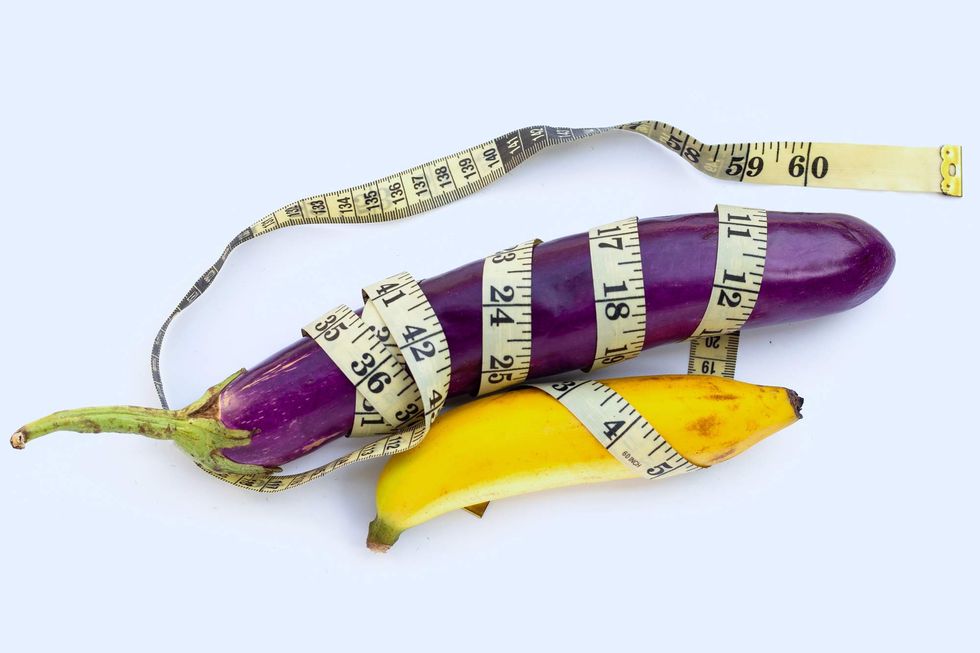
Does penis size matter?

Does penis size matter?
sasirin pamai/Shutterstock
Ah, the age-old question: does penis size matter? When is comes to sex, the size of your penis doesn’t really matter because with technique, sex positions, and toys, anyone can be a dynamo in bed. But when it comes to using bottoming to treat painful health issues, you need to start small and not be a size queen.
“I would make sure you have progressed on the anal dilators to an appropriate size that mimics your partner’s length,” Goldstein explains. “Some people even add dildos to set the same stage. Make sure you bring the dilators or toys into your first true penile play, either before or during as foreplay. Set the stage for success. If there are any deviations, then pull away – literally. We do not want anymore trauma in the anal space, as it also then starts to fuck with you mentally, and not in a good way.”
Sources cited:
Dr. Evan Goldstein is a leading anal health expert in the United States and founder of Future Method.
Dr. Carmen Fong is a colorectal surgeon and the chief medical officer at Bummed.

















 How do GLP-1s impact your sex drive?