







































This story originally appeared on The Advocate.
A new report from the Joint United Nations Programme on HIV/AIDS (UNAIDS) paints a dire future for the fight to curtail new HIV infections and manage the virus, placing the blame on the worst setback in the funding of preventive care in decades. The UN venture says this is a direct result of cuts in crucial aid by the Trump administration and European nations.
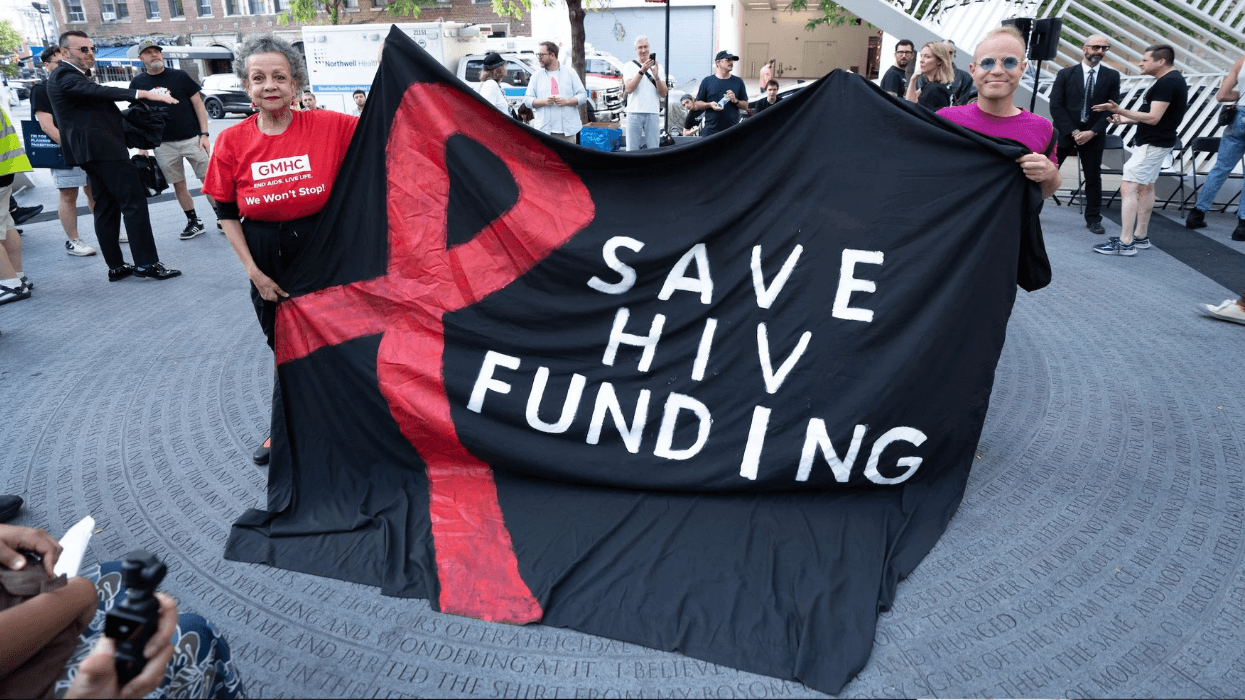
UNAIDS, which for 30 years has organized a joint effort from 11 U.N. groups to fight HIV and AIDS, issued a stark warning Tuesday that cuts and shifts in international HIV financing, paired with a climate of “anti-rights and anti-gender campaigns,” are creating a global crisis that threatens to reverse one of the greatest public health achievements in history.
HIV cases around the world have plummeted from their mid-1990s peak, the organization noted, with new infections hitting a low of 1.2 million cases last year.
Related: Budget cuts and ignorance of history are racing us towards another HIV & AIDS epidemic
But while the world has moved closer towards the United Nation's goal of controlling the HIV epidemic and ending AIDS as a public health threat by 2030, President Donald Trump began cutting foreign aid for HIV care last year. As The Advocate reported last month, that move by the U.S. sparked alarm among international healthcare providers who are running short on crucial HIV medicines.
More than two dozen countries hardest-hit by the fallout of these budget cuts by U.S. and other Western nations are struggling, Semafor reported. UNAIDS is also impacted, having to dismiss half its staff and stopped work in 30 nations.
"We are on the cusp of ending AIDS – this has been the greatest story of global health – and just when we should finish it, cuts and the rolling back of human rights is threatening to take away our gains," Winnie Byanyima, executive director of UNAIDS, told Reuters in response to the UNAIDS report. "Community organizations are not an optional extra. They are often the only trusted bridge between health systems and the people most at risk of HIV," Byanyima explained.
Thanks to grassroots activism in the U.S. to spur governments and pharmaceutical companies to create life-saving medicines, HIV has become a manageable health condition. According to UNAIDS, more than 32 million of the 40 million people around the world who are living with HIV are being treated. The report also highlights a drug called lenacapavir, which is injected twice a year, as well as other new long-acting prevention treatments being developed, which could protect millions more people from becoming HIV positive.
Related: How Black communities protected each other during the early days of the AIDS crisis
But that $1 billion in U.S. cuts to funding have left fewer HIV resources available in low- and middle-income countries, a gap estimated at more than $4 billion annually.
The U.N. study revealed greater than 75 percent of organizations surveyed reported disruptions and more than 80 percent of them were operating at less than half their capacity as of the end of last year.
Also in 2025, there was a drastic decline in the number of people accessing PrEP to prevent HIV: nearly half a million fewer people protected than the previous year, said UNAIDS. Among sex workers use of PrEP declined by 59 percent; 58 percent among injectible drug users, 23 percent among people who identify as transgender and 17 percent among gay men and other men who have sex with men. According to UNAIDS, only 2.6 million people had access to PrEP in 2025. but more than 20 million people will need it by 2030.
Related: Funding cuts could cause 3.3 million additional HIV infections by 2030: report
The distribution of condoms also fell worldwide, according to the report, from 3 billion to 2.7 billion between 2024 and 2025. Another proven HIV prevention option is voluntary medical circumcision, but due to the cuts those procedures dropped by more than half over that same period, according to UNAIDS.
Then there's advanced HIV disease or AHD, which remains a major cause of illness and death. In 2025, UNAIDS estimated that 3.4 million people worldwide were living with AHD; that's about eight percent of everyone living with HIV. The agency found that one in eight people with AHD died within a year, with the majority of those dying within the first three months.
A short-term solution to replace the lost funding is impossible, UNAIDS reports. Countries most affected are carrying a debt load of at least twice or three times the amount spent by their governments on healthcare.
Related: 1985: the year the AIDS crisis finally broke through the silence
Countries across Western and Central Africa have the greatest burden, said UNAIDS, with many at least 90 percent dependent on international funding for HIV treatment. Even the countries that aren't financially struggling still depend heavily on donors for HIV prevention programs, UNAIDS reported.
The result is fewer HIV tests being conducted, the labs that analyze those tests face greater challenges and fewer people are seeking treatment. The systems that provide community support to help sustain those needing this life-saving care are vanishing.
"The world is sleepwalking into a preventable crisis," said Byanyima in a press release accompanying the report. "We know what happens when HIV prevention collapses. People become infected, treatment needs rise, costs soar and lives are lost. Every clinic that closes, every outreach worker who loses their job and every young woman turned away from prevention services today risks becoming a new HIV infection tomorrow."