








































Despite queer horror films often setting the bar for genre works, they don’t always manage to attract the attention of mainstream moviegoing audiences. But Australian director Adrian Chiarella’s feature debut, Leviticus, has been causing talk among a wide swath of cinephiles since its triumphant debut at this year’s Sundance Film Festival. Specifically, its original, jaw-clenching take on conversion therapy as a central metaphor seems to have captivated an array of audiences in a moment when, as its director has said, LGBTQ+ rights are in an extended backslide.
Ahead of the film’s release on June 19, and its anticipated success during awards season, here’s what to know about Chiarella’s timely, cautionary tale about young love that blooms in a hostile, small-town atmosphere, leading to horrific consequences.
‘Leviticus’ and its conversion-therapy plot delivers a new take on queer horror themes
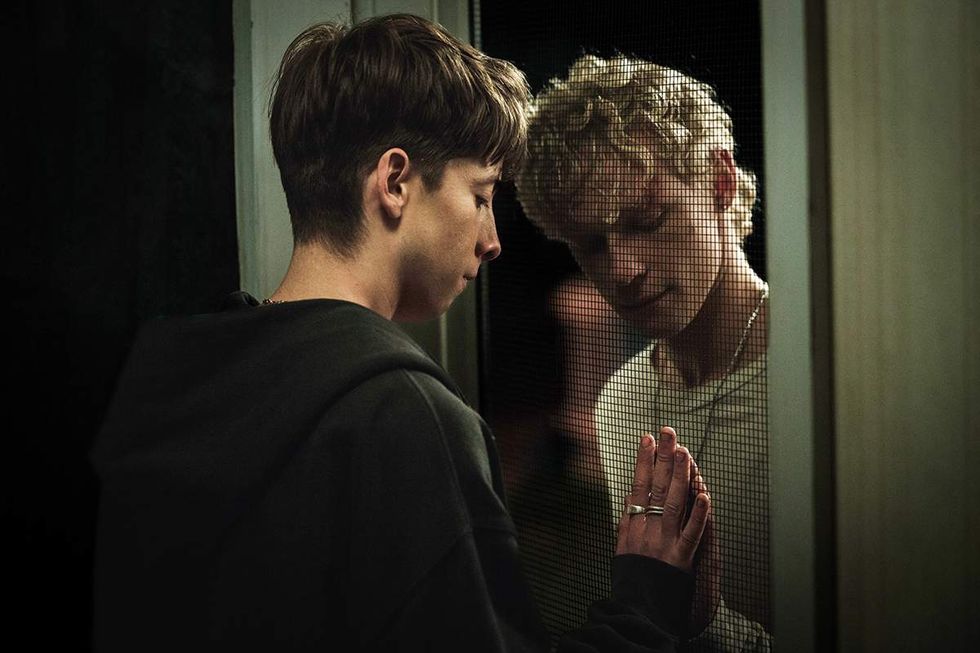
Joe Bird and Stacy Clausen in 'Leviticus'
Courtesy Neon
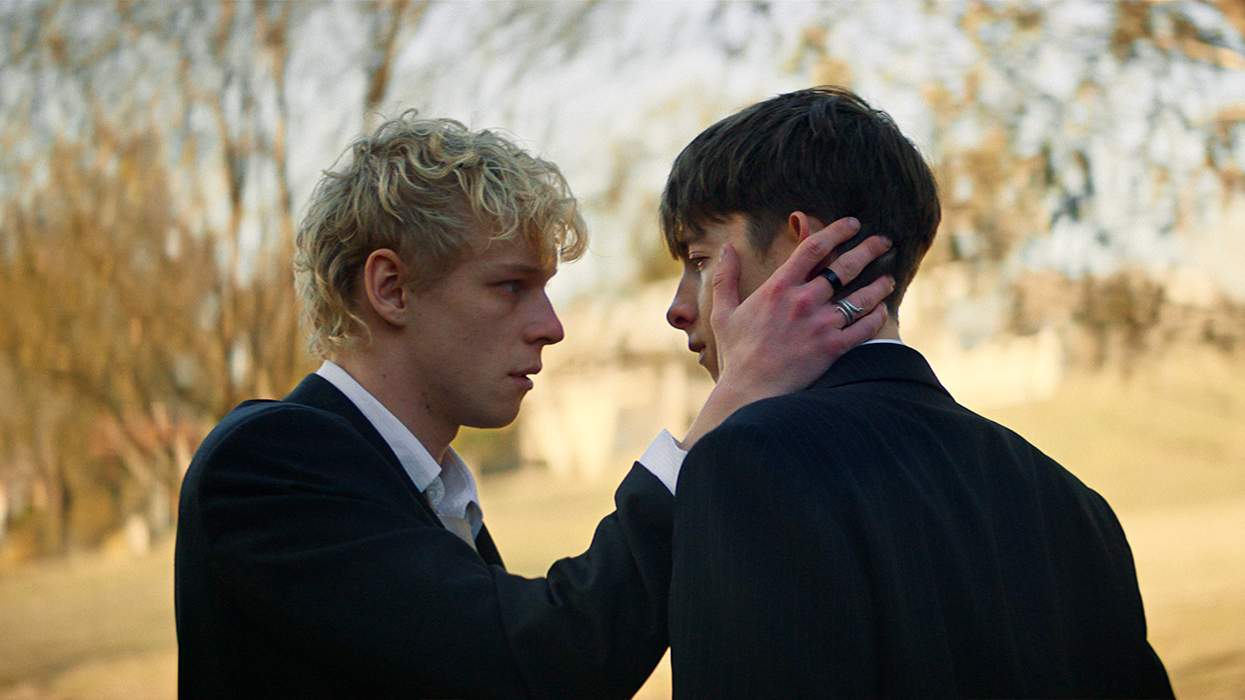
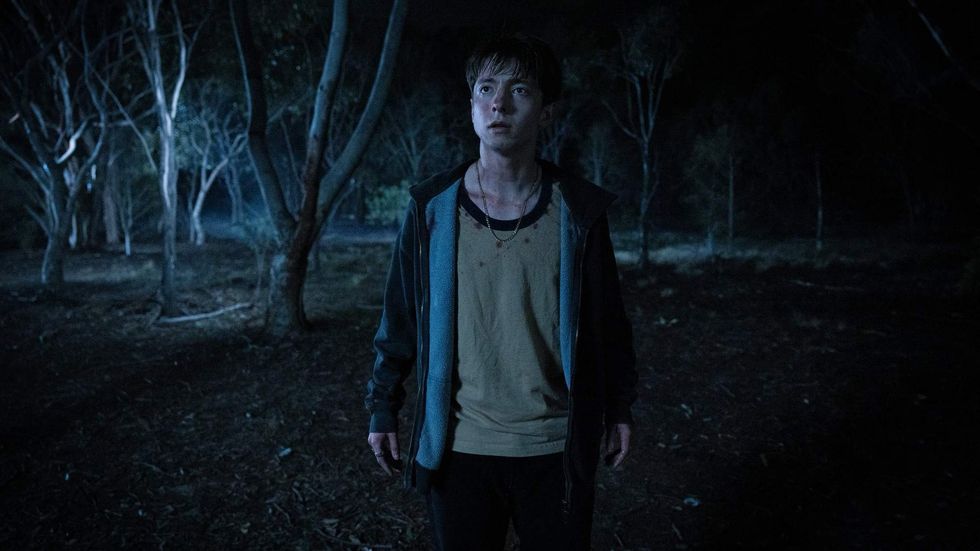
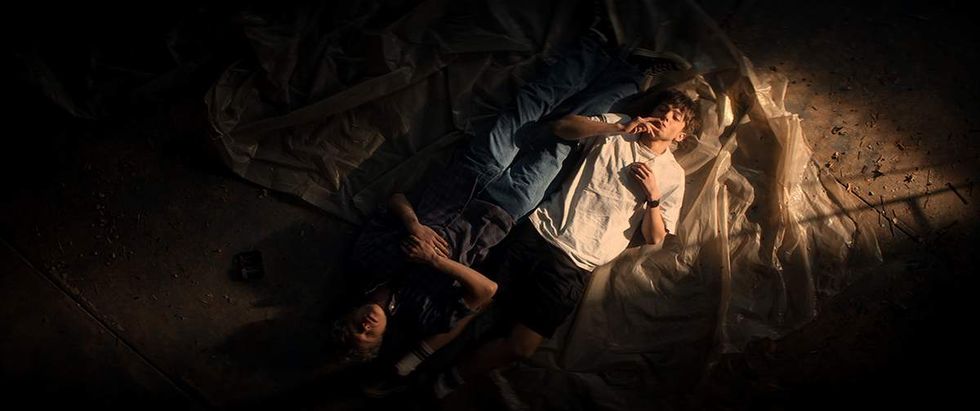
Leviticus stars Joe Bird and Stacy Clausen as high school classmates, Naim and Ryan, who, as the film opens, strike up a very boyish flirtation — tackling and razzing each other in anticipation of more intimate contact. But the teenage protagonists are destined for an even more earth-shattering coming-of-age experience than falling in love, as is made clear in the film’s bloody opening scene.
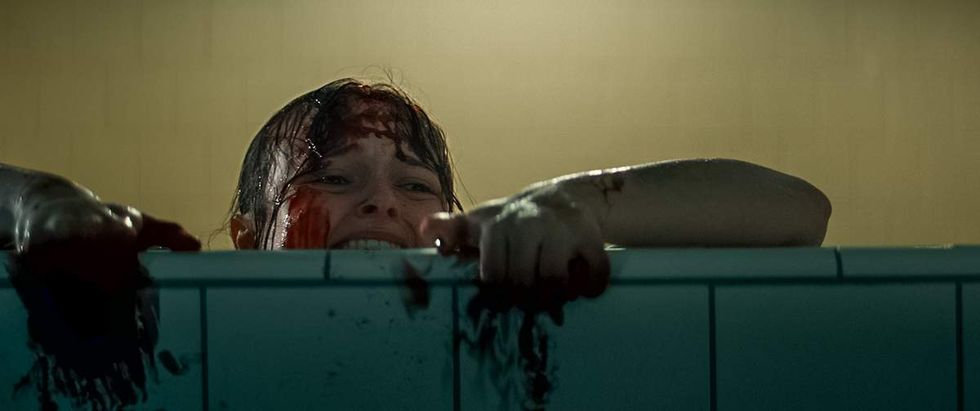
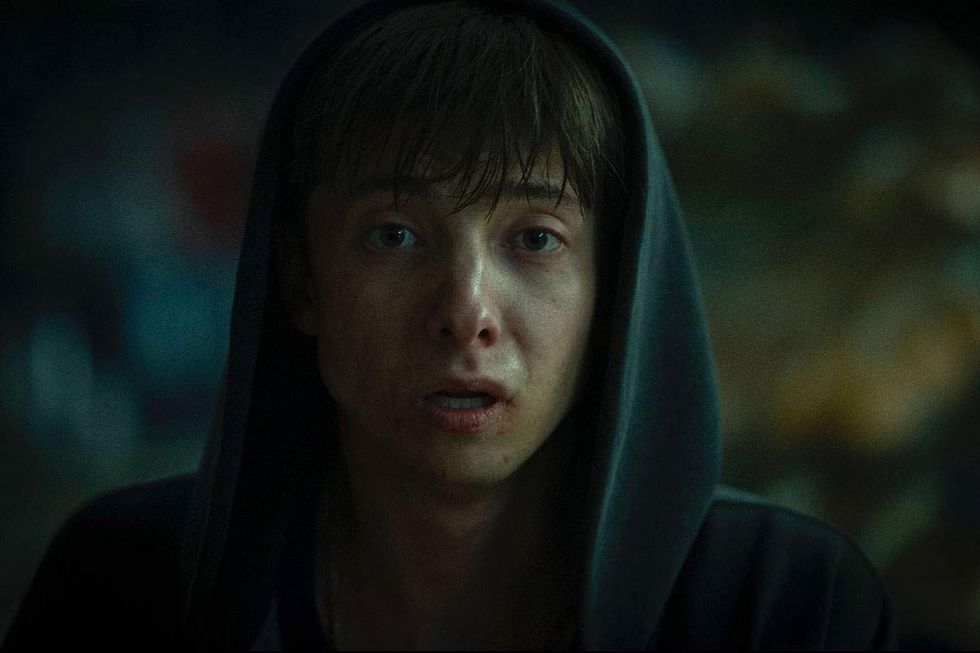
See, it turns out that the small town that Naim’s mother (Mia Wasikowska) has recently moved him to houses a pastor hellbent on ridding its boys of homosexual urges. And when Naim, already struggling with being the new kid in school, discovers the object of his affection has wandering eyes, he makes the horrifying error of informing on him. A few exorcisms-gone-bad later, and Naim and Ryan end up saddled with demonic stalkers who appear in the form of the person they want the most — each other, of course — and their teenage desires take on terrifying new dimensions.
The official synopsis: "Two teenage boys must escape a violent entity that takes the form of the person they desire most - each other."
Joe Bird in 'Leviticus'
Courtesy Neon
The film — named for the Old Testament chapter often cited as justification for anti-LGBTQ+ laws and doctrines — is certainly not the first to use conversion therapy as a vehicle for exploring the consequences of religious fanaticism and sexual repression. Just in recent years, titles from 2018’s Boy Erased to 2022’s They/Them have all put their spin on portraying the monstrosities of the practice. But there’s something both immensely fresh and timeless about Chiarella’s waking-nightmare approach, where internalized homophobia is given a literal role in the form of doppelgängers. And yet, amid the horrifying isolation that creates, the film manages to keep queer yearning and young love as its central considerations.
Shannon Berry in 'Leviticus'
Courtesy Neon
Leviticus knows that “sometimes, homophobia is a literal human trying to murder you,” Mey Rude wrote in an Out review of the feature following its Sundance premiere, calling it “exactly the kind of horror gem you hope to find at film festivals.”
“The film also perfectly balances its two genres, horror and coming of age. Both outside of the horror, and within, it sensitively and intimately explores the struggles and joys of teen love and exploration,” Rude wrote, adding that “it’s impossible to not root for [Bird and Clausen’s characters] to survive together.” “When the horror gets serious, the movie doesn’t abandon its romance or personal growth; instead, it ties the two together.”
Beyond onscreen chemistry — why ‘Leviticus’ deserves the nickname the ‘Heated Rivalry’ of horror
Joe Bird and Stacy Clausen in 'Leviticus'
Courtesy Neon
Despite being a highly original addition to the cannon, Leviticus has inevitably drawn comparisons to other titles in the highly derivative horror genre. The teenage-sex-has-consequences scenario has earned the film comparisons to indie horror hit It Follows, for example. And reviewers have also noted how well it fits in with recent Australian films like Talk to Me, which also starred Bird, and Lake Mungo that use supernatural scenarios to explore identity and repression, coming of age, and difficult (to say the least) family dynamics.
But it’s not just horror titles that Leviticus is being compared to. Amid the ongoing excitement surrounding the feature, it has been dubbed “the Heated Rivalry of horror” — a nickname Chiarella and his stars have graciously accepted, thanks, we assume, to Aussies’ characteristically good sense of humor.
Joe Bird in 'Leviticus'
Courtesy Neon
As Chiarella has pointed out, there are stark differences in everything from the worlds that the characters inhabit to the way that sexuality is represented in Leviticus and Jacob Tierney’s steamy hit series about queer hockey players. But there are some comparisons worth making, beyond the fact that both feature gay intimacy between lip-locking brunette and blond protagonists. On a deeper level, the projects have both been made possible by film industries outside the U.S. that are, and have been, finding success through platforming original projects from new creators and voices that are less and less welcome in Hollywood. And, perhaps even more importantly, they’ve still been able to attract positive, widespread attention at a time when the entertainment landscape, like the political one, is notably conservative and unfriendly toward LGBTQ+ viewpoints.
“I’ve noticed around the world, and part of the reason I made this film, this regression we’ve had in LGTBQ rights in the last decade or so,” Chiarella told IndieWire, regarding the film releasing in more than 1,000 U.S. theaters, in addition to its substantial Australian theatrical rollout. “It makes me a little anxious about releasing a film like this, but at the same time, it makes me excited because I feel like we need more of these kinds of stories. It’s been a while since I’ve seen an Australian film with a queer love story at its heart open this wide in my own country.”
How to watch ‘Leviticus’
In tandem with its Australian rollout, Leviticus releases in U.S. theaters nationwide on June 19 through Neon. And while the streaming date for the film hasn’t yet been announced, it’s sure to get platformed by one of the big players in the near future.
Until you get a chance to see Chiarella’s rumination on queer yearning for yourself, you can watch the trailer above, which gives a peak at the film’s nubile protagonists trading the excitement of young love for being stalked by stone-faced, but somehow still alluring, doppelgängers. If critics are correct, we’ll be talking about the romance horror well into next year, when awards season gears up, so it’s not one to be missed.
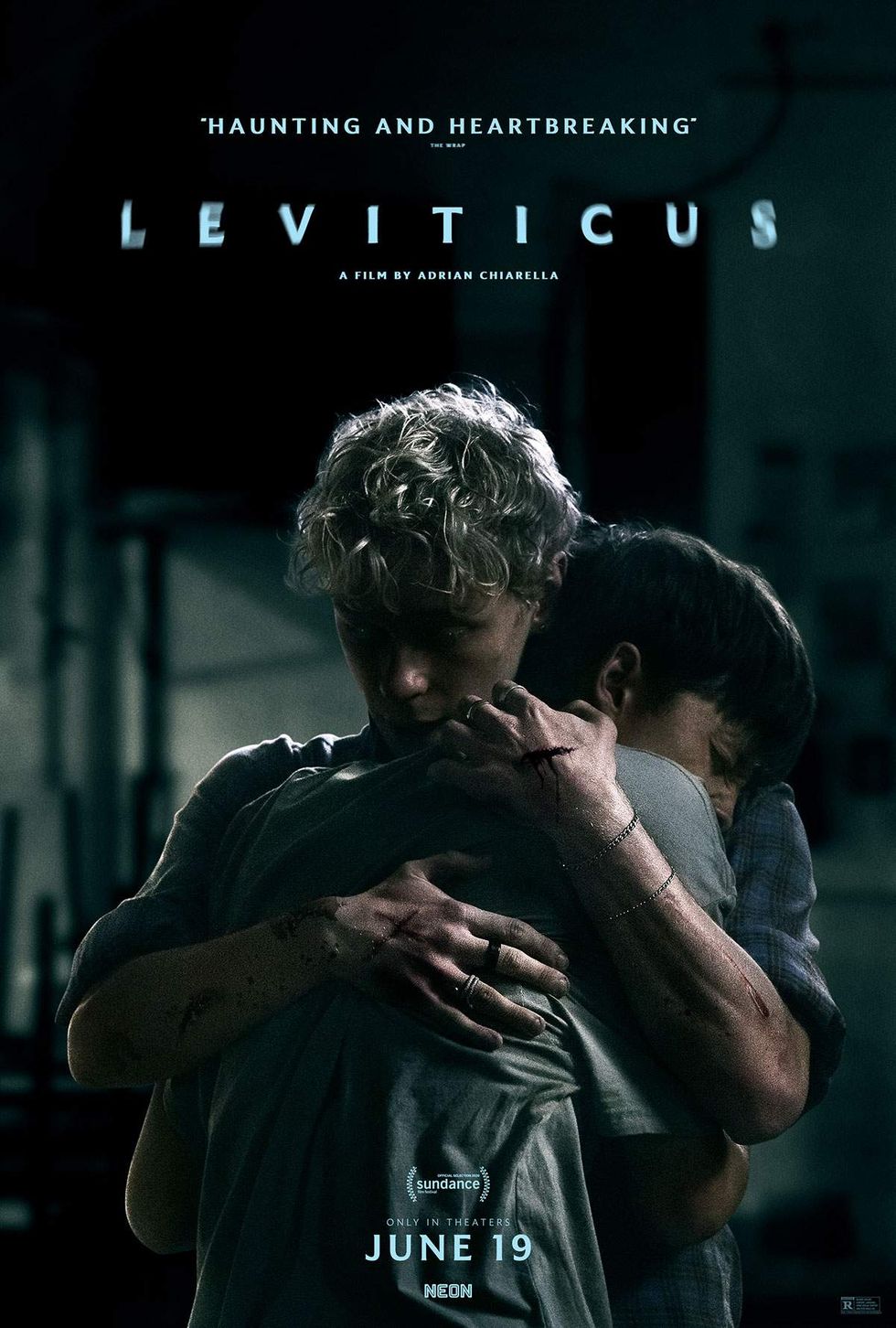
'Leviticus' poster
Courtesy Neon