










































“Alpine divorce” might sound like a chic way for the one percent to end their marriages while vacationing at a ski chalet in Gstaad, but in reality, it’s a dangerous new trend and a cruel way to end a relationship.
The term has been trending online since social media user @everafteriya posted a video on TikTok on February 18, with the caption, "POV: you go on a hike with him in the mountains but he leaves you alone by yourself and you realize he never liked you to begin with,” where a woman is seen sobbing as she hikes a rocky trail, calling it “the worst Saturday of my life.”
The video, which has more than 23 million views as of publication, sparked other women in the comments to admit their significant other had done this to them as well, and even mentioned a support group created for victims of an “alpine divorce.”
And while this trend is largely popping up on social media in reference to heterosexual relationships, there are reasons LGBTQ+ couples might be susceptible too.
But really, it has us wondering, are straight people OK?
What is an 'alpine divorce', and where did the term originate?
The term originated in the short story An Alpine Divorce by Robert Barr, which is about a husband who plans to end his marriage by pushing his wife off a cliff in the Swiss Alps. The phrase evolved to refer to the phenomenon of people abandoning their partner in the wilderness rather than directly breaking up with them.
“An ‘alpine divorce' is the disturbing practice of one partner abandoning the other in a remote, wilderness, or otherwise dangerous location as a way of ending a relationship without a formal breakup or divorce proceeding,” divorce and family law attorney Andrew L. Hope told Out. “Rather than having a difficult conversation or navigating the legal and financial complexities of separation, one partner simply leaves the other to avoid confrontation.”
When @everafteriya’s video went viral, it sparked other women to share stories of being stranded in the wilderness by their partners, often without adequate gear, supplies, reliable communication, or a way home.
And the trend isn’t isolated to the U.S.; there was also a recent case in Austria where a man was convicted of gross negligent manslaughter and received a suspended five-month prison sentence and fined roughly $11,300 after abandoning his girlfriend on the top of a mountain where she died of hyperthermia.
According to Hope, the “alpine divorce” trend has “become a troubling intersection of relationship abuse, abandonment, and conduct that could raise serious legal concerns, including reckless endangerment.”
Why would someone do this to someone they are dating or married to?
Someone who would choose to leave their partner in a dangerous situation instead of having an adult conversation is probably trying to avoid the emotional fallout of a divorce and doesn’t care that their actions are cruel and could lead to their partner getting hurt.
“They want to break up but are not mature enough to just be direct about it,” said divorce attorney John Nachlinger, who has represented hundreds of LGBTQ+ clients over the years. “They clearly want to make the other person so upset and abandoned that they will also want the relationship to end. It is selfish and childish, but these are the same people who used to break up by text or just ghost someone after months or years of dating.”
Stella Ong, a queer therapist and cofounder of LightingWay Counseling & Therapy, said that in her experience, a person who does this is likely dealing with “severe conflict avoidance” and feelings of guilt they can’t handle.
“The person likely felt unable to face confrontation so much that they would rather create a dangerous situation than have a conversation about ending the relationship,” she said. “There may often be an underlying fear of confrontation, or difficulty tolerating guilt of ending things.”
What are the warning signs?
 Why would someone do this to someone they are dating or married to? Aleksey Matrenin/Shutterstock
 The women who have made videos about “alpine divorce” on TikTok talk about being surprised that their partner would do this to them, and while a dangerous breakup may catch you off guard, there are warning signs you can be on the lookout for.
If your partner has ever monitored your movements, tried to isolate you from friends and family, exerted financial control, or tried to coerce you, they may also be the type of person to leave you behind in the woods without warning.
“One warning sign could consist of a partner suddenly becoming enthusiastic about a remote or isolated trip when that type of activity is out of character for them,” Hope said. “You might also notice growing emotional distance alongside increased logistical control over your daily life. Another could be a partner’s discouragement of telling others about the trip, keeping the itinerary vague, withholding the trip from friends and family, or even insisting on controlling all navigation tools, maps, or communication devices without giving you independent access.”
You should also trust your instinct if your partner is overly enthusiastic about a remote or isolated trip or activity when they’ve never expressed an interest before, and you’re worried it might end badly for you.
“‘Alpine divorce’ doesn’t happen out of nowhere,” Hope continued. “By the time a partner is willing to leave someone stranded in a wilderness setting, there has almost always been a prior history of control, manipulation, or cruelty within the relationship. Recognizing warning signs earlier in a relationship’s deterioration can prevent situations from escalating to literal danger. Outdoor safety and relationship safety are intertwined. The wilderness safety community and domestic violence advocacy community need to collaborate more because the overlap is real."
Are LGBTQ+ people more likely to engage in or experience ‘alpine divorce’?
There are no statistics showing that LGBTQ+ people experience “alpine divorce” more or less than their heterosexual counterparts, but it may be more likely to happen in places where queer people have fewer legal protections and leaving a relationship is more complicated. Ong said that the “minority stress” that queer people face could also contribute to them leaving their partner in the wilderness instead of getting a divorce or breaking up with them in a healthy way.
“The cumulative impact of discrimination and navigating a heteronormative world may sometimes interfere with the development of healthy conflict resolution skills,” she said. “Some queer folks might feel more trapped in relationships and they don’t know how to leave properly, but extreme avoidance like alpine divorce is really more about individual psychology, not identity.”
Nachlinger believes that everyone, regardless of sexual orientation or gender identity, could become the victim of an “alpine divorce.”
“For all that some in the straight community like to think our relationships and marriages are different or not entitled to be recognized, LGBTQ+ relationships are exactly like any other,” he said. “Someone who would do this clearly lacks empathy or care for you. That can happen in any relationship. This is just another passive way to break up without facing reality with dignity.”
What should you do if you think your partner might do this to you?
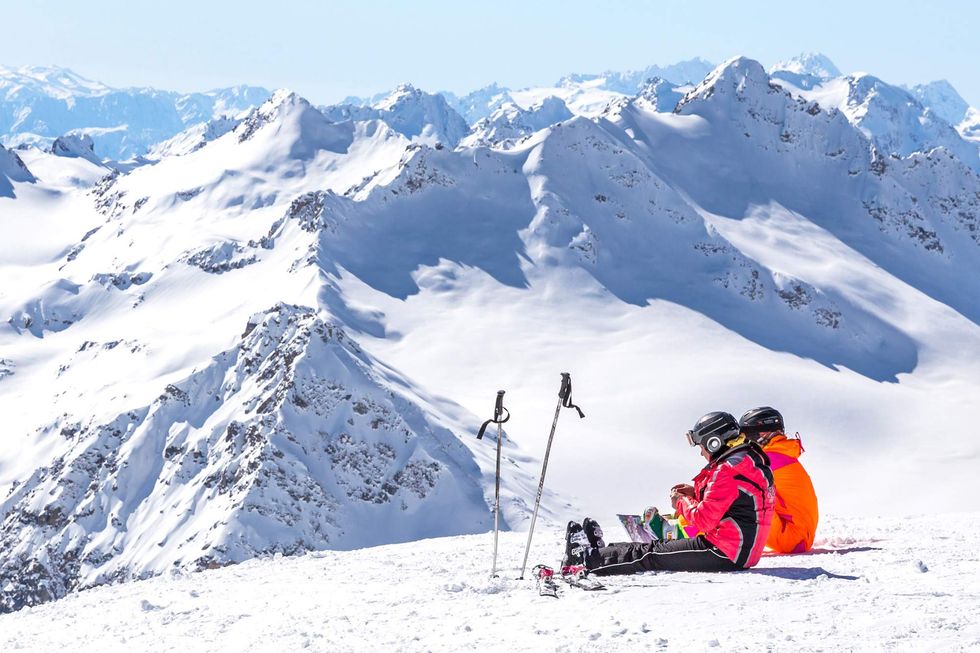
What should you do if you think your partner might do this to you?
mariakray/Shutterstock
Regardless of relationship status, you should never go to a remote location with someone you don’t trust. So if something seems off, trust your instincts and stay home.
“You will need to prioritize immediate safety planning,” Ong recommended. “Don’t go for the trip, and if you are worried that your partner might endanger you instead of having a direct conversation, the relationship may benefit from ending with support, e.g. from a therapist or trusted friends and family.”
As a divorce attorney, Nachlinger said your best bet is to break the relationship off yourself if you are worried that your partner might do something like this. “The feeling that your spouse might try to hurt you is your cue to remember that you only live once, and another relationship might be a little healthier for you,” he explained. “Many people stay in bad relationships because they are fearful of the future or have low self-esteem (often caused by their partner).”
But if you do decide to ignore your instincts and take that trip or go on that hike anyway, make sure you carry your own navigation and communication devices as well as your own water, food, and emergency supplies so that if your partner leaves you behind, you can get back home safely. And make sure someone you trust knows where you’ll be going in advance.
If you feel unsafe in your relationship, contact the National Domestic Violence Hotline at 1-800-799-7233.
Sources cited:
Andrew L. Hope, a divorce and family law attorney.
Stella Ong, a queer therapist and co-founder of LightingWay Counseling & Therapy.
John Nachlinger, a divorce attorney who represents many members of the LGBTQ+ community in legal issues, including adoption, name change, divorce, and parental rights.