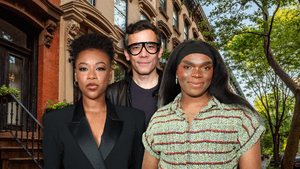
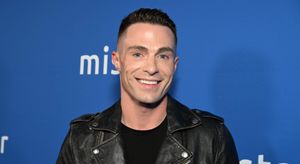
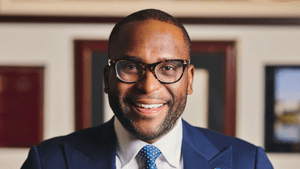
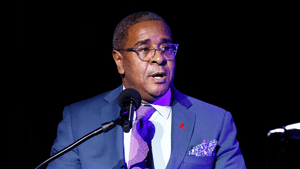
Michigan Attorney General Dana Nessel; California Attorney General Rob Bonta; New York Attorney General Letitia James
Courtesy Pictured; Sheila Fitzgerald/Shutterstock; lev radin/Shutterstock
Nine Democratic state Attorneys General have vowed to do "whatever it takes" to defend the rights of transgender youth as the school year begins.
A new video campaign from the National Women's Law Center features Rob Bonta (California), Anthony Brown (Maryland), Andrea Campbell (Massachusetts), Charity Clark (Vermont), Keith Ellison (Minnesota), Letitia James (New York), Kathy Jennings (Delaware), Dana Nessel (Michigan), and Dan Rayfield (Oregon) each stating "I promise to fight for trans students."
"We will continue to hold this federal administration accountable, fighting to protect your rights, to protect access to health care, and so much more," the AGs take turns reciting. "When it comes to keeping trans youth safe, we will do whatever it takes. We are protecting our hospitals and clinics to provide the care that you may need. We won't look away if students are facing hostile learning environments, and we will hold schools accountable under our state laws."
"As the school year starts, we want you to remember: You belong here. You inspire us. And we do love you," they conclude. "So, have a great school year and know that you've got some people who have your back."

Donald Trump signed an executive order attempting to ban gender-affirming care for people under 19 shortly after taking office, which a federal judge blocked in February after finding that it is likely unconstitutional. Twelve states filed a separate lawsuit in August, asserting that the care is legally protected under their laws and the order violates states’ rights guaranteed by the 10th Amendment.
Despite the care being protected under state laws, providers in California, Connecticut, Colorado, Illinois, Michigan, and more have discontinued their programs, citing the Trump administration's threats. After University of Michigan Health stopped providing gender-affirming care for youth, Nessel warned it to reconsider or her office would be "considering all of our options" for legal action.
“There is broad support throughout the nation to resist the administration’s attacks on trans students,” Fatima Goss Graves, National Women’s Law Center’s president and CEO, said in a statement. “These young people — our children — continue to be bullied by the administration and other extremists in ways that threaten their education and even their existence."
"Even as Donald Trump has rolled back civil rights enforcement, many states are stepping up to hold schools accountable and ensure every child can learn in an environment free from discrimination," she continued. "Students need to know there are people who have their back and will never stop fighting for their right to learn in safety and dignity.”
Mary Trump believes her uncle's signature on a card to Jeffrey Epstein is authentic.
Matthew Horwood/Getty Images; Andriy Blokhin/Shutterstock
The out lesbian niece of Donald Trump has no doubts that it's his signature on an alleged raunchy birthday card sent to Jeffrey Epstein.
Democrats recently revealed the card, which the Wall Street Journalfirst reported on in July but did not show, after Trump and officials in his administration continually called it a "hoax." Mary Trump has since weighed in, stating she believes the card to be authentic.
“That’s definitely his signature,” she wrote in a post on X, formerly Twitter. “Just saying.”
— (@)
Trump allegedly sent the card to Epstein for his 50th birthday in 2003, according to the WSJ report. It includes a hand-drawn sketch of a naked woman with Trump’s signature placed along her pubic area to mimic hair, with text stating that the two share “certain things in common" and wishing Epstein “another wonderful secret."
The card features an imaginary conversation between the two men written in third person. It reads as such:
“Voice Over: There must be more to life than having everything,” the note began. Donald: Yes, there is, but I won’t tell you what it is. Jeffrey: Nor will I, since I also know what it is. Donald: We have certain things in common, Jeffrey. Jeffrey: Yes, we do, come to think of it. Donald: Enigmas never age, have you noticed that? Jeffrey: As a matter of fact, it was clear to me the last time I saw you. Trump: A pal is a wonderful thing. Happy Birthday — and may every day be another wonderful secret."
Trump filed a lawsuit against WSJ, as well as its parent company News Corp and owner Rupert Murdoch — who also owns Fox News — after the outlet published the article. The lawsuit, filed in southern Florida, seeks more than $20 billion in damages for defamation.
The White House has repeatedly denied the card's authenticity, with Press Secretary Karoline Leavitt most recently saying that "it’s very clear President Trump did not draw this picture, and he did not sign it."
Epstein died in jail in 2019 after being charged with sex trafficking conspiracy. He had long been accused of sexually abusing underage girls, with allegations that his prominent friends had been involved as well. His longtime associate, Ghislaine Maxwell, was sentenced to 20 years in federal prison for her complicity in child sex trafficking.
Even though Trump has claimed to be “not a fan” of Epstein, the two men with frequently photographed together in the 1980s and ’90s. Trump told New York Magazine in 2002, “I’ve known Jeff for 15 years. Terrific guy. He’s a lot of fun to be with. It is even said that he likes beautiful women as much as I do, and many of them are on the younger side."
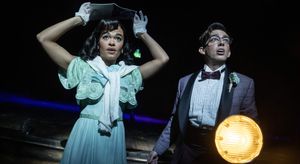
Broadway actors Javier Muñoz (Hamilton) and Peppermint (Head Over Heels) on Capitol Hill to lobby Congress against cutting HIV prevention and treatment funds (September 3, 2025).
Morrison Media Group
Before Congress can cut crucial funding for HIV prevention and treatment, Broadway stars Javier Muñoz and Peppermint are making them listen to the people who will be impacted.
Muñoz, best known for starring as Alexander Hamilton in Hamilton, and Peppermint, runner-up on season nine of RuPaul’s Drag Race and the first out transgender woman to originate a principal Broadway role in Head Over Heels, met with Democrat and Republican lawmakers alike on Wednesday afternoon to persuade them not to vote for a budget they warned will "eviscerate" government programs dedicated to HIV.
For Muñoz, an out gay man who has been living with HIV for over 20 years, it could be a matter of life or death.
"This is not something that is outside of my existence or my life. This is my life, this is my health, this is my future," Muñoz tells The Advocate. "This is my ability to actually maintain breathing and living and access to my treatment on a daily basis."
The House Appropriations Committee recently released its FY26 funding bill, which would cut HIV treatment and prevention by $1.7 billion — cuts much steeper than even those initially proposed by Donald Trump. This would revoke over $1 billion through the U.S. Centers for Disease Control and Prevention, including $220 million from the president's Ending the HIV Epidemic (EHE) initiative.
The proposed budget would slash the budget for the Ryan White CARE Act by 20 percent ($525 million), ending grants to over 400 clinics that provide care. It would also threaten the President’s Emergency Plan for AIDS Relief, the global program started by Republican President George W. Bush in 2003 which has saved an estimated 26 million lives; Medicaid, which provides health insurance for 40 percent of Americans living with HIV; and access to prevention drugs such as pre-exposure prophylaxis, or PrEP.
This would destroy "any advancement, things that are on the horizon, things that might put us towards closer and closer towards ending this virus," as Muñoz describes it; advancements such as combination therapies, one-pill-a-day treatments, and "the fact that I have no side effects with my medication."
Broadway actors Javier Muñoz (Hamilton) and Peppermint (Head Over Heels) on Capitol Hill to lobby Congress against cutting HIV prevention and treatment funds (September 3, 2025).
Morrison Media Group
"They will put us back to where we started. We will be back to HIV wards — AIDS wards — in hospitals," Muñoz says. "We will be dwindled down. We will watch our loved ones die again, and it is completely needless. We are in the position to do more and better, and it's inexcusable to even have these cuts on the table."
The U.S. House of Representatives and Senate have not yet voted on the cuts, but must do so before the end of the fiscal year on Sept. 30. Until that happens, Peppermint is urging others to "take advantage of these services while you have them" by utilizing the clinics near them and "routinely getting checked" for STDs.
"After nearly 30 years living in New York City, I've really been proud of the things I've been able to do, and that is in huge part thanks to my being able to identify as a trans woman and have matching documents, matching paperwork, matching IDs, and then also the healthcare that I was able to utilize," Peppermint says. "The healthcare services that I was able to utilize in times when I was flying high on a TV show or on Broadway, but also times when I was in between jobs and wasn't able to work."
Those who wish to speak directly to the budget cuts should "reach out to local politicians," Muñoz advises, as he says "the only way we're going to really apply pressure is to say to these elected officials who are going to vote for these cuts, 'We will vote you out.'"
Both actors are aware of the significance their meetings hold as they represent LGBTQ+ people at a turning point for the community. They hope their personal experiences can sway the hearts of some lawmakers, as Peppermint notes "they might not always have the opportunity to connect with their constituents in this way." For Muñoz, the opportunity forces politicians to confront the reality of what they're doing.
"Look at me dead in the eye and tell me I don't deserve to live," Muñoz says. "Tell me that right now, because I am exactly the person who's going to be directly affected by these cuts."
Joe Biden and his team announced this Sunday, May 18 that the former President of the United States has been diagnosed with prostate cancer. On social media, Biden's running mate and Vice President pick Kamala Harris shared an emotional post about this health update. Biden's main political opponent, Donald Trump, has also chimed in.
"Doug and I are saddened to learn of President Biden's prostate cancer diagnosis. We are keeping him, Dr. Biden, and their entire family in our hearts and prayers during this time. Joe is a fighter — and I know he will face this challenge with the same strength, resilience, and optimism that have always defined his life and leadership. We are hopeful for a full and speedy recovery."
Another high-profile reaction to Biden's diagnosis came from his biggest political opponent in the 2020 and 2024 presidential campaigns: Donald Trump.
The current president wrote on Truth Social:
"Melania and I are saddened to hear about Joe Biden's recent medical diagnosis. We extend our warmest and best wishes to Jill and the family, and we wish Joe a fast and successful recovery."
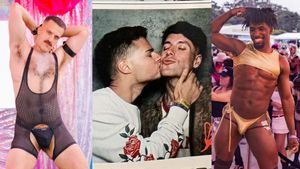
Adult stars Tony Genius, Jordan Starr, and Dom King.
Mile High Entertainment / Carlos Salazar / Men.com
The biggest names in the industry are clapping back.
Adult stars Tony Genius, Jordan Starr, and Dom King.Mile High Entertainment / Carlos Salazar / Men.com
President Donald Trump has not been shy about his goal to demonize drag queens and the LGBTQ+ community and ban pornography. Since Project 2025 was first published, it became clear that adult content was on the chopping block, and so far, the new administration hasn’t wavered from this goal.
On May 8, Republican Sen. Mike Lee of Utah has introduced the Interstate Obscenity Definition Act (IODA) which would band porn of any kind at the federal level if passed. Backed by the Heritage Foundation, the architects behind the draconian Christian nationalist policy plan, Project 2025, the bill would redefine “obscenity” in the broadest possible terms so that everything from explicit adult content to more tame scenes in traditional films could be considered smut, MSNBC reports.
Like every Republican who has tried to codify censorship into law, Lee claims the goal of IODA is to protect children. Adult content creators have known that conservatives were planning to threaten their livelihood, even creating a “Hands Off My Porn” campaign to try and sway young men to vote for former Vice President Kamala Harris. Much like porn stars and creators predicted, Lee and the Trump administration are using Project 2025, which says porn is to blame for the “propagation of transgender ideology and sexualization of children,” to try to outlaw porn all together. The bill would target the creators and distributors of pornography, paving the way for a nationwide ban and punishing the tech companies that try to continue publishing adult content, ignoring Supreme Court precedent.
But what do LGBTQ+ adult performers and content creators think about IODA, the Trump administrations obsession with banning porn, and how it will impact their careers? Keep scrolling to find out!
PRIDE: The Senate has proposed the Interstate Obscenity Definition Act (IODA), which would prosecute people for sharing or hosting content deemed to be sexually explicit. What do you think about the bill?
Jkab Ethan Dale: The bill is completely unnecessary—and very scary. We already have the Miller Test, which is the national standard for determining whether material is legally “obscene” in the United States. This new bill is a way for the far right to gain more power through vague language, and it’s further proof that they do not care about the Constitution. It’s a direct threat to the First Amendment and will heavily impact marginalized communities. It’s also more evidence that Project 2025 is real, and we all need to work together to stop it.
Do you think IODA amounts to a ban on pornography? Why?
With the current administration, anything is possible—so yes, this could absolutely lead to a ban on pornography. The language used to determine what is or isn’t “obscene” in the bill is so vague that it could be interpreted to target LGBTQ+ identities, sexual education, and more. They’re not even being subtle—they’re openly calling it an anti-porn bill. This bill directly aligns with their Project 2025 agenda, which takes an uncompromising stance against all forms of pornography.
How will this impact your livelihood if it passes?
I’m a full-time content creator. This could end my current business and completely change my entire life. I’m scared. Whether or not the bill passes, we’ve already seen this administration show open defiance toward the checks and balances within our system. The way they fight and attack is deceptive—and dangerous to our democracy.
What are your thoughts about how the Trump administration is attacking adult films?
With GOP leaders controlling both the House and the Senate, I do think this bill has a real chance of passing—ultimately enforcing the most conservative interpretations of speech and morality across the country. That’s why we all need to stay informed and call our local representatives to make it clear that we stand against this infringement on our First Amendment rights to free speech and expression.
This is also a powerful reminder of why local elections matter—and why we have to keep fighting back.
Jordan Starr: This bill is really dangerous for people like me who work in the adult industry. It’s part of a bigger effort from some politicians to ban porn and control sexual expression. One of the main backers, Senator Mike Lee, has been trying to push this kind of thing for years, and now, with Trump and his team (especially the folks behind Project 2025) back in the spotlight, they’re feeling more confident to go after us.
Legally, there’s a difference between “porn” and “obscenity.” Porn is protected by the First Amendment. Obscenity isn’t. Since the 1970s, courts have used the “Miller Test” to decide what counts as obscene. It’s not perfect, but it’s helped keep adult content legal. This bill tries to change those rules so that way more porn can be labeled “obscene,” which could make it illegal.
Basically, they want to shut down adult content by changing definitions—without coming right out and saying “we’re banning porn.” It’s a sneaky, extreme move that goes against freedom of speech and artistic expression. It’s all part of a bigger push to enforce a Christian nationalist agenda.
Do you think this bill could eventually lead to a ban on pornography?
It’s important to understand this bill doesn’t say it’s banning porn directly—because that would be obviously unconstitutional. But it tries to change what counts as “obscene,” which could mean that a lot of what we currently call porn could be reclassified and taken down. So while it’s not a direct ban, it could still have the same effect—shutting down content, censoring creators, and scaring platforms and companies into not working with us anymore.
How will this impact your livelihood if it passes?
If this bill passes, it could be the end of my career and the careers of thousands of other performers, creators, and workers in the adult industry. Websites could stop hosting our content. Credit card companies might cut ties with us. Platforms we rely on could shut down. This bill puts everything we’ve built at serious risk.
What are your thoughts about how the Trump administration is attacking adult films?
Honestly? It’s ridiculous. The people pushing this act like adult films are some big threat, but they’re ignoring the fact that this is a real, legitimate industry with real people making a living. We tell stories. We connect with our audiences. We make art, even if it’s sexual. Trying to silence us like this is a joke—but it’s also dangerous.
Dom King: It’s a broad and unnecessary bill. “Obscenity” is subjective, and giving the government power to define it risks censoring content that’s fully legal.
Do you think IODA amounts to a ban on pornography? Why?
It could. Adult content is usually the first target when vague laws like this are passed.
How will this impact your livelihood if it passes?
It would directly impact it. This kind of bill puts the work I do—and the platforms I use—at risk. It’s also how a lot of people pay their bills and support themselves and their families.
What are your thoughts about how the Trump administration is attacking adult films?
It fits with the Project 2025 agenda—a push for more control over media. Adult content is just the starting point.
Tyler Saint and Ace Banner: Well, I’d love to see their browser history! Clearly, this bill is a simple infringement on free speech. It’s gross overreach by the government to regulate our bedrooms.
Do you think IODA amounts to a ban on pornography? Why?
I don’t think it will. It’s a transparent page from Project 2025 engineered by the Heritage Foundation to reshape American culture, but the implications go far past just pornography. The definition of obscenity already exists with the Miller Test, but this is a clear attempt at an end-around and opens up the definition of obscene to almost anything that is beyond a G rating. I’m not sure bros and horny dads want to lose their Game of Thrones! The bill seems to be rebuffed on both sides of the isle so far.
How will this impact your livelihood if it passes?
If it passes, we’d have to find a work around. Our studio has already made moves to transfer operations to another country. Our fans platforms are already heavily regulated, but delivered from other countries. Unless they shut down all internet, porn will still get through. The human desire is too strong…plus, I like to think we make good shit that people seem to want to watch. We’d find a way.
What are your thoughts about how the Trump administration is attacking adult films?
It’s blatant pandering to the base. Trump has high marks from people who hate what he hates. Otherwise, it’s not a popular position and there’s no way it passes the smell test in the judiciary….as long as they hold. However, just like abortion and trans issues, they’ll keep hacking away. This is just the test case to see how much the public can tolerate. Lee is an expendable member of congress in a reliably red district. If he gets voted out because of it (which he won’t), there’ll be another one behind him to keep trying. They lose nothing for the effort. The fight is just beginning.
Tony Genius: This bill demonizes legal consenting adults and tries to shame our work as immoral. This is in clear violation of our freedoms of expression through art and must never pass!
Do you think IODA amounts to a ban on pornography? Why?
I do believe that bills like these are funded by companies with an agenda to control others through religious morality. the more they try, the more they gain support for these legislative agendas. Our freedoms are being stripped from us, and even those who support these actions today, may be the victims of the actions tomorrow.
How will this impact your livelihood if it passes?
I would be fighting for my freedom because nothing they are presenting will stop me from my expression!
What are your thoughts about how the Trump administration is attacking adult films?
We all knew the ties between Trump and Project 2025, and we have been preparing for the actions of this administration to disappoint us all with far reaching government control and censorship.
King Dwarf: As someone who works in the adult film industry, I see the Interstate Obscenity Definition Act (IODA) as a serious threat—not just to my livelihood, but to free expression and the rights of consenting adults across the country. On a personal level, it’s frightening. This bill seems to criminalize the work I do, even though it’s legal, consensual, and involves adults choosing to engage with and create sexual content. It treats that work as inherently harmful or dirty, without acknowledging the humanity, agency, or professionalism of those of us in the industry.
Do you think this bill could eventually lead to a ban on pornography? Why or why not?
I absolutely think the IODA could lead to a ban on porn—or at the very least, make it nearly impossible to create, share, or access it legally in the U.S. Even if it doesn’t say “porn is banned,” the way it’s written gives the government way more power to decide what counts as “obscene,” without the usual protections we’ve relied on. Right now, there are rules that help protect what I do as free expression—especially if it has artistic value, or if it reflects the standards of specific communities. This bill wipes that out and replaces it with a stricter, one-size-fits-all moral definition. That’s terrifying, because once you change the legal standard, it’s easy to start applying it to all kinds of porn. Suddenly, what I film or post—even if it’s consensual, legal, and made by adults—could be labeled “obscene” and criminal. And when that happens, platforms that host our work, payment processors, even social media companies will panic. They’ll kick us off just to be safe. We’ve seen it before—after SESTA/FOSTA, a lot of sex workers lost access to the internet almost overnight.
How will this impact your livelihood if it passes?
If the IODA passes, it could devastate my livelihood. Right now, I earn a living by creating and distributing adult content—content that’s legal, consensual, and made for adults who choose to view it. If this bill becomes law, that could all be at risk. Even before the law is enforced, platforms I rely on—OnlyFans, JusrFor.Fans,—might shut down adult content to avoid liability. Payment processors like Visa and Mastercard might follow, as they’ve done before when they feared legal trouble. No platform = no income stream. If the definition of “obscene” content is broadened and federalized, there’s a real chance I could be criminalized just for doing my job. That includes filming, posting, or even sharing behind-the-scenes content. The threat of jail time, fines, or getting caught in a legal fight is chilling—not just for me, but for everyone in this space.
What are your thoughts about how the Trump administration is attacking adult films?
As someone working in the adult film industry, I find the Trump administration's recent actions deeply concerning. The administration has supported legislation that could criminalize the production and distribution of adult content, such as the Interstate Obscenity Definition Act (IODA). Additionally, the administration's backing of initiatives like Project 2025, which includes proposals to ban pornography and prosecute those involved in its production, signals a significant threat to our livelihoods and freedom of expression. These measures not only jeopardize our ability to work safely and legally but also risk pushing the industry underground, where performers may face greater exploitation and fewer protections. It's essential to recognize that adult content is a form of expression and that those involved deserve the same rights and protections as workers in any other industry.
Dallas Steele: This bill isn’t surprising. The current administration has emboldened the extreme right to go after everything from abortion to marriage equality to immigrant rights and now, this attack on free speech. The courts have made clear that pornography IS protected by the First Amendment. But even if this were to become law and later, overturned by the Supreme Court, we have no guarantee this administration will follow the order. Look at how many court orders they’ve failed to follow already.
Do you think IODA amounts to a ban on pornography? Why?
Republicans love porn too, though most would never admit it publicly. I don’t see this bill going anywhere. They’ll say ‘I support the idea, but our Constitution is clear about this.” And ultimately, if it did pass, Trump — a fan of escorts and by extension porn, would be unlikely to sign it, knowing it would most certainly end-up before the Supreme Court and overturned as unconstitutional.
How will this impact your livelihood if it passes?
Obviously if this were to become law, it would be devastating to a multi-billion dollar industry and the hundreds of thousands of people who make a living with adult content. The second effect, would be the creation of an underground industry, endangering women and children — the very people republicans claim they want to “protect.”
What are your thoughts about how the Trump administration is attacking adult films?
I don’t think Trump personally opposes porn but what’s scary is his willingness to cooperate with the extremists in order to gain even more power. We’ve seen it multiple times. He’d throw his best friend under the bus to make a buck or bolster his power.
Alfonso: I think is a sensationalist exercise that goes on theme with the actual administration.
Do you think this bill could eventually lead to a ban on pornography? Why or why not?
It could if the Senate approves it. I don’t think it goes through tho, that would impact the economy of a lot of people and the USA can’t really afford affecting the economy even more right now.
How will this impact your livelihood if it passes?
Honestly it would affect me more emotionally as an Artist and a creator than economically, because at the time I couldn’t really say that I live just from producing porn. I guess I would have to keep doing my work out of the States, I just don’t see me quitting this lifestyle. Porn has been big part of my life for almost 10 years now, way before I started being in front of the camera. It’s where my favorite network of people thrives.
What are your thoughts about how the Trump administration is attacking adult films?
I guess it makes sense. It has always been part of the conservative speech to ban different expressions of art. The thing with porn is that it’s an easy target because it shares a thin line with sex work. Nothing wrong with it, but there’s people that just can’t stand liberal arts or sex work. They care too much and they really think they’re doing the right thing by banning stuff instead of debating it.
Benvi
Credit: NextDoor Studios
PRIDE: What do you think about the bill?
Benvi: As a sex worker, I’m clearly not fond of the proposed bill. It was all laid out in Project 2025 though. I’ve just been waiting for this threat to come to fruition much like many others mentioned in Project 2025.
Do you think IODA amounts to a ban on pornography? Why?
I don’t think the establishment that currently run our country would abolish a billion dollar industry completely. It may become a lot more restrictive going forward but I have hopes that it won’t be completely erased. Because ultimately The industry contributes greatly to our economy.
How will this impact your livelihood if it passes?
With everything else the current establishment is getting away with, I’m incredibly worried for the future of my peers and I. A nationwide criminalization of porn would lead to so many people losing their entire livelihood, not just models or creators either. There’s so many people involved in the production side of this industry! It’s a very scary time for all of us right now.
What are your thoughts about how the Trump administration is attacking adult films?
I think it’s incredibly weak of this administration to directly attack not only the porn industry but every single marginalized community in our country. My hope is that those who feel they haven’t yet been targeted, realize this and stand by our side before it’s too late. Also, the Bible Belt consumes more pornography than the rest of the country so I’m really hoping that will be taken into consideration when they take it to the polls.
Jaq Quicksilver: Somewhere online I found this image — two men have protest signs that say "decent men protect indecent movies." I don't know the origins of this photo, but they were damn right. A discerning citizen can see that IODA is not just an attack on pornography but an attack on the right to think and to speak to each other.
Do you think IODA amounts to a ban on pornography? Why?
The proposed IODA is an attack on one of the basic rights of citizens of the United States. I do believe that one of its intended uses is an attempt to outright ban pornography, because it's straight out of the Project 2025 playbook. The writers and proponents of Project 2025 have outright stated one of their goals is to outlaw the creation and consumption of "obscene" media, from pornography to basic medical information for LGBT people.
How will this impact your livelihood if it passes?
The passage of this act would severely jeopardize my livelihood and my ability to support myself. Over 50% - maybe even up to 90% - of my income is from sales in the United States. Consumers are already measurably put off by state-level ID-requirement laws, preferring to go to less ethical websites from abroad, which don't require identification from consumers OR producers. I cannot imagine this would get better if the federal government decided to throttle access or even collect private information from porn consumers. My hard-earned financial freedom would be in tatters.
What are your thoughts about how the Trump administration is attacking adult films?
I think the Trump administration's attacks on adult films are despicable Christifascist power grabs... Not to be too blunt about it! This administration is using everything it can - from more conventional methods like IODA to shock-and-awe waves of Executive Orders - to erode the rights of citizens and to disempower us. They use the smokescreen of "obscenity" to attack transgender people, LGBT rights, women's rights, and the freedom of speech as a whole.
Damien King: I think on the surface that the bill is a blatant violation of the First Amendment and a breach of the separation of church and state. I also think that it lays the groundwork for a much broader attack on LGBT+ representation in the media.
Do you think IODA amounts to a ban on pornography? Why?
I think that that is the ultimate goal of republicans, yes. But I don’t think that such a ban is likely, particularly because it is a more fringe idea. But I’ve been wrong before, so I’m also not being complacent.
How will this impact your livelihood if it passes?
I’m very fortunate to have a primary source in a different sector, but it would put a dent in my discretionary spending. I do worry for my friends in the field whose primary source of income is adult films.
What are your thoughts about how the Trump administration is attacking adult films?
I think that this goes beyond the Trump administration — not that he’s blameless. I think it’s rooted in the discomfort with sex that’s deeply rooted in conservative ideology. Their goal, at the end of the day, is that sex only leads to procreation. Any sex or portrayal of sex — be it gay/lesbian or even straight but utilizing contraception - that is purely for enjoyment and not for procreation is under threat from them. As much as we,LGBT+ people will be the first to be attacked, we will not be the last.
Sam and Ed (producers at AltSHIFT Films)
AltSHIFT Films
PRIDE: What do you think about the bill?
Sam and Ed: We think that this act is the far right trying to makeanything they deem obscene prosecutable if it’s shared. They haven’t specifically defined what is obscene; it’s subjective and vague, making it difficult to apply with certainty to any given material; leaving them open to deem anything obscene which offends their version of morals; this could be anything from depictions of same sex relationships or any relationships such as polyamory which are not the nuclear 2.4 family model, kink events, video games with violence, queer comics and obviously all porn - as some examples. We think this bill could allow them to police all free speech and expression, not just in creative industries, but in how lives are lived and shared online.
Do you think this bill could eventually lead to a ban on pornography? Why or why not?
We think that this is a start to the US trying to ban all porn; already we are seeing big sites such as Pornhub being banned in some states; such as Texas, which is currently more to do with the law instituting age-verification measures; which are also effecting the UK with the “Online safety Act." But it feels like these age verification acts, which are being masqueraded as a way to ‘keep children safe online’ are really the soft launch to something like IODA which will ban all porn.
How will this impact your livelihood if it passes?
If porn is banned in the US it would affect us as we sell our films to a global market.
It’s not just the US that is looking at banning porn, the definitions of ‘extreme porn’ in UK law are also vague and subject to the whims and ‘moral’ code of the arbiters. We believe ethical porn means paying and treating the performers correctly, not what’s depicted on screen. Our livelihoods are already in the balance, and the more we are driven underground, the less space there is for the protection and oversight of sex worker rights.
What are your thoughts about how the Trump administration is attacking adult films?
“Project 2025” which is a far-right wish list for Trumps term, and calls for an outright ban on porn: "Pornography should be outlawed. The people who produce and distribute it should be imprisoned. Educators and public librarians who purvey it should be classed as registered sex offenders. And telecommunications and technology firms that facilitate its spread should be shuttered."
They are not doing this in secret, they are loudly saying they want all porn to be banned. This is definitely an attack on the adult film industry, and the only hope is for people around the world who believe in freedom of speech and expression to call it out and take it seriously. Education will be imperative, so people understand that this will not affect just people producing porn, but those consuming it also.
It is a Trojan bill to start policing all of our creative expression, sexuality, and right to live as we choose, and can only lead to more control on our lives.