


































This story originally appeared on The Advocate.
I was born with a body that adults wanted to fix. In preschool, I knew something was happening “down there” that was different from other kids. My parents took me to medical specialists, and I endured years of testing and invasive genital exams to figure out what was wrong with me and to fix it. My parents did everything in their power to make sure I would be normal.
Fortunately, they failed. In my 20s, in the late 1990s, already out as queer, I learned that what I had, Congenital Adrenal Hyperplasia, was an intersex variation. I started identifying as intersex, understanding and also embracing the ways I had felt like a freak, from a very young age.
I learned that intersex is an umbrella term for a set of genetic, anatomical, or hormonal variations that could result in internal or external variations in sex traits or sex anatomy. I learned the social, emotional, and political implications of growing up with a body that didn’t meet the narrow standards of acceptable for boys or for girls, a body that scared the adults around me. I learned about the unnecessary harm that was done to me and others of the 1-2 in every 2,000 people born who fit under that intersex umbrella. For Ashkenazi Jews like me, the frequency of my condition, CAH, is even more common: 1 in 200 births.
I became an activist, advocating at the San Francisco Human Rights Commission, pediatric endocrinologist and urologist association annual meetings, and anywhere else that would listen, with one demand: to let us have the bodies we were born with, until we were old enough to decide ourselves if we wanted to change them.
Thirty years into the modern intersex rights movement, I can tell you that things aren’t a whole lot better than they were in 1996. No U.S. medical center has stopped doing unnecessary surgeries on infants with intersex–atypical sex anatomy or characteristics. We Americans judge other countries for female genital cutting. However, it's both legal and the standard of care here to perform experimental and harmful surgeries on the genitals of children with perfectly healthy, functioning atypical sex anatomy.
Thirty years in, some things are different: many more people know about intersex, whether or not they like or use or identify with the word. The other major difference, the one that keeps me up at night, is that the trajectories of intersex and transgender people, especially youth, have become strangely and not so strangely, depending on your perspective or your agenda, inextricably linked.
As a Jew, as an American, as a human being, I find blood-chilling the tactical effectiveness of the attempts to systematically erase difference—in this case in the attempts to eradicate transgender people and intersex people.
Both transgender youth and intersex youth are being targeted for erasure by the same mechanisms—executive orders and federal and state legislation violating their civil rights and human rights. Indeed we are literally referenced in the same bills and legislation, but harmed in completely opposite ways, with twisted rationale that could only happen in America, given our country’s deep and maybe deeply selfish devotion to success for our children, our strict adherence to heterosexual norms, and our fanatical obsession with sex.
Most of the anti-transgender policies and pressures — including executive orders, White House memos, and threats to cut funding for providers offering gender-affirming care to adults and minors — include provisions that explicitly allow sex-affirming surgeries on infants and children. These provisions offer problematic, overly simplistic ways to determine male and female in ways that leave out many types of bodies or force them into arbitrary categories. For example, the White House's January 20, 2025, executive order defines 'female' as 'a person belonging, at conception, to the sex that produces the large reproductive cell (egg)' and 'male' as 'a person belonging, at conception, to the sex that produces the small reproductive cell (sperm).' By definition, this leaves a whole lot of intersex people without a sex.
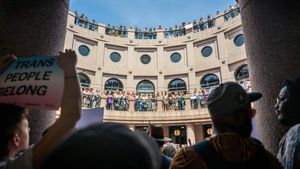
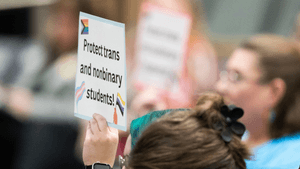
A small but powerful group of politicians has captured the critical thinking skills and imagination of many Americans, drafting laws that violate the rights and humanity of both transgender and intersex youth. So far in 2026, 840 anti-trans bills have been proposed.
Around two-thirds of these bills have intentional carve-outs — a painfully accurate word for exceptions — allowing harmful, medically unnecessary surgeries on intersex youth, often for the comfort of the adults around them, while banning medically necessary, potentially lifesaving care for transgender youth.
While some of the bills don't mention intersex by name, or use terms such as disorders or differences of sex development, many of the laws have unintended consequences for intersex people, such as SB 244, which passed in Kansas earlier this year, immediately invalidating state-issued driver's licenses with updated gender markers and banning future gender marker changes on driver's licenses and birth certificates.
The law is being challenged in court by an intersex woman and two transgender residents, for being forced to carry identification cards that do not match their identity or lived experience, exposing them to harassment, danger, and discrimination during routine daily tasks like driving, working, or traveling. The intersex woman’s gender on her license doesn't match the one on her birth certificate, as a result of doctors reassigning her sex when she was a child.
Sex testing in sports as mandated in anti-trans sports legislation, will result in traumatic genital examinations, which I can attest can have an impact similar to sexual abuse. Many people with a variety of different bodies will learn new information about themselves from people who not only aren't trained to present this information, but are likely to treat these people as if their body is wrong, in need of fixing, and at the very least, exclusion.
The problem with normal is that it’s subjective, and often those with the power to define and enforce normal either don’t have insight into the implications of their mandates, or, and this is much worse: they know exactly what they’re doing and they’re trying to eradicate other human beings.
Intersex, transgender, they’re complicated. While it’s perhaps comforting to think that there are only two sexes, male and female, no one agrees on how to determine this. XX and XY? There are 12 different chromosomal combinations. Ability to reproduce? There are XX people raised as girls with no vagina, or no uterus, or no ovaries. There are XXY people who have a penis, testes, but don’t produce sperm. Our civil and human rights can’t depend on a politician’s understanding of sex traits. Or the difference between sex and gender. Nor can we rely on the understanding of a sports administrator. Or some guy who happened to become president.
When I came out as intersex and embraced all the ways in which my body is different, my mom felt as if everything she’d done to make me happy and healthy didn’t work. But it was quite the opposite. Learning about intersex, and the impacts of our society’s desire to hide and fix our bodies, helped me come to fully understand my experiences, heal, and feel confident and at home in my body. Over time, my mom saw how powerful this understanding was for me, and became a public advocate herself for patient-centered care for intersex people. Today I know, as does she, that I am who I always was, from the beginning. And that makes us both happy.
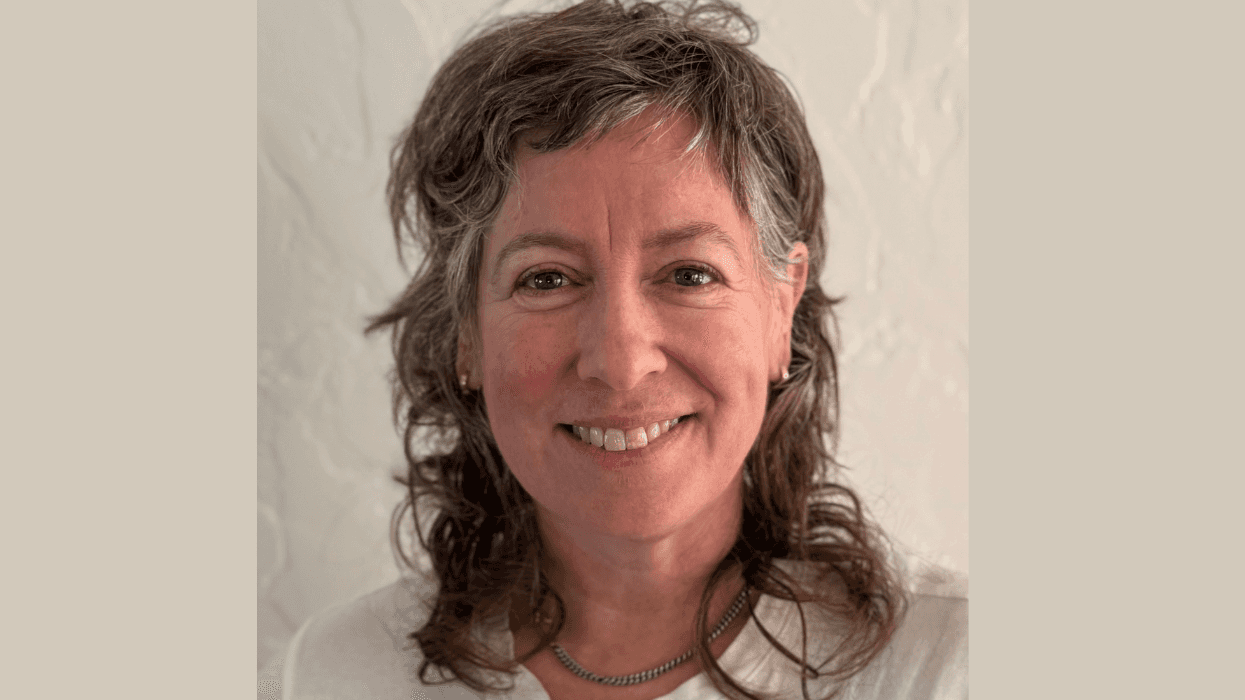
Thea Hillman is the former board chair of the Intersex Society of North America, author of Intersex (for lack of a better word), and chief communications officer at Keshet, the nation’s leading Jewish LGBTQ+ organization.