





































This story originally appeared on The Advocate.
Gender variance has existed in human biology and culture since time immemorial. And over the years, researchers have fortunately uncovered many surprising and inspiring stories of transgender and nonbinary people who’ve lived out loud throughout history — often despite the heteronormative, patriarchal societies that governed them.
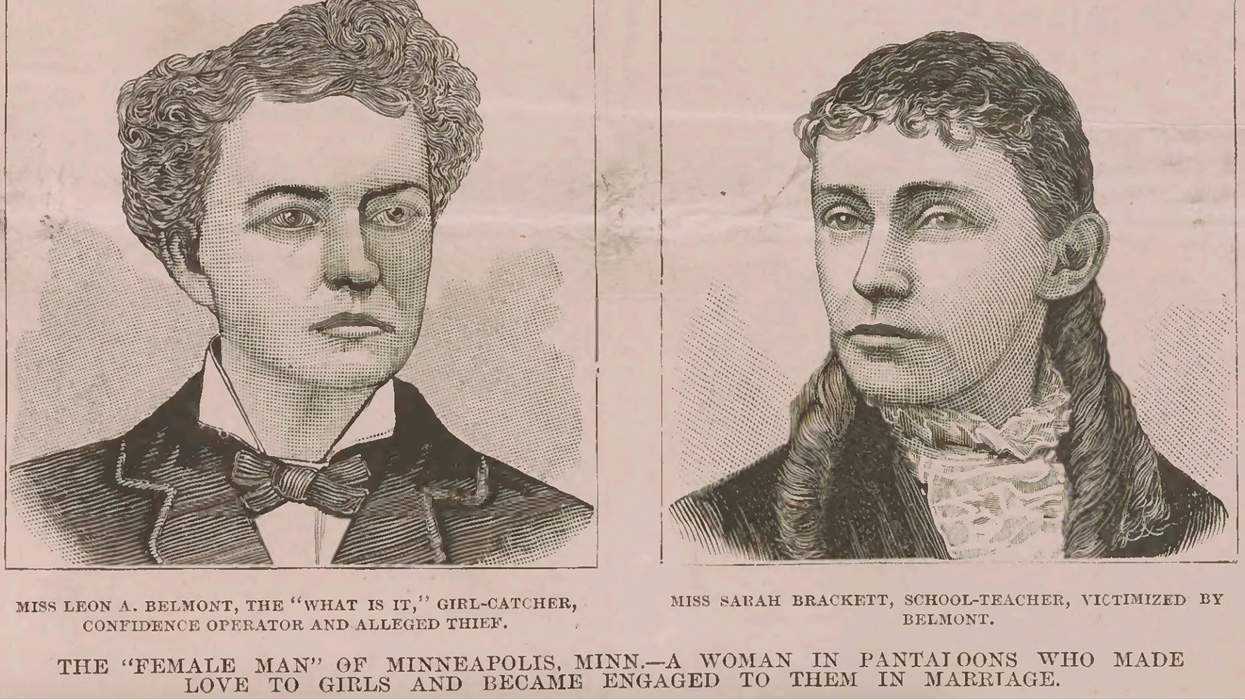
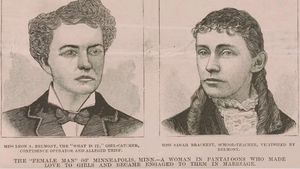
One such story belongs to Leon A. Belmont. Or should I say, Addie Liona Walker? Or was it Nova McClure Carr? Well, the answer is all three — as these identities were all espoused by the same human being.
Now, a new biography, Romantic Sensation: The Queer Lives of Leon A. Belmont, 1853-1927 by historian Lizzie Ehrenhalt, recounts the details of the fascinating life of Belmont, a Gilded Age celebrity who made national headlines after breaking a Minneapolis ordinance on gendered dress codes, as well as a police report from a girlfriend claiming he was a woman. Due to this coverage, Belmont was dubbed a “curious and romantic sensation” by news outlets at the time.
Ehrenhalt, who specializes in the history of gender and sexuality, said she first learned of Belmont’s existence while searching digital databases for evidence of queer and trans history, a regular practice in her field.
 Author and historian Lizzie EhrenhaltMichael Buxbaum/International Center for Documentary Arts
“In 2019, I was deep into the digital archives of the Minneapolis Tribune when I saw an 1880 story about ‘A Woman Who Lived in Male Attire for a Year and a Half…Exercising the Masculine Prerogative of Making Love to Two Women at Once,’” she recalls. “That obviously caught my attention! I dared to hope that there’d be a follow-up article about this person, and there was. Then I found another one, and another one, and before I knew it, I’d collected more than a hundred newspaper items about this so-called ‘romantic sensation,’ Leon A. Belmont, and his life in Minneapolis.”
After widening her search, Ehrenhalt discovered Belmont was born as Addie Liona Walker in 1853, assigned female at birth, and was working in a cotton mill by the age of 13. Belmont transitioned to male at around 25 and lived openly as a man for over 24 years.
“After that, I found primary sources like vital records, city directories, pension files, and affidavits that showed Belmont transitioned a second time later in life — from male to female — and lived from 1901 until 1927 as a woman named Nova Carr. At that point, I knew I had enough sources to write a biography, which is rare for historical figures who [transitioned] before 1900. Usually there’s a handful of sensational exposés about such a person, but you never find out where they came from or how they lived afterward. With Belmont, it was delightfully different. I was able to confirm that he lived as a man not just during his time in Minneapolis, but from 1878 until 1901, and that Carr died in Kansas in 1927.”
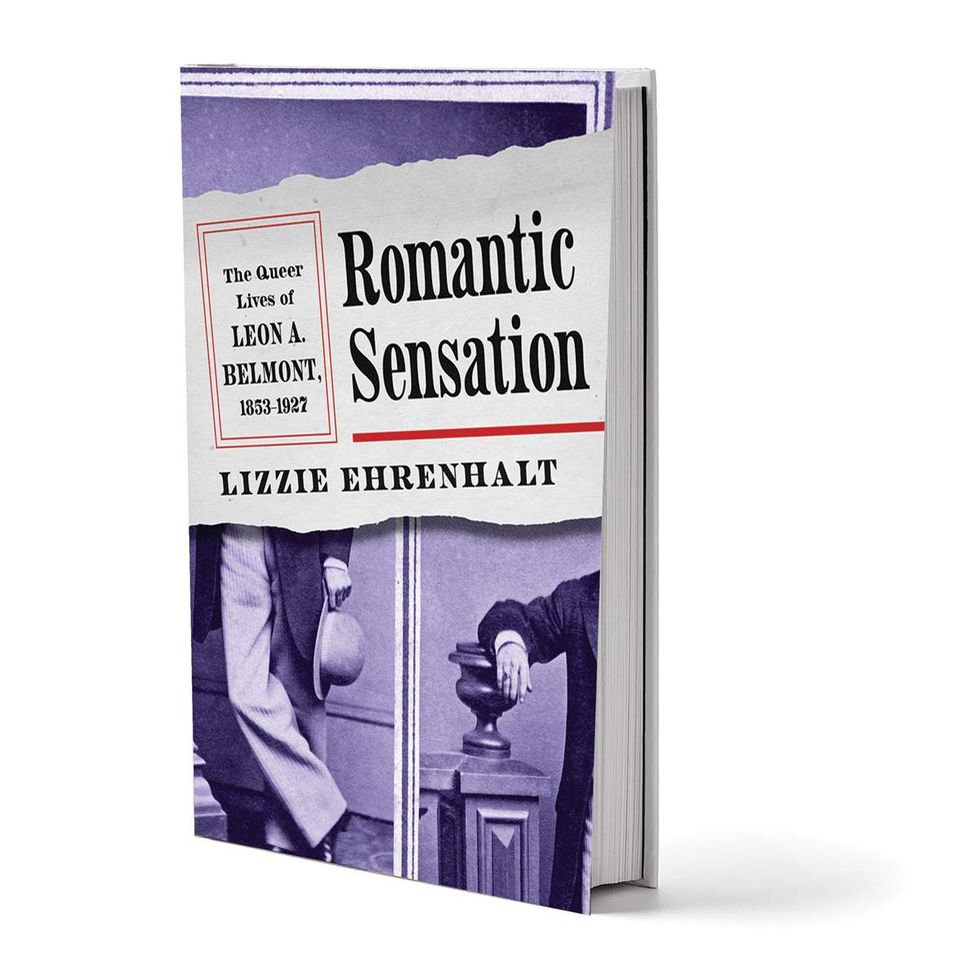 'Romantic Sensation: The Queer Lives of Leon A. Belmont, 1853-1927'Minnesota Press
On choosing to use masculine pronouns when writing about Belmont, Ehrenhalt explains, “I followed the consensus among scholars who study the lives of gender-variant people in the 19th and early 20th centuries. In general, they rally around two goals: matching the way historical figures thought about themselves — so far as it’s known — and reflecting their lived experience. Belmont’s self-identification is clearer than Walker’s. He created a man’s identity for himself, dressed exclusively as a man, assumed the social roles of a man, and answered to he/him pronouns for 25 years. He defended his gender identity under public scrutiny in Minneapolis in 1880, acknowledging only briefly under policy pressure that he had been assigned a female sex at birth.”
Ehrenhalt also says, “In spite of the newspapers’ suggestions that Belmont was a freakish anomaly, the historical record shows the opposite. As someone who studies gender variance in the U.S. between 1870 and 1920, I knew that transitioning from one gender to another wasn’t all that unusual in this period.”
“But I didn’t expect to find out that Belmont’s other so-called ‘sensational’ achievements had precedents, too,” she continues. “Belmont dabbled in confidence crime in the 1870s — but that was the decade in which the modern American con artist was born. He moved halfway across the United States to prove his masculinity in the mythical Wild West. But other American men, including Theodore Roosevelt, did that too. Belmont had a long-lasting legal marriage with his wife, but so did his peers who [transitioned]. Instead of fighting against the tide of history, he was swimming with it. American history is much more queer and trans than it sometimes seems.”
Ehrenhalt says that stories like Belmont’s are important, if only to illustrate the fact that “our experiences aren’t new. We have pre-1900 ancestors — if not in the cishet sense, then in the queer one rooted in shared, lived experience.
“Most historians agree that it’s not helpful to label people like Belmont as trans or queer — or cis or straight, either. But Belmont is still part of trans and queer history because he was surveilled by police, restricted by laws, examined by doctors, and harassed by the media because his gender and sex life were considered abnormal. Just as often as he was surveilled and harassed, however, he was also admired or left alone, and he succeeded in living the life he chose. If he could find pockets of freedom in the 1880s, then maybe we can make the same space for ourselves today.”
This article is part of The Advocate’s Nov-Dec 2026 print issue, on newsstands November 3. Support queer media and subscribe — or download the issue now through Apple News+, Zinio, Nook, or PressReader.


















 Actress Marlene Dietrich and Paul Porcasi in a scene from the movie Morocco. Donaldson Collection/Getty Images