



































Never has a bottle of poppers wreaked more havoc — on screen at least.
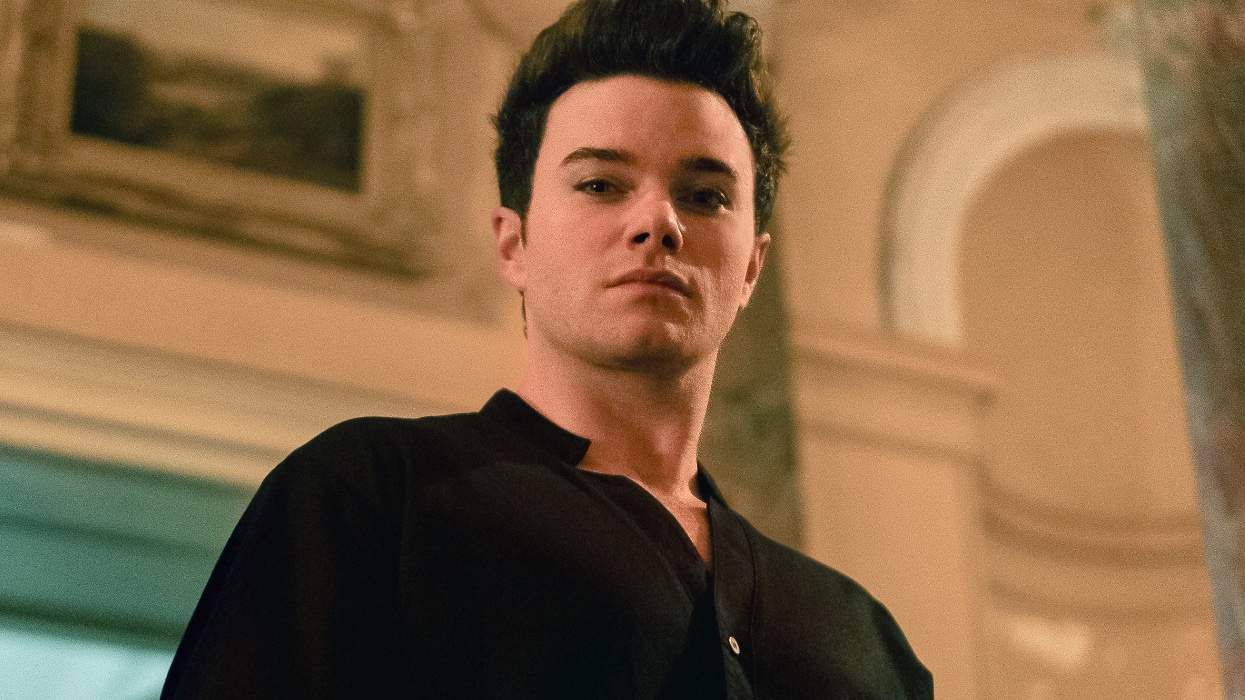
The Restoration of Grayson Manor, the new queer horror film from director Glenn McQuaid (I Sell the Dead, V/H/S), which he also co-wrote with Clay McLeod Chapman, introduces audiences to Boyd Grayson, played by Chris Colfer. Boyd is a wealthy Irish playboy who loves nothing more than tormenting his heir-obsessed, barb-toungued mother (Alice Krige) by bringing his male sexual conquests home to their sprawling mansion.
It’s after one such tryst that a shocking accident occurs — again with the unwelcome assistance of an errant bottle of poppers — that leaves Boyd maimed and helplessly under the control of his mother. Fortunately for Boyd, she has no scruples and the resources to pay for him to become the first person in history to receive experimental mechanical hands controlled entirely by his subconscious.
What could possibly go wrong?
Well, basically everything. But for the viewer, everything feels just right. The film seamlessly blends pitch-black and utterly arch humor with body horror and queer eroticism. It’s an alchemy of tones and influences that come straight from the filmmaker’s own personal experiences of growing up gay in Ireland in the ‘70s and ‘80s.
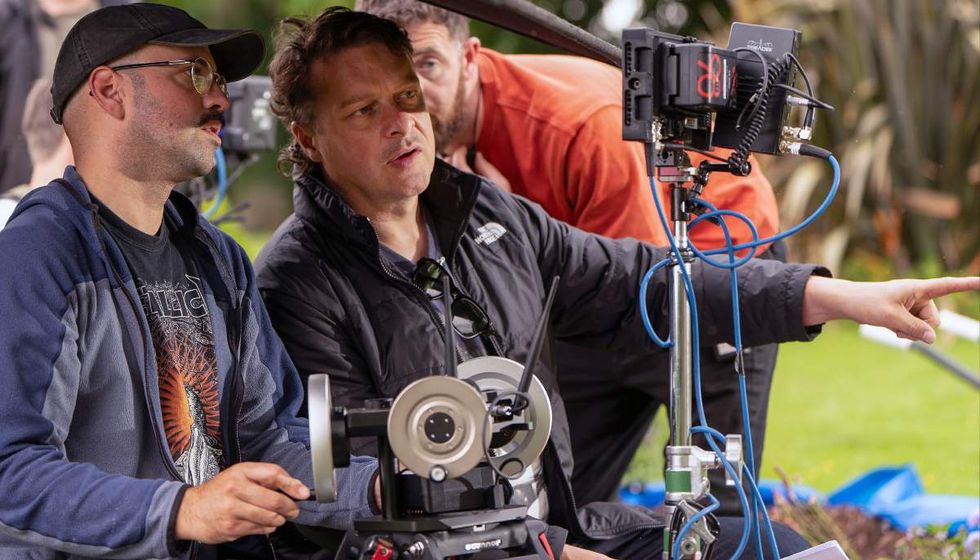
Glenn McQuaid on the set of 'The Restoration of Grayson Manor'
Courtesy photo
While queer representation wasn’t available to him the way it thankfully is now, he recalls how impactful and literally life-changing the “crumbs” of representation he was able to find through horror genre classics like The Bride of Frankenstein and The Old Dark House were. These films were helmed by famed gay director James Whale prior to the enforcement of the draconian Hays Code rules, which forced queerness into the void of subtext. “I really leaned into my own grief and trauma and how I overcame it,” McQuaid tells PRIDE.
“I watched James Whale and I got this giddy sense of queer sensibility from early Universal movies, and that was pure escapism for me,” he shares. “Genre has always been a lifesaver for me, as has melodrama, as have soap operas of the ‘80s as well, because I got through Dynasty. I got my first positive representation of a gay man. And prior to that, I was hopeless.”
Both of those influences come to bear in Grayson Manor, which feels like a film that Whale might make today. The high camp, the humor, and the exploration of body and identity resonate throughout the film — but also the melodrama. “I joked that I wanted to make The Lion in Winter of killer hand movies,” recalls McQuaid. “Another good example is War of the Roses, like two people going at it, at each other’s throats, to the point where it’s almost too much, but it’s enjoyable.”
Colfer proved to be one of McQuaid’s greatest allies in getting the film made. “I spoke with Chris on Zoom, you know, probably five years ago, and I really just got on well with him,” he recalls, saying that, in moments when the film looked like it was in real jeopardy, the actor stuck with him. “[He’s] a horror guy. And his partner Will is obsessed, so ... when we thought COVID had killed it, he was like, ‘No, don't worry, Glenn, We'll get it going, we'll figure it out.’ The guy, he's charming, he's very funny, and he's very talented.”
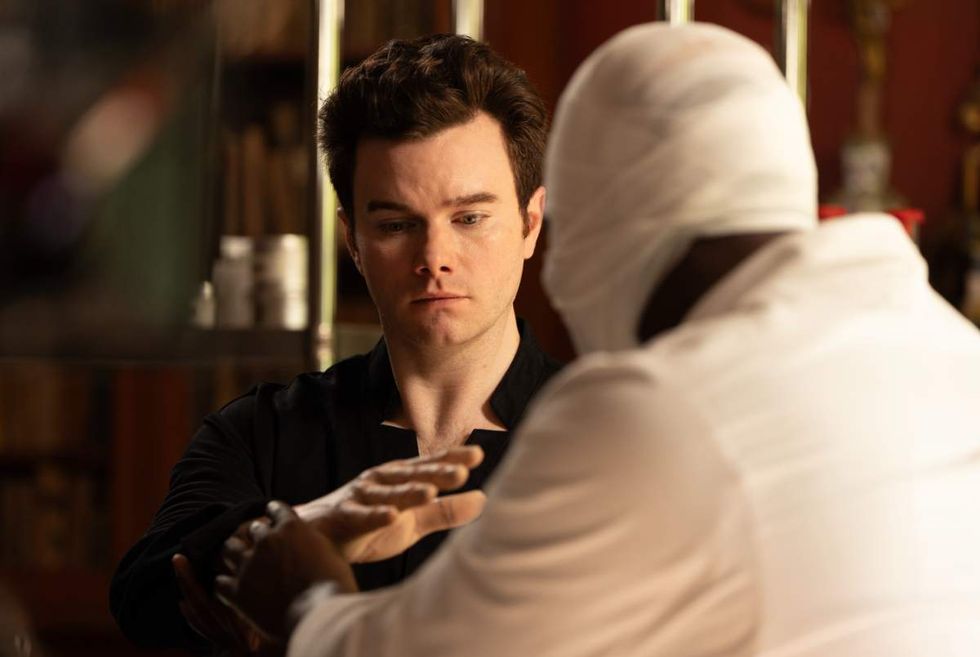
Chris Colfer in The Restoration of Grayson Manor'
Courtesy photo
Much of the film’s success revolves around the dynamic between Jacqueline and Boyd, and it was not a small source of anxiety in the lead-up to production for McQuaid. “It was always on my mind that if this relationship did not work, we were in trouble. [There’s] a very fine line to watching two characters go at each other’s throats, to have that be fun, or to have it be insufferable. I was obviously aiming for fun. I’m not a sadist with my audience!”
Fortunately, the chemistry clicked immediately, and McQuaid even had fun with the actors, helping to ignite that crackling tension between them. “At the start of a scene, I’d run up to Alice and whisper, ‘Don’t forget what that little shit did to you on your 40th birthday.’ Jacqueline would be like, ‘Well, remind me, what did he do?', 'He was born.’ Then I’d run over to Chris and whisper something similar.” McQuaid's directing style allowed for plenty of improvisation, which Krige took to quickly, often adding cutting and hilarious dialogue that wasn’t on the page. “Often Alice would say something outrageous and turn to me and say, 'I dare you to keep it,' and swan out of the room,” recalls McQuaid with a laugh.
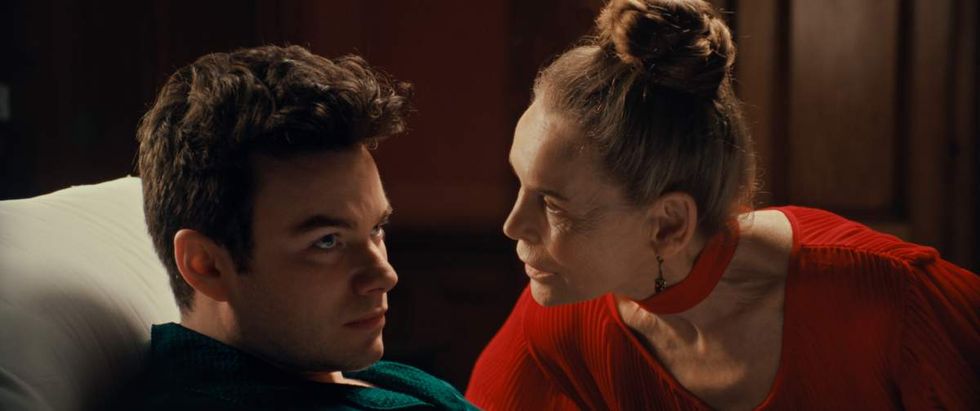
Chris Colfer and Alice Krige in The Restoration of Grayson Manor'
Courtesy photo
Despite its classic inspirations, the anxieties that the film mines are contemporary and highly relatable, particularly in a time when queerness is once again facing increasing backlash. McQuaid explores that dynamic on a smaller and more personal level through Boyd’s love-but-mostly-hate relationship with his mother, who is obsessed with her son giving her the grandchild she feels owed.
“One of the main themes that’s running through the movie is this idea of heteronormative weight being placed on queer shoulders, and how suffocating that can be. And in this piece, the heteronormative weight of ancestry and legacy are placed on very defiant queer shoulders, very rebellious queer shoulders,” McQuaid shares.
Again, this idea was ripped from the pages of McQuaid’s own life story. “A very good friend of mine, a while ago, asked me, ‘God, would you not want children?’ I’m like, 'No,' and he’s like, 'but that’s how we live on.' And I just thought, ‘Holy fuck, you know?’” he remembers. From there, the idea for the film began to gestate and became a way for McQuaid to poke fun at these heteronormative ideas and examine them through the lenses of horror and melodrama, which he sees as invaluable tools. “It’s so important for the storytellers to get truth out there [and] genre makes that easier for me. I would never in a million years have made a drama about heteronormative pressures. But I love the idea of doing it in genre,” he explains.
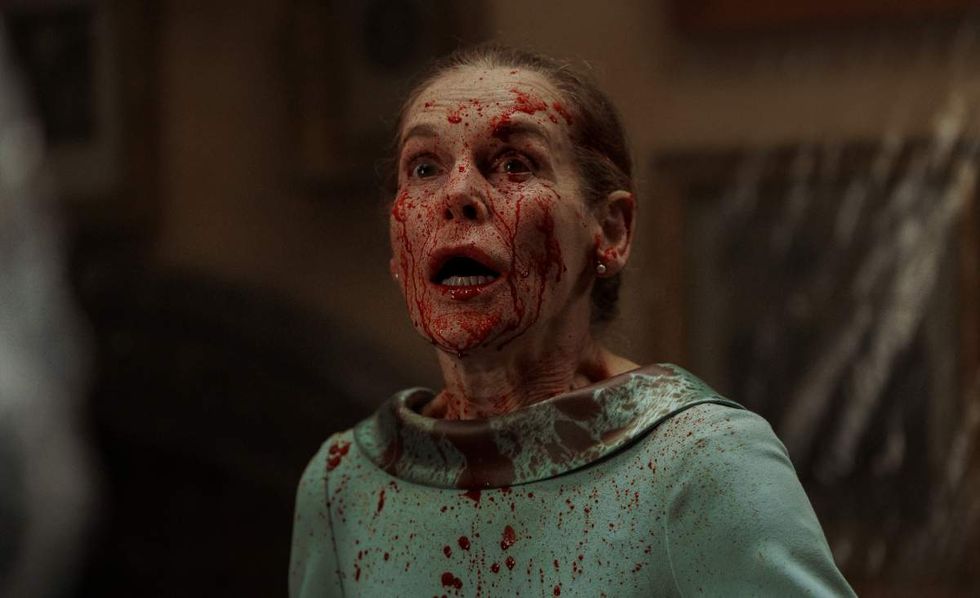
Alice Krige in The Restoration of Grayson Manor'
Courtesy photo
It also offered him the opportunity to really go to some wild, wacky, and steamy places over the course of Grayson Manor’s runtime. “It was just an opportunity to be as outrageous as possible, not censor myself and try new things,” he says. “I mean, there’s a ghost child that pops up in the movie, you know, there’s toad smoking, you know, I just wanted to load it up.”
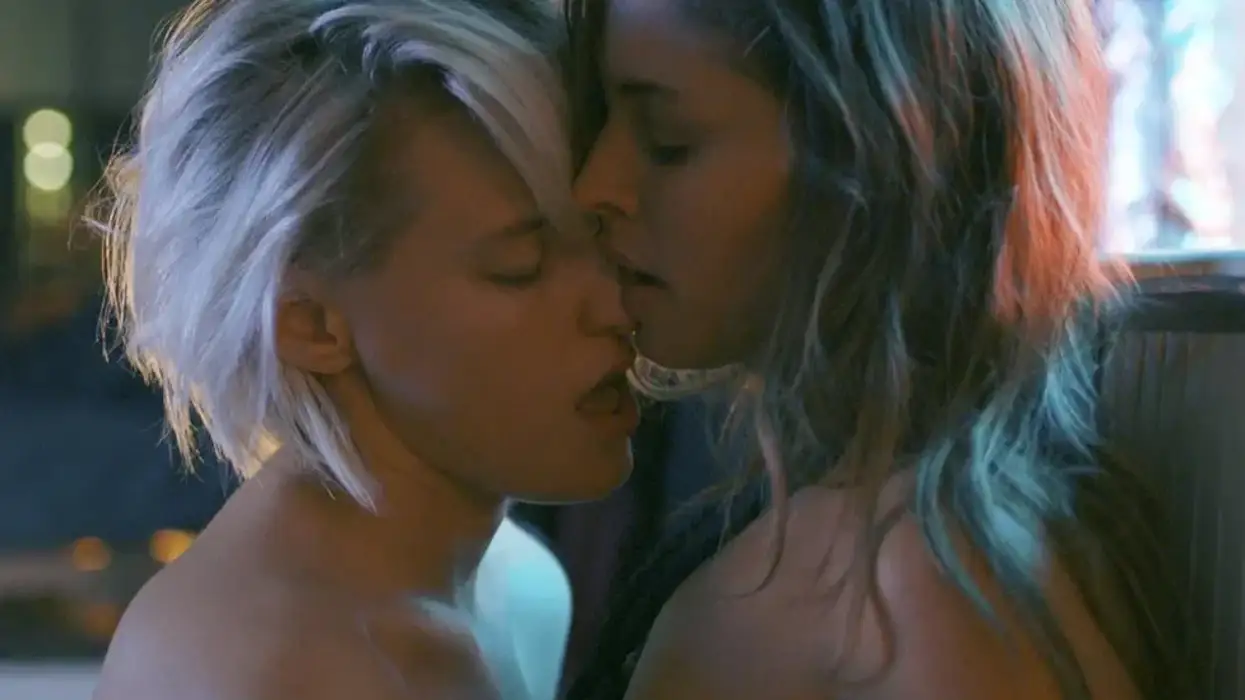
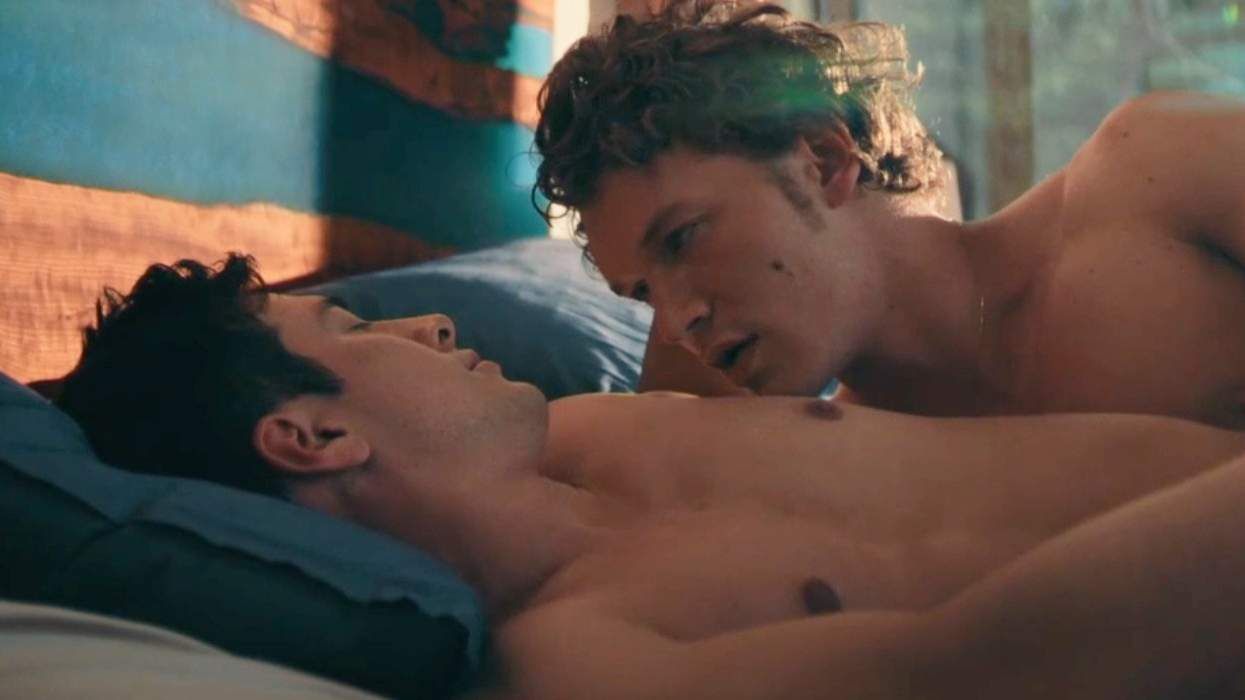
The movie also features something that Whale could only dream of bringing to the screen: queer sex — and McQuaid puts it to great use, sometimes for the purpose of humor, or arousal, or to highlight moments of real human connection.
“One moment I really love is when we’re cutting between [the nurse] Claudia (Gabriela Garcia Vargas) in the middle of a psychotic breakdown due to smoking a very, very potent psychedelic and the sex scene between Boyd and Lee,” says McQuaid. “I intercut them. So, you’ve got Claudia’s ego death, and it’s horrifying what she’s going through … and then cutting, then, to sort of the vulnerability of Boyd, allowing somebody to touch him again.”
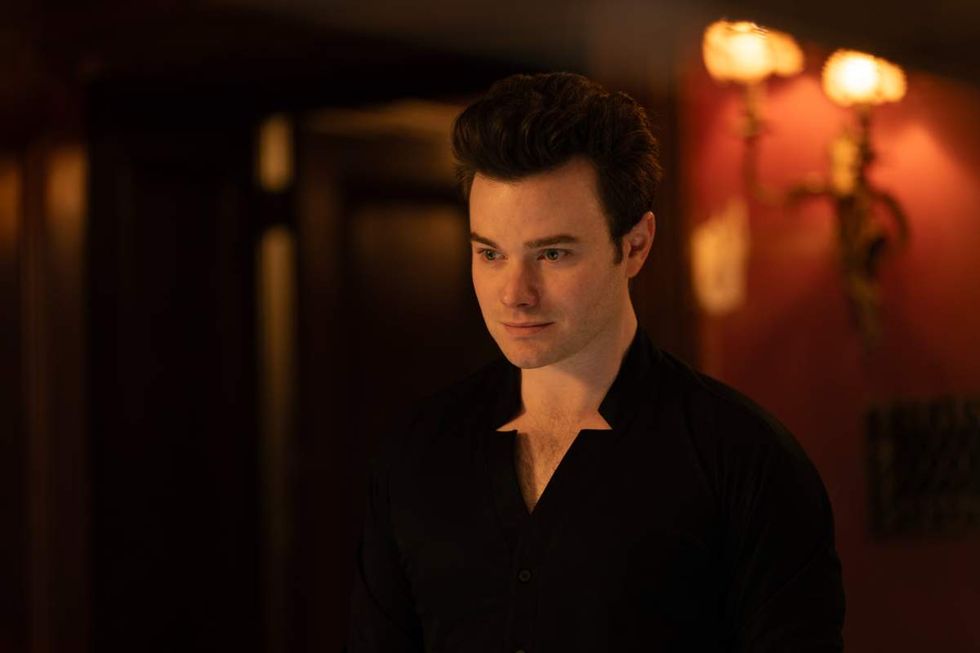
Chris Colfer in The Restoration of Grayson Manor'
Courtesy photo
“I think the most tender moment for such an erotic movie is just a dance between Lee [and Boyd],” recalls McQuaid. “I thought they were going to be bopping around at one point, and we did this nice slow dance. And then I just loved the idea of simply lips touching, rather than anything more erotic, even tongues or anything. The movie stops for it, since the lips kiss, Boyd melts, and as he is so open then, and so vulnerable and so in love.”
At the end of the day, McQuaid credits the success of those scenes to the actors themselves. “I think their chemistry was absolutely great. I’m really proud of them,” he says.
The film made its debut in Austin, Texas, at Fantastic Fest in September, where it met universal acclaim. As of this writing, it has a 100% fresh rating on Rotten Tomatoes. When PRIDE caught up with McQuaid, he was fresh off the film’s premiere, where he saw it with an audience for the first time. “I was overwhelmed,” he shared. “It was very emotional. It’s just the end of it, probably like a 10-year journey on this one, and it’s such a personal piece.”
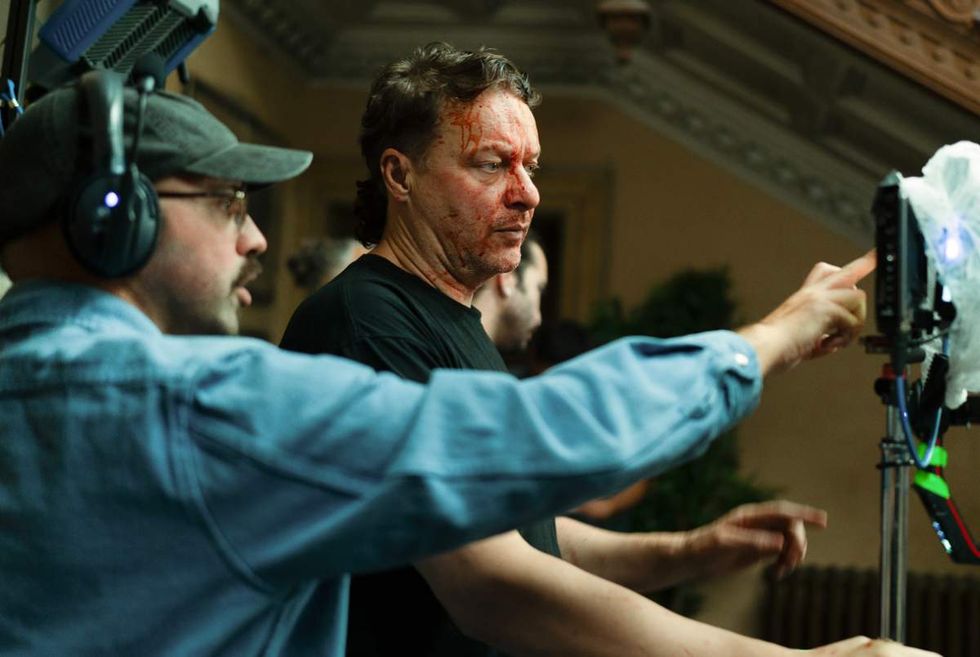
Glenn McQuaid on the set of 'The Restoration of Grayson Manor'
Courtesy photo
He’s not done yet. Next up, McQuaid is working on another horror film, this time one that tackles homophobia through the lens of a haunted house. “It’s about a gay couple that returned from New York to Ireland after a hate crime,” he reveals. “And after a long search, they find their perfect home, but their perfect home hates them.”
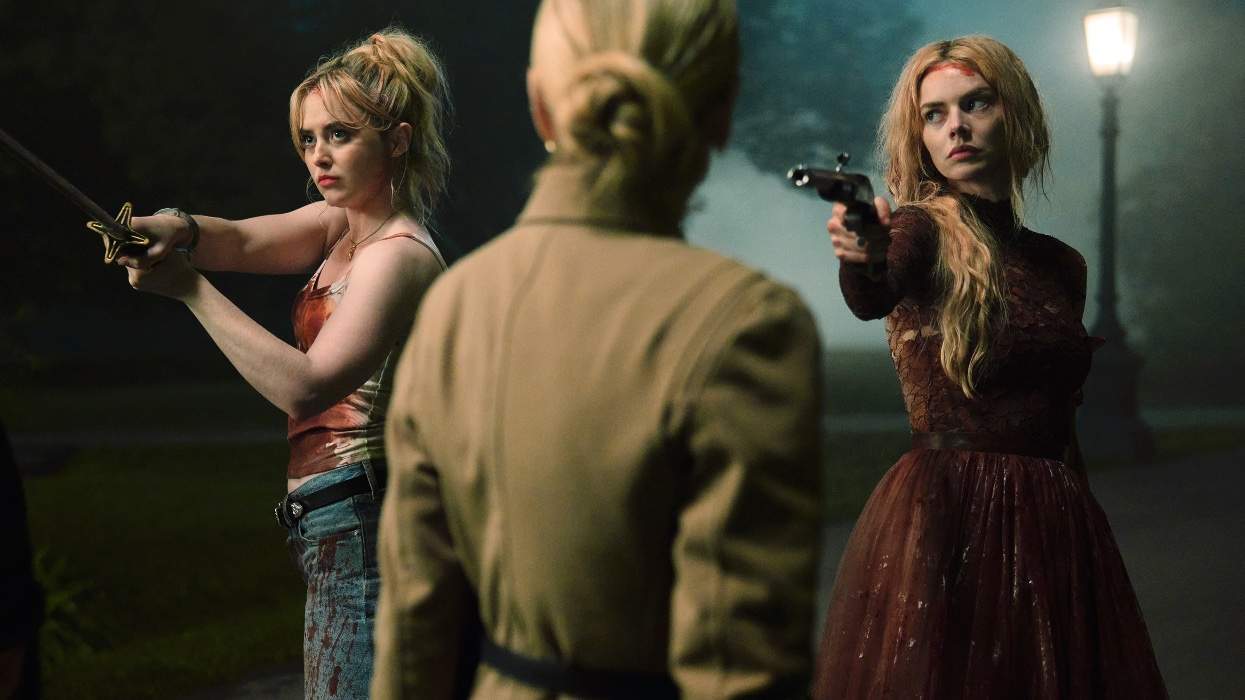
 Samara Weaving and Kathryn Newton.Searchlight Pictures/Pief Weyman
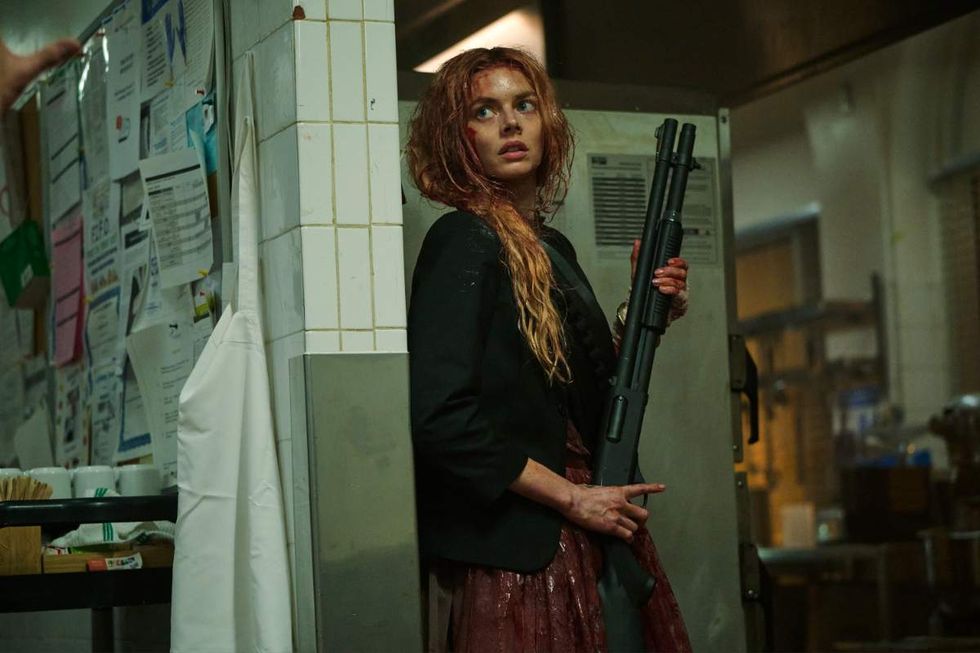 Samara Weaving.Searchlight Pictures/Pief Weyman
 Nestor Carbonell, Sarah Michelle Gellar, Shawn Hatosy, Elijah Wood, and Nadeem Umar-Khitab.Searchlight Pictures/Pief Weyman
 Daniel Beirne, David Cronenberg (portrait) Shawn Hatosy, and Sarah Michelle Gellar.Searchlight Pictures/Pief Weyman
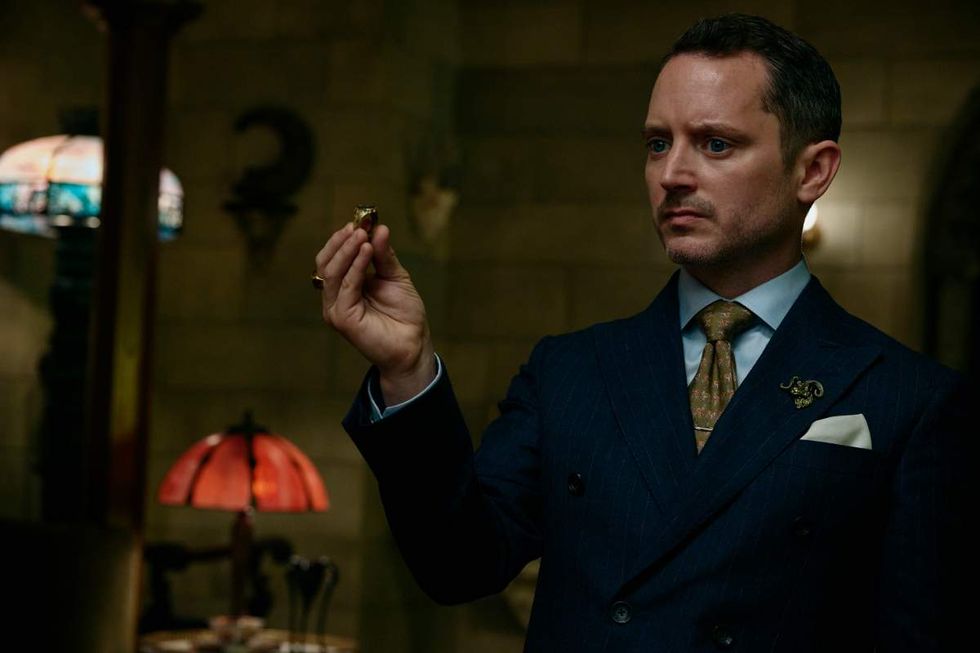 Elijah Wood.Searchlight Pictures/Pief Weyman
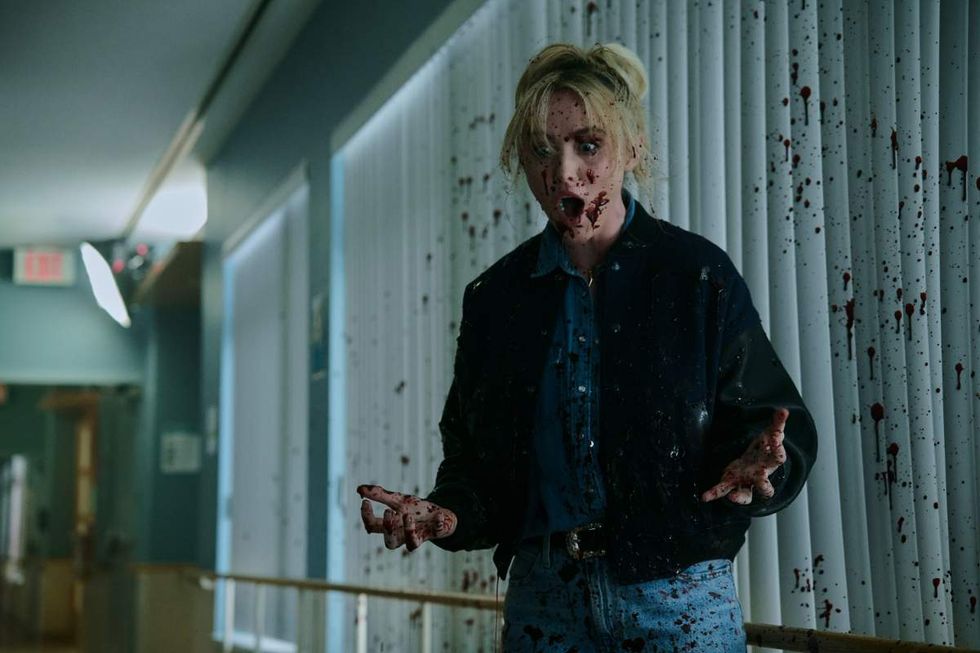 Kathryn Newton.Searchlight Pictures/Pief Weyman