








































"My roommate is transgender, and I think what you're doing is great." The voice crackled over our VHF radio as our tiny 29-foot-long ocean rowing boat bobbed in the Pacific, hundreds of miles away from the nearest land. "I'm sending them a picture of you on our radar. Good luck!"
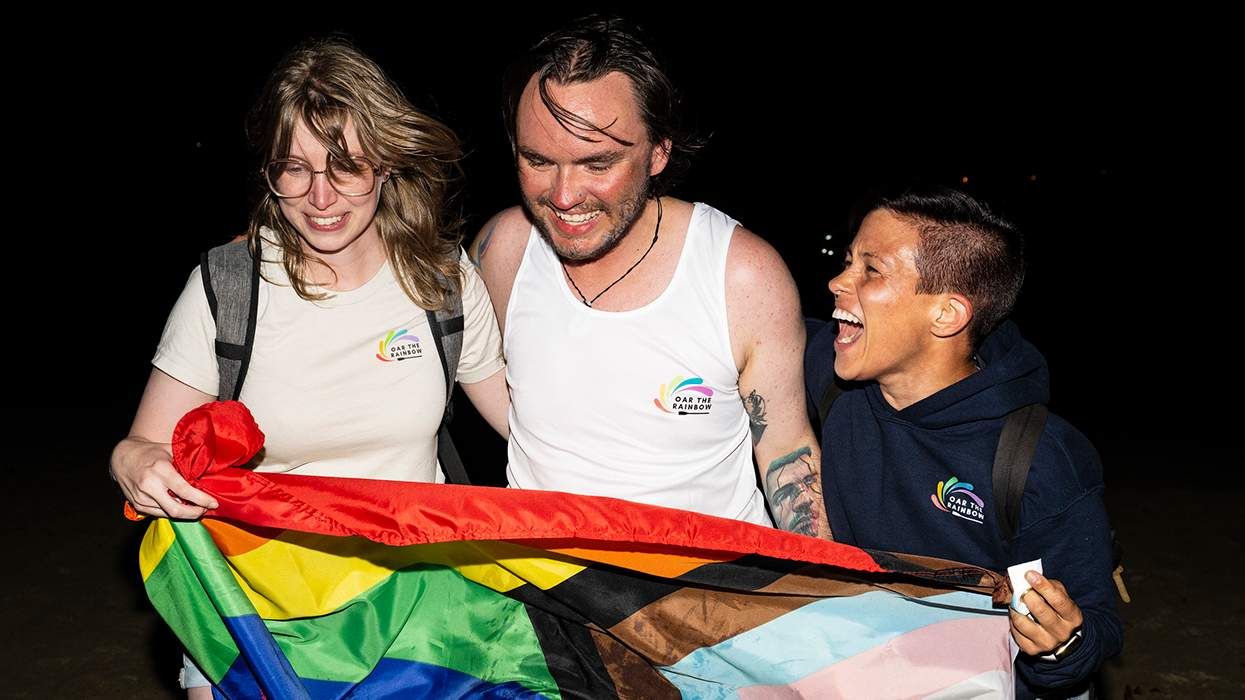
My two teammates and I, together forming the team Oar the Rainbow, were rowing 2,800 miles from California to Hawaii. Part of our mission as a team: to advocate for trans inclusion in sports. When we finished the World's Toughest Row, we broke the world record for a team of three rowing across the mid-Pacific, and I became the first out transgender person to row across any ocean.
I have been competing as an openly trans athlete for over seven years. Being a trans athlete has always carried a unique set of challenges. Still, in the current sociopolitical climate, it has become increasingly complicated — and at times dangerous — to be an out trans athlete. Earlier this year, an executive order was signed that targeted trans athletes. Since then, numerous sports governing bodies, including the NCAA and the U.S. Olympic and Paralympic Committee, have implemented policies banning trans athletes from participating on sports teams that align with their gender identity. This, along with an increase in anti-trans violence more broadly, amplifies the challenges of being an out trans athlete.
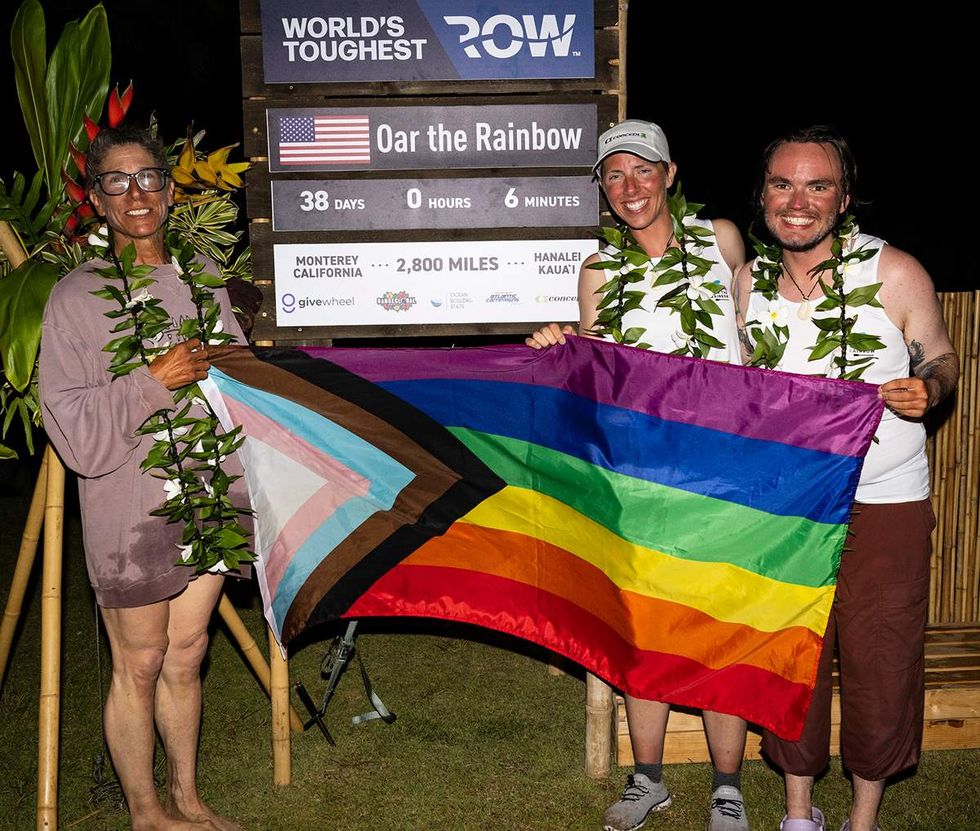 Stulting and fellow 'Oar the Rainbow' teammates completing the 'World's Toughest Row' competition. Courtesy WORLD'S TOUGHEST ROW
When I'm not rowing, I am a social work PhD student researching anti-trans violence. Being both a trans athlete and researcher has allowed me to see a clear connection between trans inclusion in sports and violence prevention. Violence prevention often focuses on enhancing protective factors, things that help reduce the risk of violence happening, and minimizing risk factors that make violence more likely to occur.
Cultivating affirming sports communities where trans people feel validated and supported can serve as a protective factor against violence—conversely, creating environments where trans athletes experience discrimination and are pushed out of sports. Through bans or indirectly through the culture of a team, these actions can act as a risk factor for violence, making sports more dangerous for everyone.
When Sports Protect
Sports have the power to change lives. They often help improve one's sense of belonging. They can create stronger community connections, ultimately acting as a protective factor against violence. They create safer communities. However, these benefits of sports are only present when the culture of a team or larger sports community is rooted in inclusion. When I've been on teams focused on ensuring everyone, regardless of identity, can find a place and feel valued as a teammate, I've experienced true inclusivity. I have seen how these benefits are strengthened by setting a standard of kindness. People feel at home on these teams, creating an environment where everyone feels safe and affirmed.
When Sports Harm
On the other hand, trans exclusion in sports normalizes violence. Whether the exclusion is through formal bans or through the culture of a given team, excluding trans athletes requires policing of gender. There have been concerns about how exclusionary policies will be enforced: hormone and chromosome testing, genital examinations, and access to private medical records have all been discussed. The surveillance does not stop with trans people. According to Athlete Ally, trans athletes make up less than 0.002% of Olympic competitors since 2004. Yet these policies subject all athletes to invasive questioning and examination. This policing of gender harms not only trans athletes but everyone participating in the sport.
Trans inclusion and representation in sports matters more now than ever. Those who argue for bans on trans athletes competing in sports often believe they are helping create a safer environment for women in sports. But the reality is that such prohibitions only normalize violence, not just against trans people, but cis women as well. If we want to create a world free from violence, we have to create inclusive and affirming environments for everyone, including in sports environments.
What We Can Do
Every person deserves to find a sense of belonging somewhere. For many of us, that place is sports. We can choose to build environments where every person thrives, or we can let fear divide us.
Contact your school boards, athletic directors, and state representatives. Tell them that inclusive policies save lives and strengthen communities. When your local gym, youth league, or college faces pressure to exclude trans athletes, show up to meetings and speak out. Support trans athletes in your community. Rowing across an ocean taught me that when we include everyone, we all get stronger.
I rowed across an ocean to prove what is possible when trans people are given a seat at the table. But we shouldn't have to set records to earn basic dignity. The strongest teams are the ones where everyone belongs.
Let us play.
Taylan Stulting (they/them) is a trans rower, activist, survivor, and researcher.
Perspectives is dedicated to featuring a wide range of inspiring personal stories and impactful opinions from the LGBTQ+ community and its allies. Visit Pride.com/submit to learn more about submission guidelines. We welcome your thoughts and feedback on any of our stories. Email us at voices@equalpride.com. Views expressed in Perspectives stories are those of the guest writers, columnists, and editors, and do not directly represent the views of Pride or our parent company, equalpride.