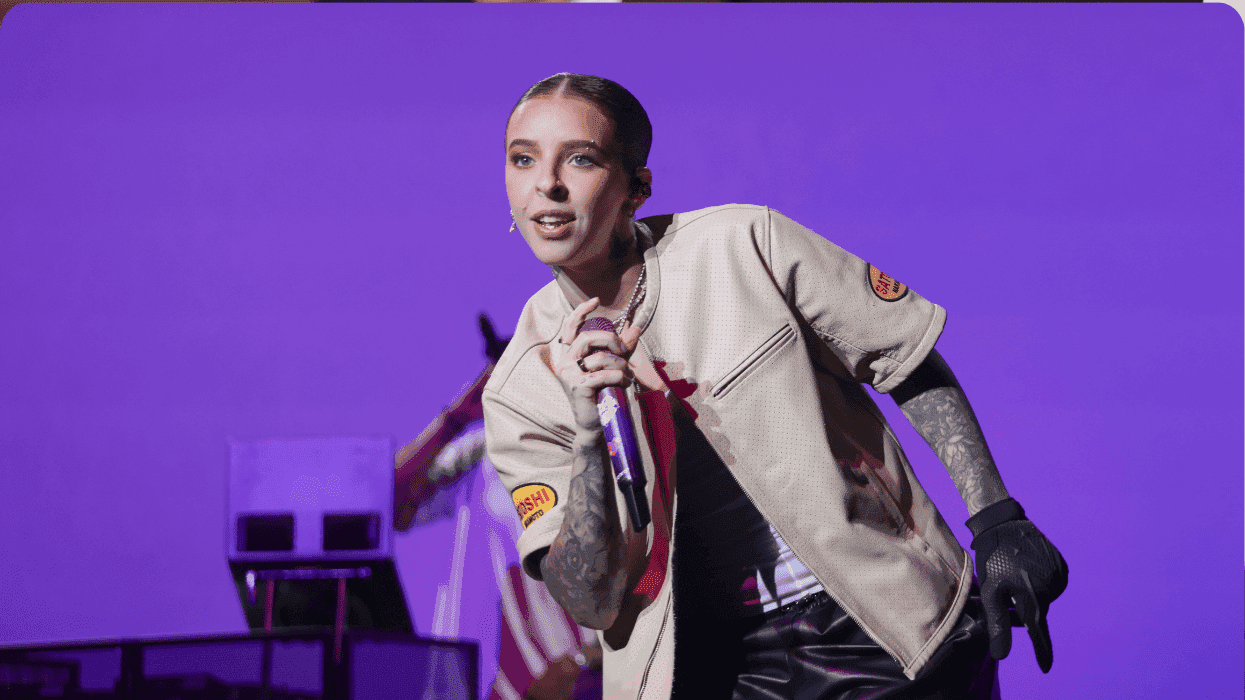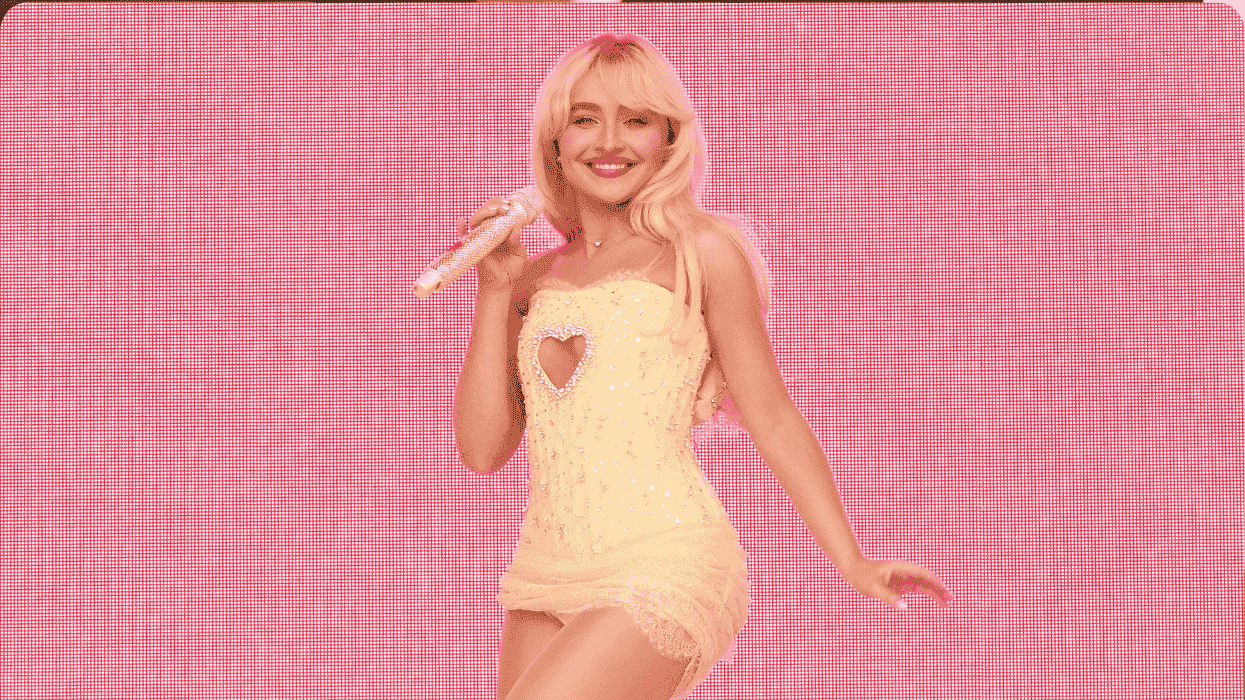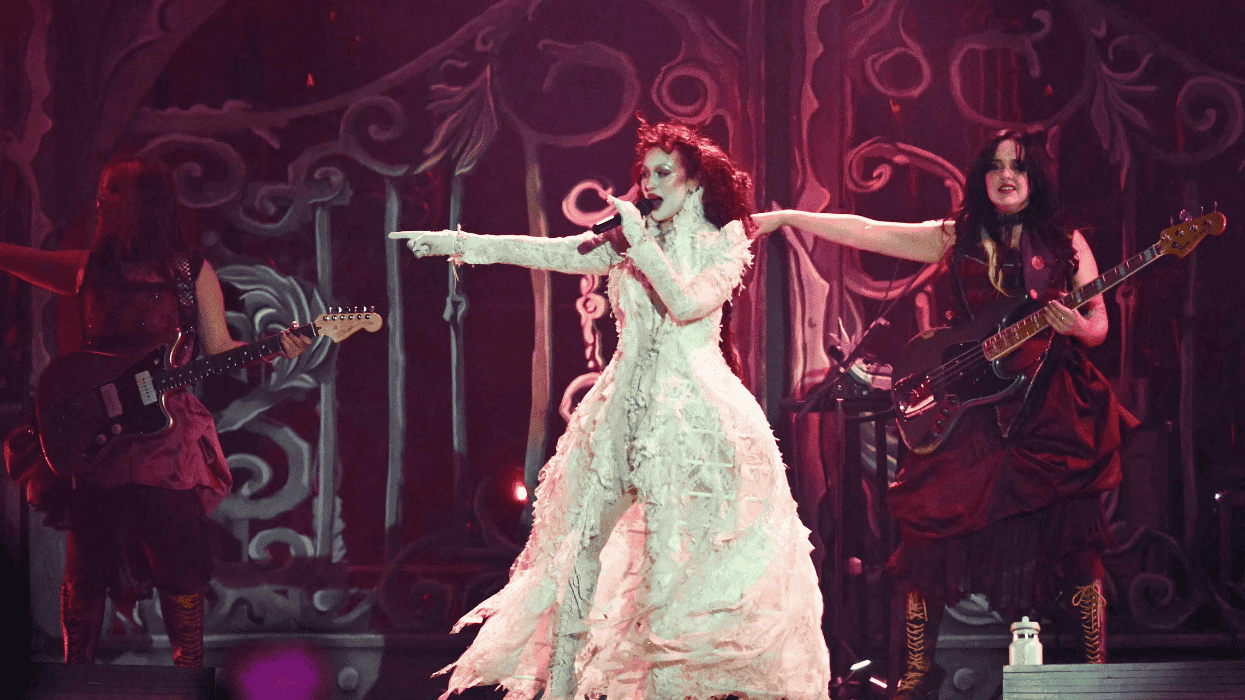







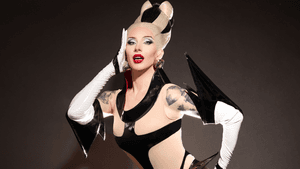





Pyrotechnic showers of white sparks fell behind Chappell Roan as she belted out, "I'm gonna keep on dancin' at the Pink Pony Club! I'm gonna keep on dancin' down in West Hollywood!" The crowd was pulsing with energy, singing along as she laid into the chorus with a voice that thrummed with power, only 14 miles from West Hollywood and The Abbey.
Like Chappell, I'm a California transplant from the Midwest, raised on compulsory heterosexuality and conservative Christianity. A late bloomer, I came out as bisexual when I was 34, and as a lesbian at 40. The cost was high: a seventeen-year marriage that forever altered the lives of my three children. Staying closeted was no longer survivable. Like Chappell in her "Roan of Arc" performance, I put on my armor, turned around with my crossbow, and launched the fiery arrow that would burn down the life I had been taught to want.
I often struggled to have compassion with my younger self for not paying attention to those feelings sooner. There were signs: my thrifted Doc Martens, a closet full of old flannel shirts, and an Indigo Girls Retrospective CD always in my Discman. But in the 90s, queerness felt particularly dangerous in the Midwest. Reminders of this weren't just on TV when helicopters airlifted Matthew Shepard to a Colorado hospital. It sat next to me at the dinner table.
I had always known my (great) Uncle Hal as a tall, lean man with red hair, whose face slanted slightly downward on one side, and whose words were slurred and difficult to understand. When I was young, I didn't know why he looked and acted differently from most people, but I also didn't particularly care. He was gentle and kind, and always winked at me and grinned when he noticed me sneaking another sweet pickle or the perfect bit of turkey before everyone sat down to the holiday feast.
When he was young, Hal had fled his hometown for Chicago, where he created window displays, worked in interior design, and performed on stage. He joyfully lived in the city's thriving gay community after Illinois decriminalized homosexuality in 1961 (it would not be decriminalized nationwide until 2003).
When he returned home to care for his ailing mother, he was met with public ridicule. He was arrested regularly and had to be bailed out by my grandfather, who fancied himself the John Wayne of the Midwest. The worst happened when he was brutally attacked and left for dead, sustaining a traumatic brain injury that left him permanently disabled and unable to fully care for himself. The body that had been his instrument of expression on the stage had become a prison from which he could not escape. His aunt took care of him for the remainder of her life, but he never returned to the city— or to himself.
Hal doted on me as a child, bringing me piles of books about faraway places he urged me to visit someday. Whenever I saw him, he placed little gifts in my hands that he thought I might like: a chocolate, new art supplies, once even a model wishing well that had tiny spools of thread in its depths, buried in gold glitter.
Decades later, on a hot California night, I stood at the barricade with my wife behind me, making sure I didn't get squished by the enthusiastic fans. We overheard a couple of attendees complaining that there were too many old people there taking up the good spots. That they had been waiting since 4, and it had been so long. My wife and I rolled our eyes at each other and kept enjoying the hell out of the concert. We danced, belting out Chappell's anthem to queer spaces. I wished Hal could see the sparks falling like gold glitter. The same shimmer that once filled the wishing well he gave me. I wondered if his own Pink Pony Club was on the bustling Near North Side of Chicago or in the smaller gay neighborhood near Dearborn and Division.
Wherever it was, I hoped it felt like safety, however fleeting.
We had waited so long to get here. Not just the hours in line, starting at 8 am to get a good spot. Some of us took years to get to this spot at Brookside by the Rose Bowl.
Some of us never got there.
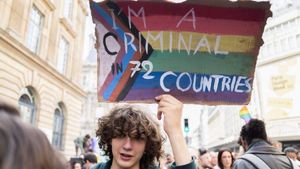
I knew that, like Hal's gay bars in Chicago, this concert was not a promise of safe queer spaces from here on out. After the concert, we'd return to a world where queer rights feel increasingly fragile. In the past year, protections have been rolled back, trans lives targeted, and even marriage equality threatened. It would be easy to grow quiet in the darkness.
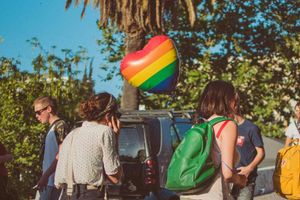
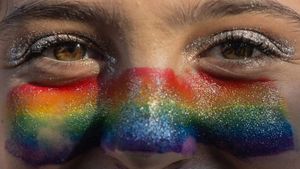
That night was all bright sparkling lights, and silence wasn't an option in our Pink Pony Club. We celebrated not only finding a queer space but also finding a part of ourselves. It felt like beautiful defiance, bold and bright, as befitting the concert's aesthetic. Over a sea of pink fans, with upturned faces sparkling with body glitter and sequins, we sang an anthem of self-love and joy. An anthem of belonging. Everything that the conservative movement is trying to push out of sight was on full, unapologetic display.
Chappell Roan was incandescent as she led what had become more of a mass chorus than a solo performance. I imagined her when she first arrived in LA, another girl from the Midwest discovering who she was free to be in California, and I was grateful.
For her lyrics that gave voice to our experiences. For her artistry and courage to be herself. May we all keep on dancing.
Perspectives is dedicated to featuring a wide range of inspiring personal stories and impactful opinions from the LGBTQ+ community and its allies. Visit Pride.com/submit to learn more about submission guidelines. We welcome your thoughts and feedback on any of our stories. Email us at voices@equalpride.com. Views expressed in Perspectives stories are those of the guest writers, columnists, and editors, and do not directly represent the views of Pride or our parent company, equalpride.