



















Terry Hastings
This isn't just a personal essay. It's a record of adaptation. Of asking, again and again: How visibly gay can I afford to be? It's about the shifting line between art and pornography, between coded abstraction and unapologetic queerness. I've lived that line. I've crossed it. I've redrawn it in full color.
Artwork titled 'Bitchezzz'

Terry Hastings
I came. I saw. I photographed it and slapped it on a T-shirt.
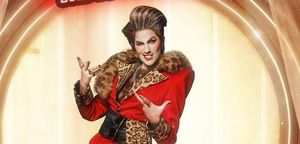
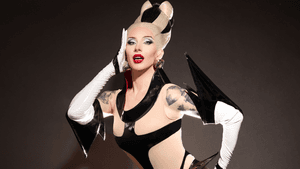
I grew up in small-town Minnesota, where piano lessons and marching band were the closest thing to art. I chased theatre to California, earned a degree, composed musicals, and even worked with a Hollywood agent. I fell in love, moved to Minneapolis, opened a clothing store, and found myself surrounded by drag. BeBe Zahara Benet walked in one day needing a dress for a Cyndi Lauper gig. Suddenly, I was photographing, publishing calendars, and producing a coffee table book years before she won the first season of RuPaul's Drag Race.
'Tea Service

Terry Hastings
Photography wasn't the beginning. It was the next act. Queer storytelling has always been my medium —musicals, drag, and photography. It's all theatre. It's all identity. And it's all me.
Palm Springs arrived after heartbreak. A ten-year relationship unraveled under the weight of family obligations and financial strain. One day, I showed up with a U-Haul and admitted, I've been grumpy for three years. My partner thought that was just my personality. It wasn't. When he asked, "Are you breaking up with me?" the answer was already written. A friend called from Palm Springs with a job offer, and I left Minnesota behind.
In Minneapolis, I had been shooting in tight, theatrical studio setups. In Palm Springs, everything opened up. The desert gave me rhythm. The sun became my collaborator. Shadows gave me structure. I wasn't just photographing bodies; I was composing operas. Natural light transformed my work into something more deliberate, more fluid, more honest.
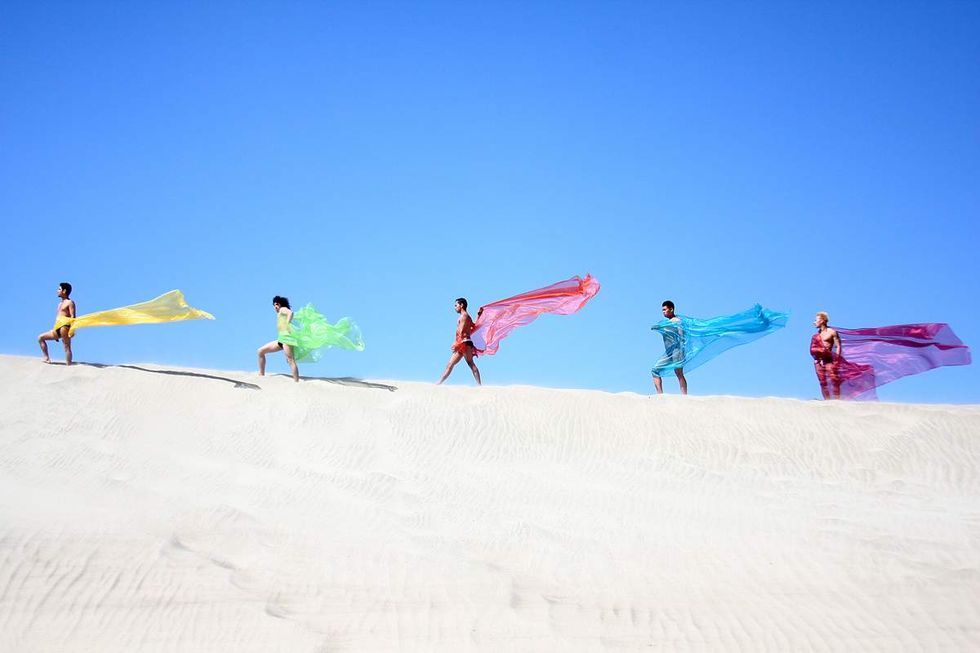
'Colors of the Wind'
Terry Hastings
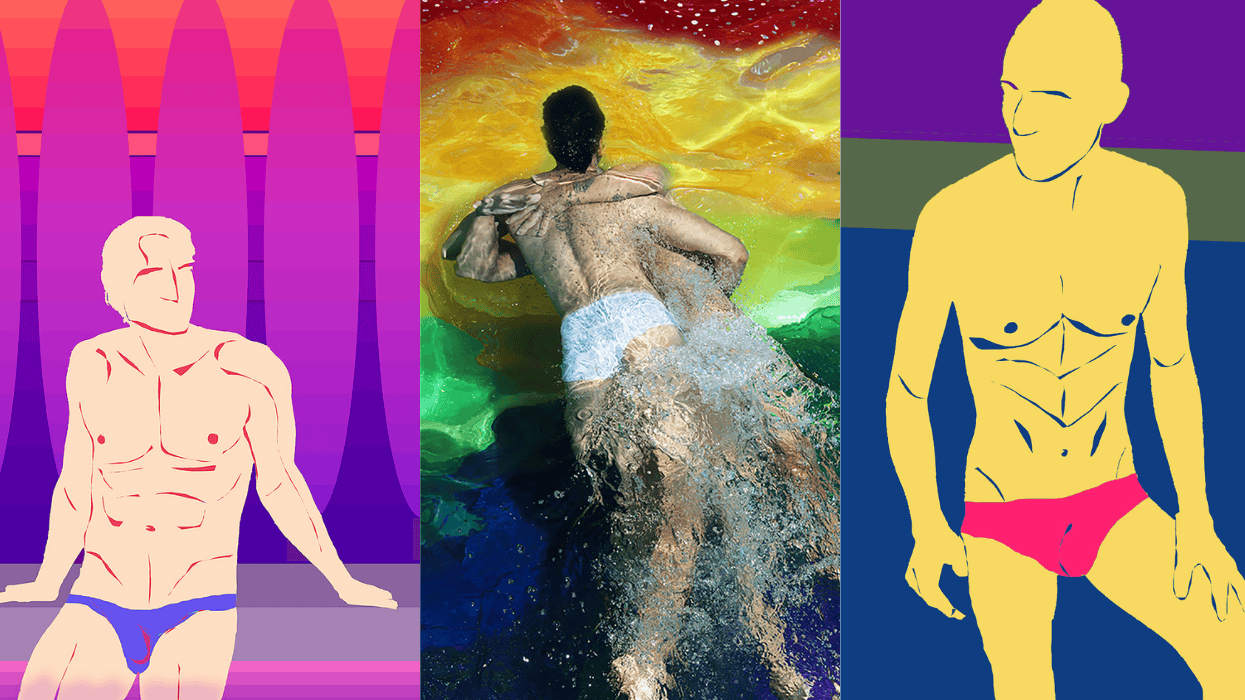
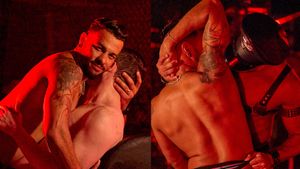
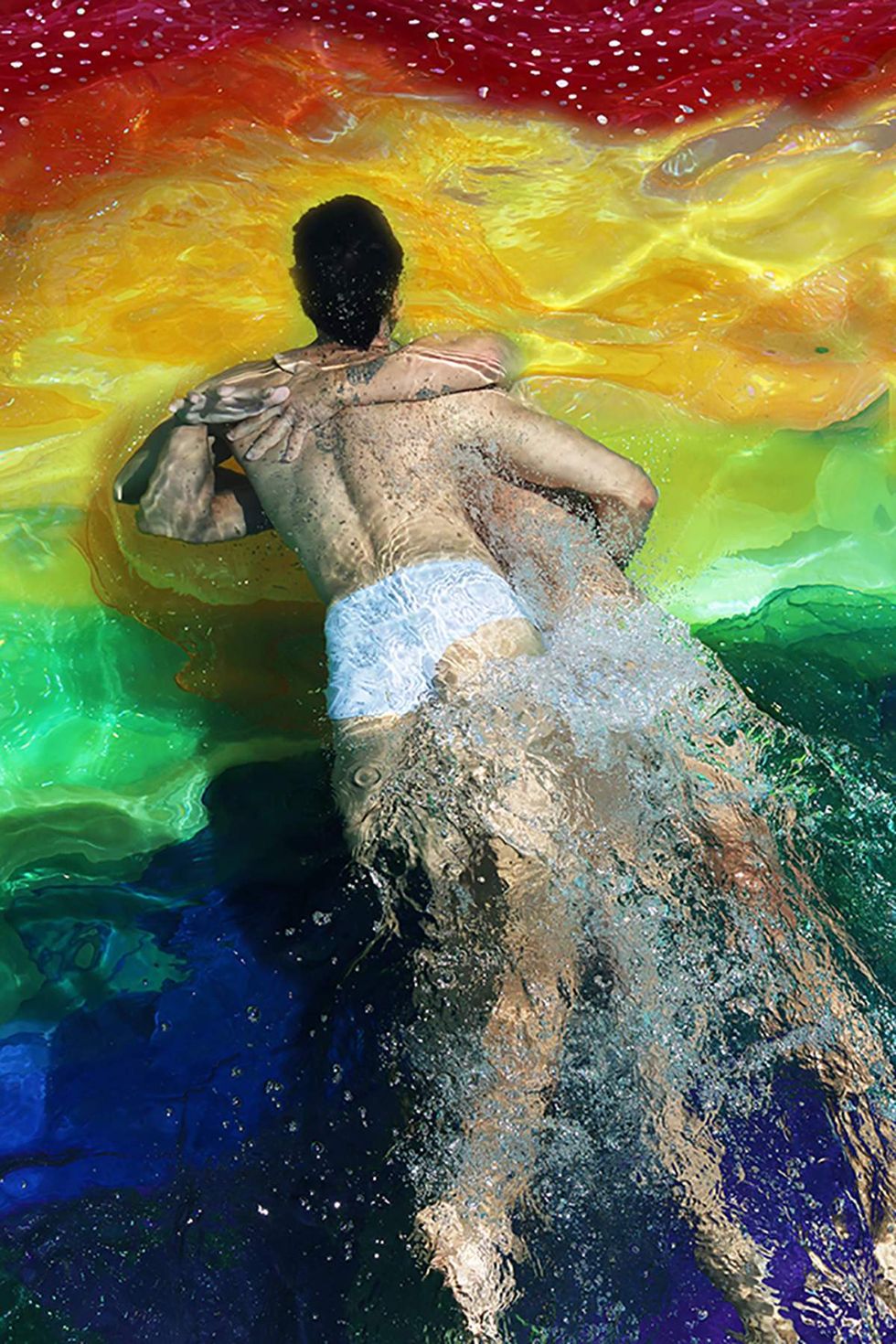
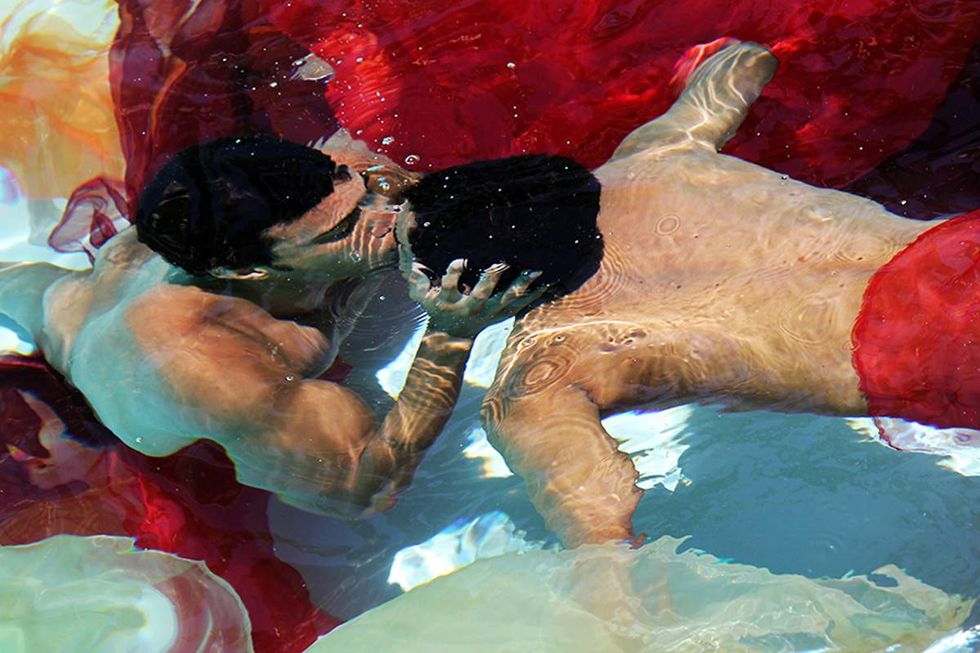
The early Palm Springs years were heaven: naked men on dunes, in pools, on rocks in Joshua Tree. I lived in a clothing-optional apartment complex. My wind and water series captured hot men swimming through colorful fabric, saturated in full color. Forget the stark black-and-white "classic" male nudes — Herb Ritts has been dead for decades.
There, I said it.
'Pride'
Terry Hastings
Then COVID hit. Anxiety made my public day job impossible. Bills piled up. I had 15 years of male nudes archived on discs. I thought, let's see if there's a market. There was. I paid my bills by selling $20 nudes online. But capitalism and censorship are relentless. As Trump and Project 2025 loomed, Etsy banned nudity. eBay scolded me for showing feet. I was shut down four times and reopened each time, but the toll was real.
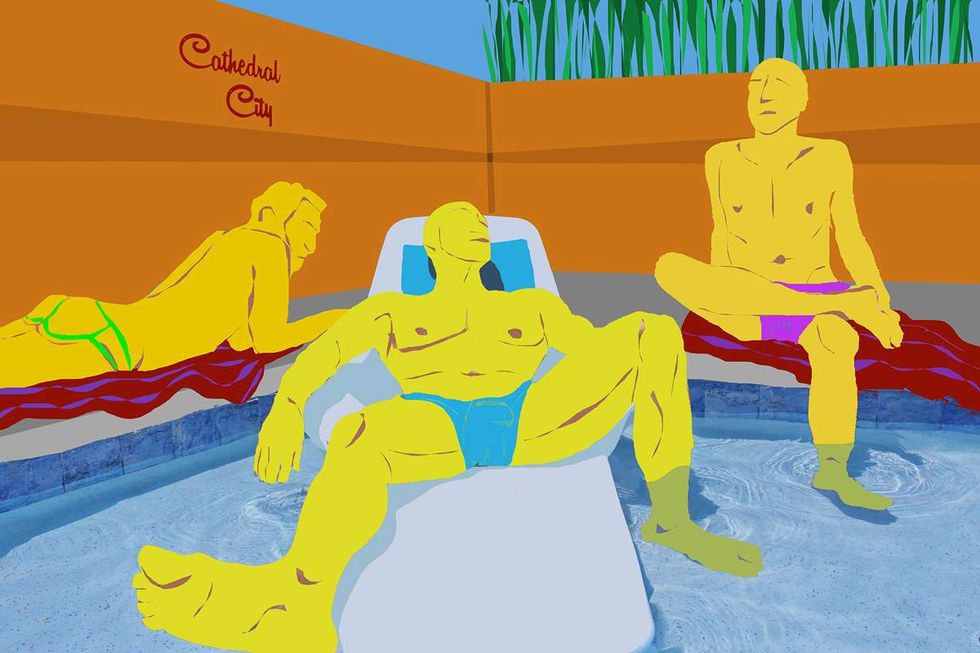
So I pivoted. Photography was "bad." Art was, surprisingly, fine. I developed a digital style using my nude photos: cutting them out, flattening with color, scratching in nipples and genitals, filling backgrounds with crisp, modernist minimalism. It wasn't less gay. It was gay reimagined. Gay disguised. Gay surviving.
'Cathedral City'
Terry Hastings
And then came the next pivot. What if I took the figure out completely? Landscapes. Abstracts. Memory pieces. Instagram followers were confused. Twitter and BlueSky sniffed only when there was at least a hint of penis. I thought maybe high-end interior designers were the new demographic. But where to find them?
'Desert Pool Series'

Terry Hastings
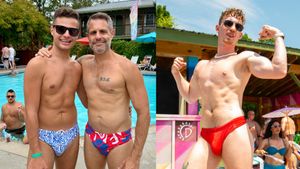
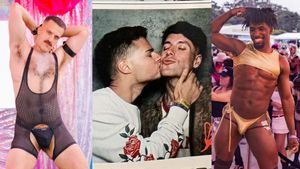
Then Pride week arrived in Palm Springs. I had a good night selling art at the Toolshed, our local leather bar. (Doesn't everyone sell art in a leather bar?) I came home to news that the Supreme Court had dismissed a suit threatening gay marriage. The Epstein files resurfaced, threatening President Trump. An email from Pan Homo Art Gallery, which represents me in Tel Aviv, wants more art. And then I had a phenomenal weekend at the Palm Springs Pride Festival selling art.
Collectors stopped by. Friends told me how great I looked, and how great my art looked. There was joy. Connection. Visibility.
'Hidden Kiss'
Terry Hastings
Four days later, once I recovered from the exhaustion, I sat down and relaunched my gayness. Not as a whisper. Not as a coded abstraction. But as a full-color, unapologetic declaration.
Queer art survives by adapting, but it thrives by refusing to disappear. I've been censored, shut down, redirected, and disguised. I've sold nudes for twenty bucks and abstracts for hundreds. I've lived the line between art and pornography, and I've redrawn it in my own hand.
If I want to be the self-proclaimed "Preeminent Queer Voice of the 21st Century," I need to buy a pin that says exactly that — and wear it on my shirt.
Magnets, though, not stickpins. I've poked enough holes in myself already.

Terry Hastings
Terry Hastings is a Palm Springs–based gay artist specializing in the male form. His work blends photography and digital art with theatrical staging, exploring queer intimacy, desire, and visibility. With international exhibitions and a bold, unapologetic style, Hastings creates images that celebrate the body and challenge censorship.
Perspectives is dedicated to featuring a wide range of inspiring personal stories and impactful opinions from the LGBTQ+ community and its allies. Visit Pride.com/submit to learn more about submission guidelines. We welcome your thoughts and feedback on any of our stories. Email us at voices@equalpride.com. Views expressed in Perspectives stories are those of the guest writers, columnists, and editors, and do not directly represent the views of Pride or our parent company, equalpride.