










































Grinding up on someone in a club is a heady experience, but it can be nerve-racking if you’re worried more about how you smell than who you’re going home with.
Or maybe you were getting hot and heavy with a date when you started freaking out that maybe you’re private area wasn’t smelling fresh as a daisy.
That’s where “whole body” deodorant supposedly comes in. Brands like Lume, Secret, Dove, Old Spice, and Native are all selling this type of deodorant that is meant not just to control armpit odor, but the way the rest of you smells, too.
There are already scented body washes, deodorants, intimate area washes, body sprays, perfumes, and so many other creams, sprays, and soaps that we already hand over our hard-earned cash in the hopes of keeping anyone from getting a whiff of our body odor.
These “whole body” deodorants are being marketed to take care of this pesky problem, but is it really a problem that needs solving, and do they really work, or is it just adding to the already overwhelming stigma about the human body? To find out everything we need to know about this new product, we talked to dermatologist Dr. Hannah Kopelman from Kopelman Aesthetic Surgery and Certified Sex Therapist Dr. Candice Cooper, who is the lead advisor on sex and relationships at Private Sugar Club.
What is whole body deodorant, and is it a new trend?
fizzles/Shutterstock
Whether you want to feel more confident during sex or are worried about being the smelly person on the subway, whole body deodorants are marketed as the solution.
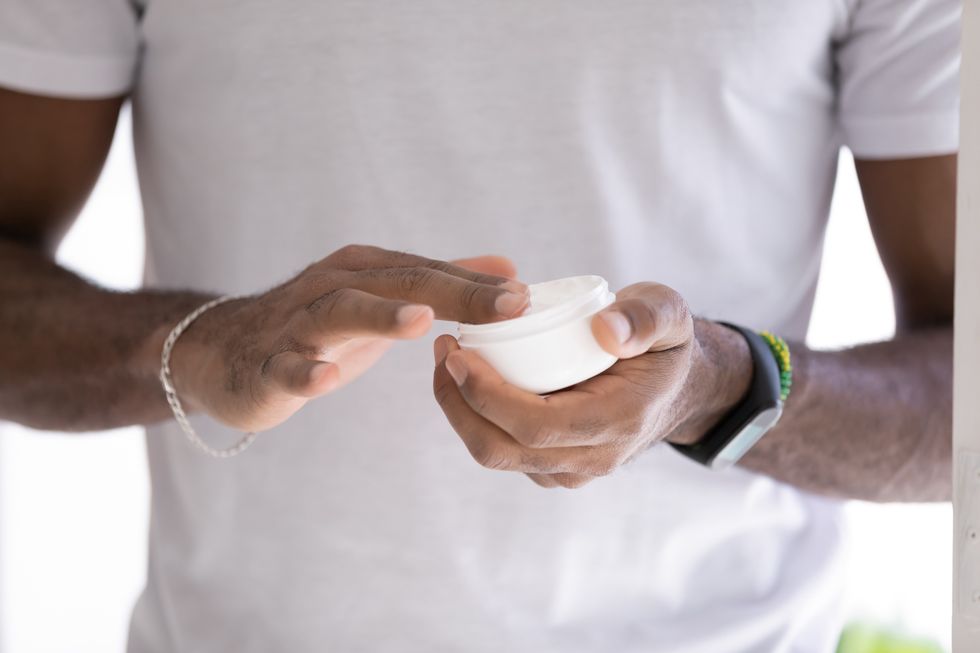
While traditional deodorants target the high number of sweat glands in the underarms, whole body deodorants are marketed as being safe to use in other areas like feet, chest, and groin, and they usually come in the forms of creams, roll-on sticks, or sprays. “I see the rise of ‘whole body deodorant’ as an extension of the wellness and beauty industry’s tendency to expand categories and create new markets,” Dr. Kopelman tells PRIDE.
How does it differ from traditional deodorant, and how does it work?
Unlike the deodorant you coat your armpits in every morning, whole body deodorant doesn’t have the same heavy-duty antiperspirant agents like aluminum salts and instead tends to focus on antibacterial and pH-balancing ingredients and fragrances. Some may also contain absorbent powders or even botanicals used to help manage moisture.
“Instead of clogging up sweat glands around our body, these focus on more antibacterial ingredients and strong natural fragrances to cut through the odor,” Dr. Cooper tells PRIDE. “That said, these areas are called sensitive areas for a reason, and they can cause irritation nonetheless.”
Is it a necessary part of good hygiene practices?

Bernard/Shutterstock
Think of whole body deodorant as more of a preference and a necessity for good hygiene. As long as you are showing regularly and staying hydrated, you probably don’t need one, although you may want to give it a try if you frequently feel self-conscious about the way you smell — especially if it’s keeping you from having a fulfilling sex life.
According to Dr. Kopleman, these products are not medically necessary, and that “regular bathing with mild cleansers, changing out of sweaty clothing, and targeted use of traditional deodorant where odor is most common are usually sufficient.”
Is it causing increased shame or stigma about people’s bodies?
Dr. Cooper fears that the marketing around these new products “pathologize normal body odors” and worries that shaming “our bodies can harm confidence and connection” so when it’s marketed this way, it could potentially lead to people feeling bad for just smelling like a normal human being.
Dr. Kopleman agrees, and says that it’s one of her main concerns about these products gaining popularity. “This trend may inadvertently fuel stigma around the natural scent of the human body, particularly in intimate areas, creating pressure to feel ‘odorless’ at all times,” she explains. “Bodies are meant to have a scent, and in most cases, that’s not a health problem.”
Is it solving a real problem, or creating a new one?
 Is it causing increased shame or stigma about people’s bodies? Pro-stock studio/Shutterstock
 Whole body deodorants seem to be more about making money than solving a real problem, but Dr. Kopleman says that they may be useful for “athletes, people with hyperhidrosis (excessive sweating), or those prone to recurrent fungal or bacterial skin infections.”
These products seem to be solving a problem for some and creating a new one for everyone else. “Some people generally don’t like their own bodily scents, or feel anxious about the amount that they sweat,” Dr. Cooper explains. "For this population, I’d say it’s solving a problem. But for the general population it’s coming up with a solution to a problem they never had.”
What should people look for and avoid?
If you have sensitive skin, Dr. Cooper recommends looking for products that are dermatologically tested and fragrance free, since the harsh chemicals that make up fragrances can irritate sensitive areas of the body. “Things like itching, redness, swelling or rashes are a sign that you should stop using it and consult a medical professional,” she warns.
Dr. Kopleman echoes this advice and says that you should also pick a product that has antibacterial or pH-balancing ingredients. “Avoid harsh alcohols, strong fragrances, or ingredients that could disrupt the skin barrier—especially in sensitive areas like the groin,” she says.
What are the health risks? What are the health benefits?
“The biggest risks are irritation or allergic reactions, particularly in areas where the skin is thinner or subject to friction,” Dr. Kopelman says. “Overuse can also disturb the skin microbiome, which is important for protection against infection.” On the other hand, it can also “lower the risk of rashes or yeast overgrowth in some cases,” she adds.
While there may not be huge health benefits to slathering on a new product, Dr. Cooper says it can do wonders for people who are consumed by the fear that they smell bad. “The main benefit is psychological. We feel fresher, more confident and thus we feel better. But it’s not a necessity to achieve this,” she says.
Sources cited:
Dr. Hannah Kopelman, a dermatologist from Kopelman Aesthetic Surgery.
Dr. Candice Cooper, a certified sex therapist and the lead advisor on sex and relationships at Private Sugar Club.