Settling in for a night of ‘Netflix and Chill’ has never been as easy as it is today. The only hard part is choosing what to watch! With so many great films, docs, and tv shows to chose from, here are 12 Pride films on Netflix worth watching.
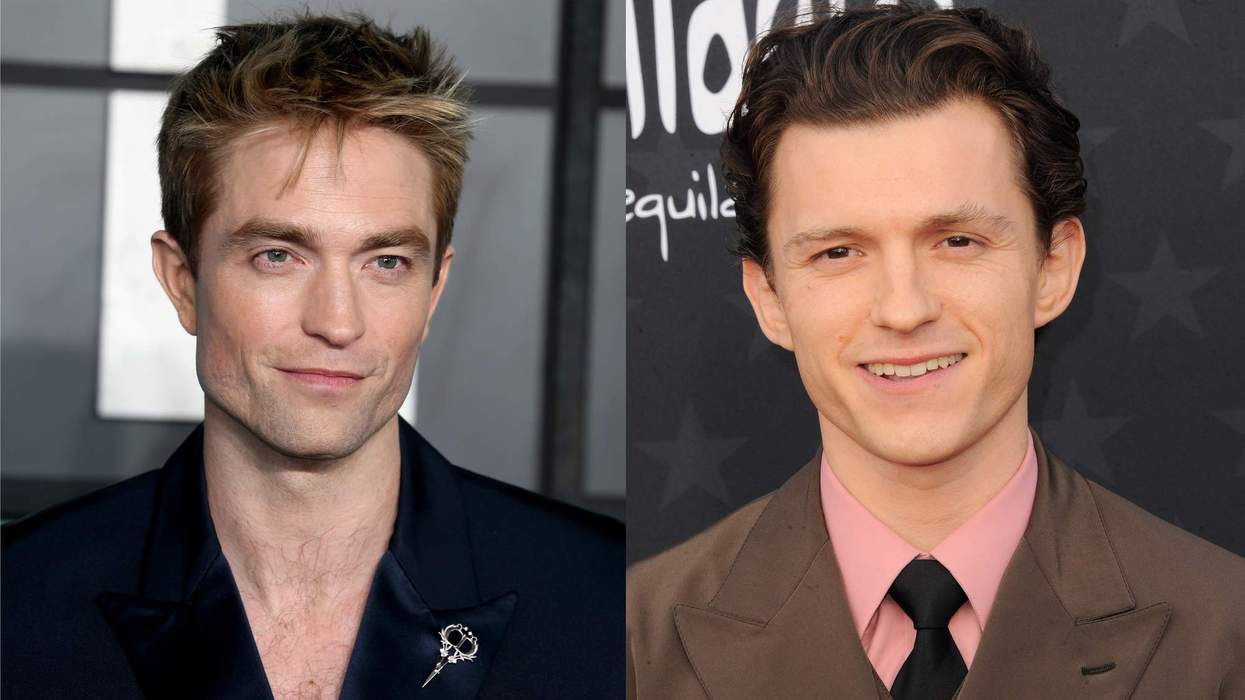
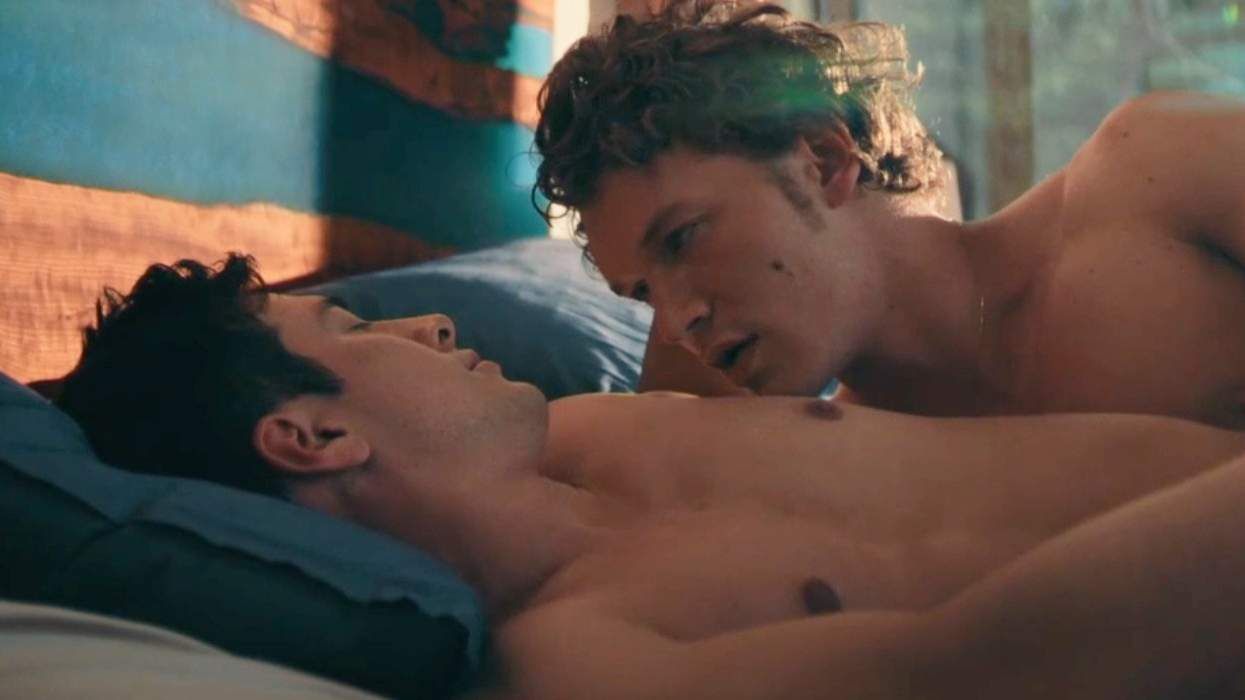
The new trailer for Christopher Nolan’s The Odyssey dropped yesterday, and while some people have been commenting on the lack of historical accuracy, the gay side of the internet has been focused on one thing: the chemistry between stars Robert Pattinson and Tom Holland.
In particular, the moment when the two actors get up close and personal, and Antinous (Pattinson) confronts Telemachus (Holland) and says, “You’re pining for a daddy you didn’t even know, like some sniveling bastard.”
The tension between the characters and the use of the word “daddy” sparked an immediate and very spicy reaction from fans on social media.
From people joking that they should “just f—k already” to other fans calling Pattinson “greedy” for having this scene with Holland when he’s also currently starring in The Drama as Zendaya’s love interest, the reactions have been spicy.
Check out the trailer forThe Odyssey and fan reactions below!
Jesse Grant/Variety via Getty Images / 20th Century Studios
It's a scene that's resonated with people around the world.
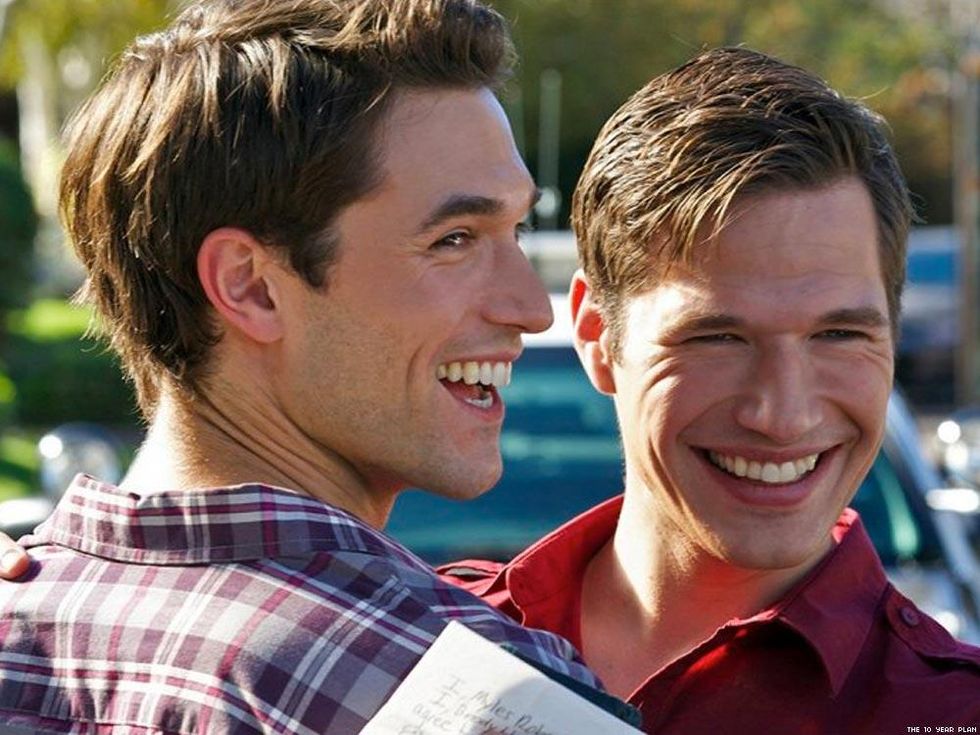
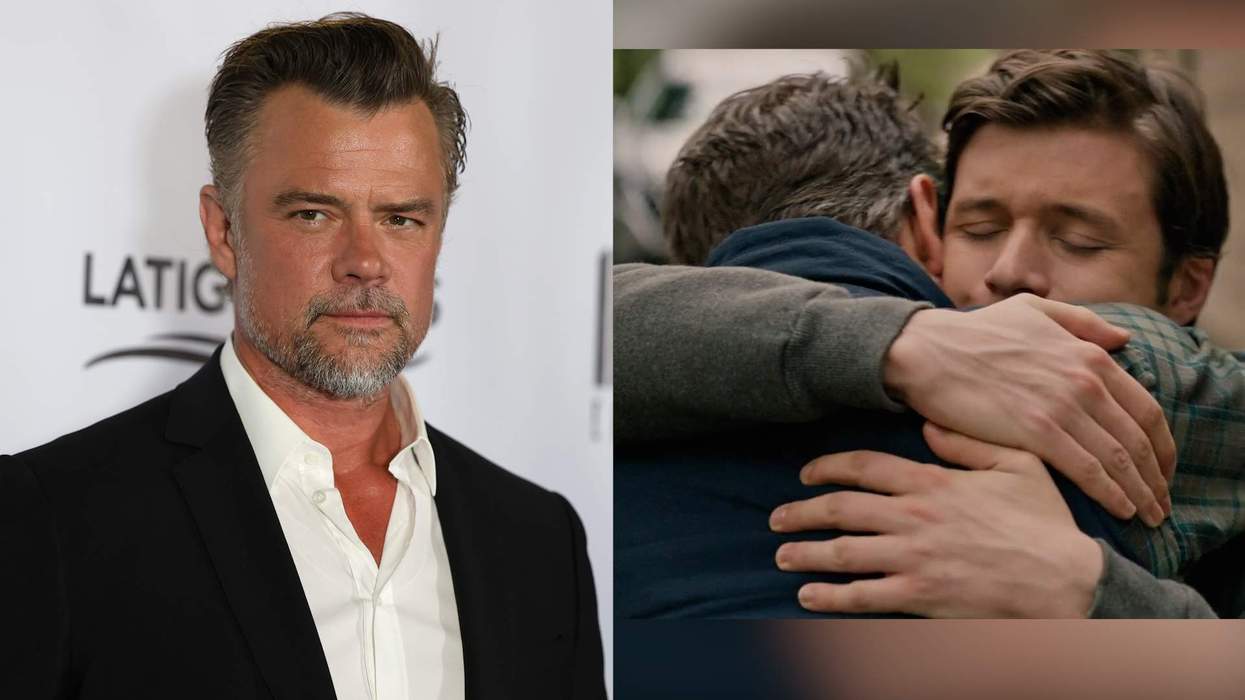
Love, Simon is a monumental queer film known for being the first major Hollywood studio film to focus on a gay teenage romance. The impact is undeniably astronomical, but the relationship between Simon (Nick Robinson) and his father Jack (Josh Duhamel) has deeply resonated with many in the LGBTQ+ community.
One of the most pivotal moments in the film occurs when Jack embraces Simon as his gay son. The tearjerking scene has not only helped many queer people heal their traumatic coming-out experiences, but it's also served as the blueprint for family members to accept and love their child unconditionally.
"I remember when I read that script. He's been hard on his son and didn't know how to react to his son being gay. When he has that moment where he apologizes and comes clean to him, that's [when I realized], I have to play this part," Duhamel tells Out.
Although Love, Simon came out in 2018, Duhamel still receives a lot of love and support for his portrayal to this day. The actor says this movie serves as one of the most crucial roles he's ever played on screen.
"I have had a lot of people come up to me over the years thanking me for playing that part. It was never my intention! I just really liked the part and I felt like it was an important part. I appreciate [the love]."
Now, Duhamel is leaning into another father-figure role in his new film Neglected. The Emmy winner plays a detective who's on the brink of retirement before discovering his son is in danger and needs to be saved within a very short timeframe.
"I understood the character. He had a lot of guilt for not being there for his son because he worked so much. I can relate to that on some level. I feel incredibly lucky to be in this business going on 26 or 27 years now. I wouldn't be here without those who follow my career. I've never taken a single second of this for granted."
Duhamel stars alongside Dylan Sprouse in the thrilling project, and the two established actors bonded over their passionate fanbases who have supported their endeavors for decades.
"When I meet fans in person, I'm stunned and very thankful. I'm blessed to have a very diverse group of people who have been following me since I was very young. I've grown alongside them and if they want to talk to me like I'm their cousin, they're fully allowed to whenever they want," Sprouse tells Out.
Neglected premieres this Friday in theaters. To see the full interview with Josh Duhamel, check out the video at the top of the page.
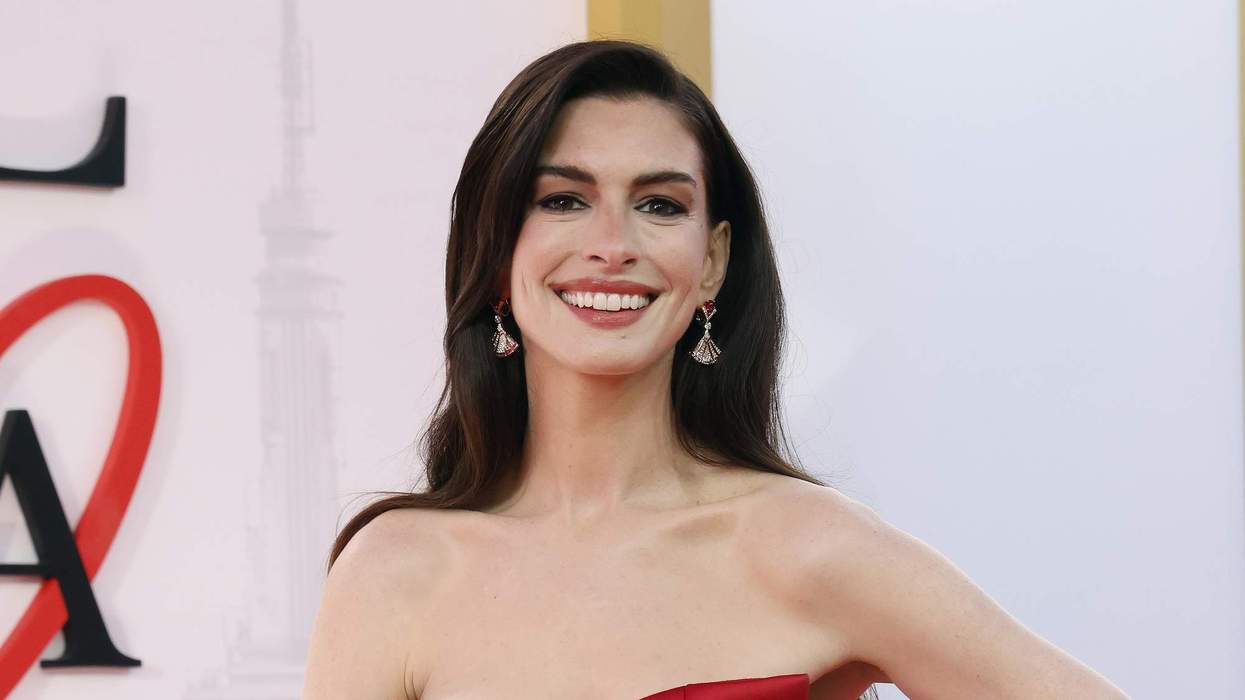
Anne Hathaway attends "The Devil Wears Prada 2" New York Premiere.
Taylor Hill/WireImage
Miranda Priestly will see you now.
It's hard to believe that Anne Hathaway stepped on the set of The Devil Wears Prada twenty years ago at just 22 years old. Two decades later, the actress is reprising her legendary role of Andy Sachs in the highly anticipated sequel that's already receiving rave reviews.
Starring alongside Meryl Streep, Emily Blunt, and Stanley Tucci, Hathaway is proud to revisit an iconic movie that's resonated with millions of people around the world, especially within the LGBTQ+ community. In The Devil Wears Prada 2, Sachs is recruited to help Priestly in a major scandal that puts the reputation of Runway Magazine at stake.
"I had [the queer community] in my heart the entire time we were filming! I knew who I was doing it for. It's so obvious to me, the whole concept of equality. It doesn't make any sense to me that the laws determining human freedom are not even applied across the spectrum. I'll fight until it's that way, but in my head and in my heart, I know that's true," Hathaway tells Out.
Hathaway has starred in a slew of feel-good movies throughout her incredible career, such as The Princess Diaries, Les Misérables, Alice in Wonderland, Brokeback Mountain, Ocean's 8, and so many more. The talented star has built an impressive catalog of films that have brought hope and inspiration to millions of adoring fans.
The timing of The Devil Wears Prada 2 couldn't be better, as queer people are living in fear over the rise of anti-LGBTQ+ legislation across the globe. Hathaway is thrilled that the sequel can serve as a crucial form of escapism and joy at a time it's needed most.
"This is a film for everyone. I love that there's a film and there's a space where we can be thinking about suburban dads and urban gays. We know that they will both love it and find something in it! I feel like there's a lot of, frankly, money to be made by keeping us divided. It's really wonderful to offer something for everyone."
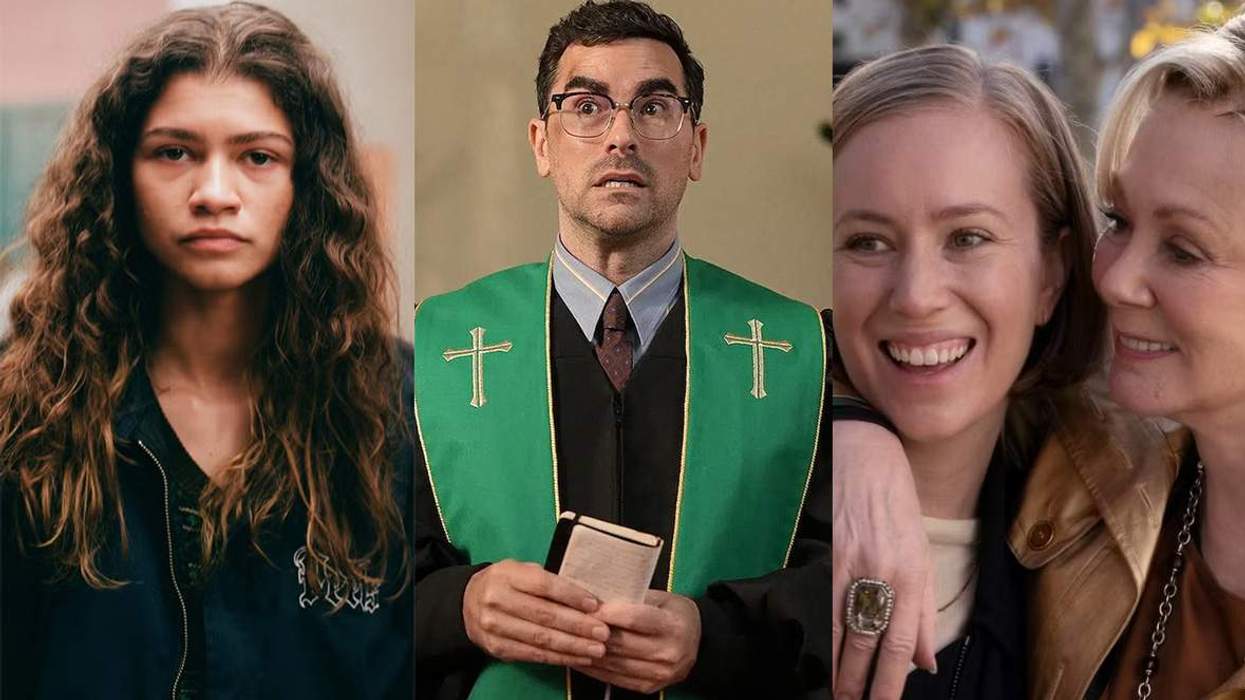
From left: 'Euphoria,' 'Big Mistakes,' and 'Hacks.'
HBO; Netflix
Spring is finally here, and along with flowers blooming and birds chirping, there is also a whole new crop of LGBTQ+ movies and television shows ready and waiting for you to check out.
Not only are there brand new queer movies coming to theaters, but some of your favorite bingeable TV shows are also returning with exciting follow-up seasons. The content is so good, you might miss all of the Spring showers!
Keep scrolling to see what awaits you this month — and where you can watch them too!
All film and series descriptions are courtesy of their respective studios and networks.
'Love on the Spectrum' — April 1 on Netflix
Season 4 of Love on the Spectrum brought viewers a queer love story between Pari Kim and her new partner, Tina Zhu Xi Caruso. In season 5, new and familiar faces star in this heartfelt documentary series that follows singles on the autism spectrum as they search for true love.
This spring, Kitty Song Covey (Anna Cathcart) returns to the Korean Independent School of Seoul (KISS) for her senior year, excited to check off everything on her Senior Sunset list in this sequel to the popular To All the Boys I've Loved Before movies.
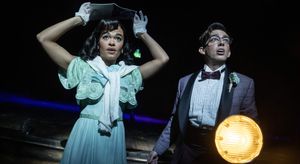
A professionally shot version of the Tony-winning Sondheim revival of Merrily We Roll Along starring Jonathan Groff, Daniel Radcliffe, and Lindsay Mendez is coming to Netflix.
Season 5 marks the finale season of the long-running comedy series. In the aftermath of mistaken and unflattering news reports that she passed away, Deborah Vance (Jean Smart) and Ava (Hannah Einbinder) return to Las Vegas more determined than ever to secure Deborah’s legacy as a comedian.
In the fifth and final season, it’s Homelander’s world, completely subject to his erratic, egomaniacal whims. Hughie, Mother’s Milk, and Frenchie are imprisoned in a ‘Freedom Camp.’ Annie struggles to mount a resistance against the overwhelming Supe force. Kimiko is nowhere to be found. But when Butcher reappears, ready and willing to use a virus that will wipe all Supes off the map, he sets in motion a chain of events that will forever change the world and everyone in it. It’s the climax, people. Big stuff’s gonna happen.
The Boys season 5 premieres on Wednesday, April 8, on Prime Video.
'Big Mistakes' — April 9 on Netflix
Dan Levy is back, and this time he’s bringing the family drama (and crime) with the new comedy series Big Mistakes, premiering April 9. In what promises to be a wildly dysfunctional, hilariously chaotic ride, the series follows two deeply incapable siblings who are blackmailed into the world of organized crime.
Big Mistakes premieres Thursday, April 9, on Netflix.
'Euphoria' — April 12 on HBO Max
Euphoria returns for a third season which will jump forward in time by five years and find Rue (Zendaya) in a sticky situation with a drug kingpin, Cassie (Sidney Sweeney) is engaged to Nate (Jacob Elordi) and making content for OnlyFans, and Jules (Hunter Schafer) is in art school and trying to avoid her responsibilities.
Euphoria season 3 premieres on Sunday, April 12, on HBO Max.
'Mother Mary' — April 17 in theaters
Long-buried wounds rise to the surface when iconic pop star Mother Mary (Anne Hathaway) reunites with her estranged best friend and former costume designer Sam Anselm (Michaela Coel) on the eve of her comeback performance. The film also stars Hunter Schafer as Sam's assistant, Hilda.
Mother Mary premieres Friday, April 17, in theaters.
'Almost Us' — April 17 on WatchVIM
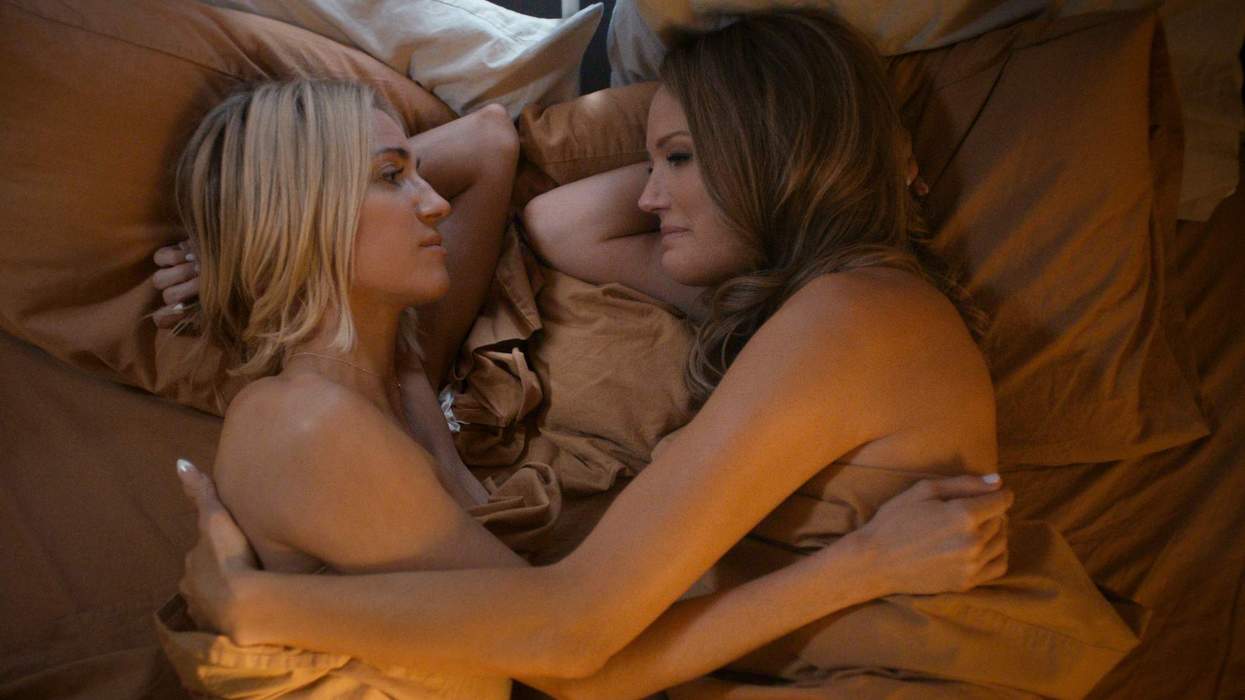
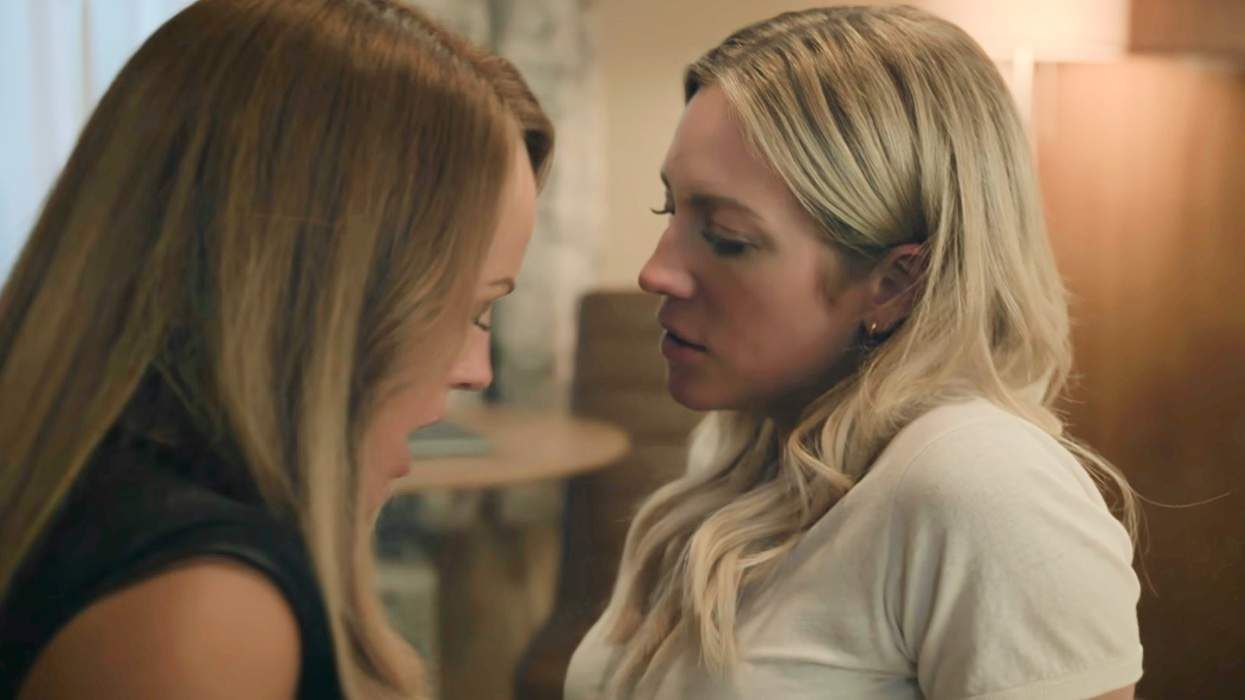
Almost Us is a queer romance comedy about messy timing, unexpected sparks, and the hilarious (and sometimes heartbreaking) moments that happen when two people try to act like they don’t care… but clearly do.
Almost Us premieres on Friday, April 17, on free LGBTQ+ streaming service WatchVIM.
'Running Point' — April 23 on Netflix
Isla Gordon (Kate Hudson) is no longer the surprise choice to lead the Los Angeles Waves, she’s the one everyone is watching. With the franchise finally rebounding after last year’s scandal, Isla is determined to prove she’s not just keeping the seat warm for her brother Cam (Justin Theroux).
What she doesn’t know is that Cam is quietly maneuvering behind the scenes to reclaim his post, turning every misstep into ammunition. The show also features Sandy Gordon, Isla's gay half-brother, who is the family-owned basketball team's chief financial officer.
Running Point season 2 premieres on Thursday, April 23, on Netflix.
From L to R: Kathryn Newton, Sarah Michelle Gellar, and Samara Weaving.
Searchlight Pictures/Pief Weyman
Feel as though you have a rageful scream perpetually caught in your throat? Wish you had somewhere to put those feelings of frustration and anger over the state of the world? Want some catharsis with a side of bloody revenge, but, you know, legally?
That’s where genre filmmaking becomes such a mental health lifeline, especially horror, and particularly films like Ready or Not 2: Here I Come. Like its predecessor, the film functions as both an adrenaline rush and a darkly hilarious eat-the-rich revenge fantasy, pitting a woman — or in this case two women — against a horde of elitist, sociopathic monsters and letting us watch her cut through them one by one.
Samara Weaving and Kathryn Newton.Searchlight Pictures/Pief Weyman
It's tense, it's fun, it's gruesome, and it's cathartic, and it meets the collective moment with much-needed, fictional class war.
For those unfamiliar with the first film, it follows a young bride, Grace (Samara Weaving), who, on the night of her wedding into a wealthy, elite family, is forced to play a game of hide and seek. What at first feels like an eccentric but harmless family tradition reveals itself to be a deadly game of cat and mouse, at the behest of the devil himself, with whom the family made a bargain in exchange for wealth and power.
Grace comes out on top, but as we see in the sequel, her battle for survival has just begun. The second film picks up precisely where the first leaves off with Grace, blood-soaked, smoking as her in-laws' estate burns down behind her.
Samara Weaving.Searchlight Pictures/Pief Weyman
The action picks up with the arrival of her estranged sister Faith (Kathryn Newton), who, along with Grace, finds herself in the crosshairs of a group of wealthy and powerful families tracking her down to reclaim the power granted her by, again, the devil, after she becomes the last remaining member of her family.
It's a killer setup for a horror film, but it resonates metaphorically, too. This is not lost on Sarah Michelle Gellar, who stars as Ursula, one of the elites looking to track down and sacrifice the sisters.
“Genre is best at explaining the things either that we can’t explain or the things that we don’t want to truly understand. It gives us an outlet to explore it and to see it without having to mirror too much reality that [it gets] depressing, because we’re already living in it,” she tells PRIDE.
Nestor Carbonell, Sarah Michelle Gellar, Shawn Hatosy, Elijah Wood, and Nadeem Umar-Khitab.Searchlight Pictures/Pief Weyman
It's this ability to hold up that mirror while still entertaining that makes horror so powerful, and why it has had such a legacy of being the thematic Trojan horses for cultural critique that would potentially turn off audiences if the approach was more didactic. Elijah Wood, who joins the cast as the literal devil's advocate, known only as “lawyer,” agrees. “When it’s at its best, genre can shine a light on ideas that are real and be thought-provoking and allow for exploration of those ideas. It becomes sort of like a mirror to our experience as human beings,” he tells PRIDE.
That being said, both actors are reveling in their villainous roles. “As an actor, they’re the meatiest roles,” Gellar explains. “In this movie alone you get to make people cry, you get to make people laugh, you get to make people scared. It’s a love story between two sisters, it’s an action movie, like, it’s all in there, and you get to do it all in one job.”
Daniel Beirne, David Cronenberg (portrait) Shawn Hatosy, and Sarah Michelle Gellar.Searchlight Pictures/Pief Weyman
While Gellar is best known for her more heroic characters, she brings the same level of humanity to her monstrous ones. “When you play an evil character, you have to give them some humanity or the audience doesn’t connect,” she explains. “Otherwise it’s just, ‘That person’s bad, I hope they die.’ But when you truly give them humanity, the audience goes back and forth, like, ‘Well, I hate them, but also they’re struggling, and is that why they’re making these choices?’”
Wood, who was a fan of the original film, was delighted to sign on to the sequel for his mysterious role. “Having loved that first film and then being asked to participate in a sequel that is honoring that first movie and expands upon the narrative in a way that you really want a great sequel to do was just such a gift to be asked to come to the party,” he says.
Elijah Wood.Searchlight Pictures/Pief Weyman
Newton, who stars as Weaving's little sister, has made a career of starring as endearing, complicated, and hilarious antiheroes in horror. Coming from leading roles in films like Freaky, Abigail, and the criminally underappreciated Lisa Frankenstein, she is just as excited to bring her unique approach to this one. “In a genre movie, you have to be weird. You can’t be just one thing, and no one is. We all know someone’s going to die and there’s going to be a final girl, but how do we keep the audience invested? Weird choices,” she tells PRIDE.
But also, she says that audiences will connect with the complicated but ultimately loving dynamic between Faith and Grace as they try to survive the night. “If [Grace] had just been alone in the sequel, it would have been too easy to give up. Now she has someone she’s got to fight for. Sometimes it’s a beautiful thing to stop thinking about yourself so much. Look around you, help someone else out.”
Kathryn Newton.Searchlight Pictures/Pief Weyman
The film also charms by bringing together multiple generations of beloved women in horror, which, for Newton, was an actual dream come true, particularly when she learned that she and Weaving would be starring opposite Gellar, who she had long admired. “I literally fell on the floor because I was like, this is three generations of scream queens coming together in one universe. As a fan of the genre, I was like, fans are going to love this.”
She’s not wrong. The film is exactly the bloody, funny, and culturally cutting escape that many are naturally craving. It expands the world introduced in the original while maintaining what made the first movie so fun. It’s girl power vs. the power-hungry, where wit, grit, and a whole lot of ass-kicking — in a wedding gown, no less — will have audiences cheering for its heroes and leaving them hungry for revolution.
Ready or Not 2: Here I Come arrives in theaters March 20. Check out the trailer below!













































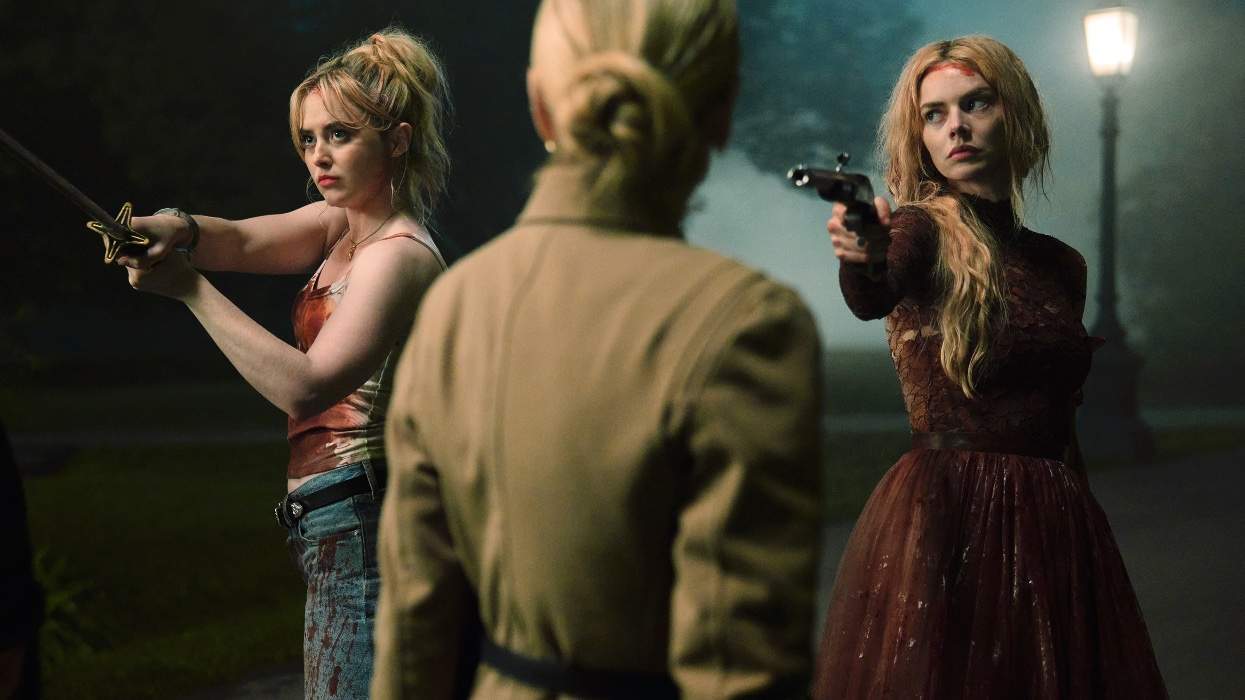
 Samara Weaving and Kathryn Newton.Searchlight Pictures/Pief Weyman
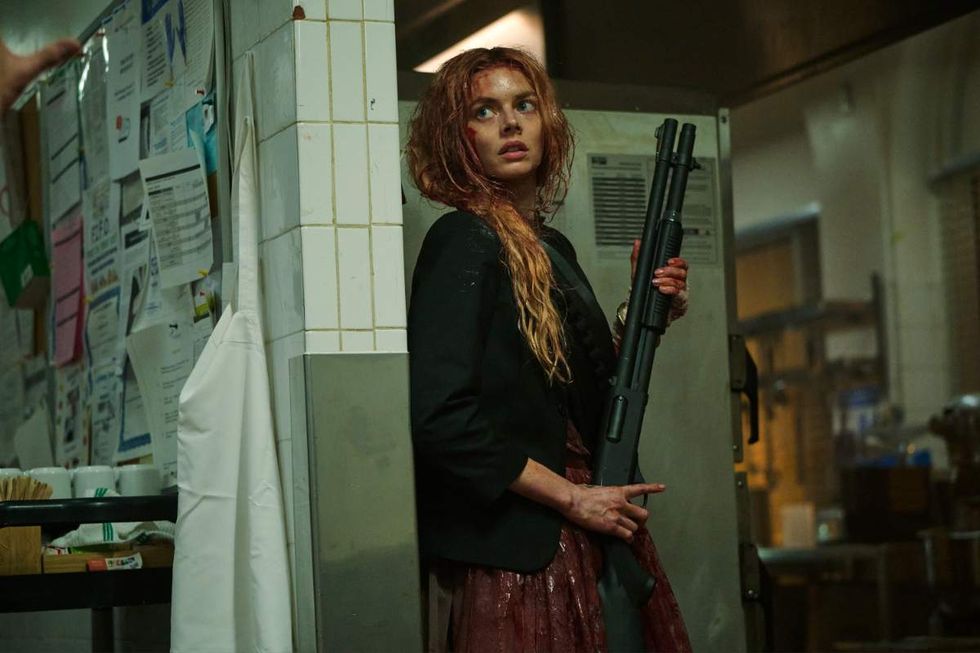 Samara Weaving.Searchlight Pictures/Pief Weyman
 Nestor Carbonell, Sarah Michelle Gellar, Shawn Hatosy, Elijah Wood, and Nadeem Umar-Khitab.Searchlight Pictures/Pief Weyman
 Daniel Beirne, David Cronenberg (portrait) Shawn Hatosy, and Sarah Michelle Gellar.Searchlight Pictures/Pief Weyman
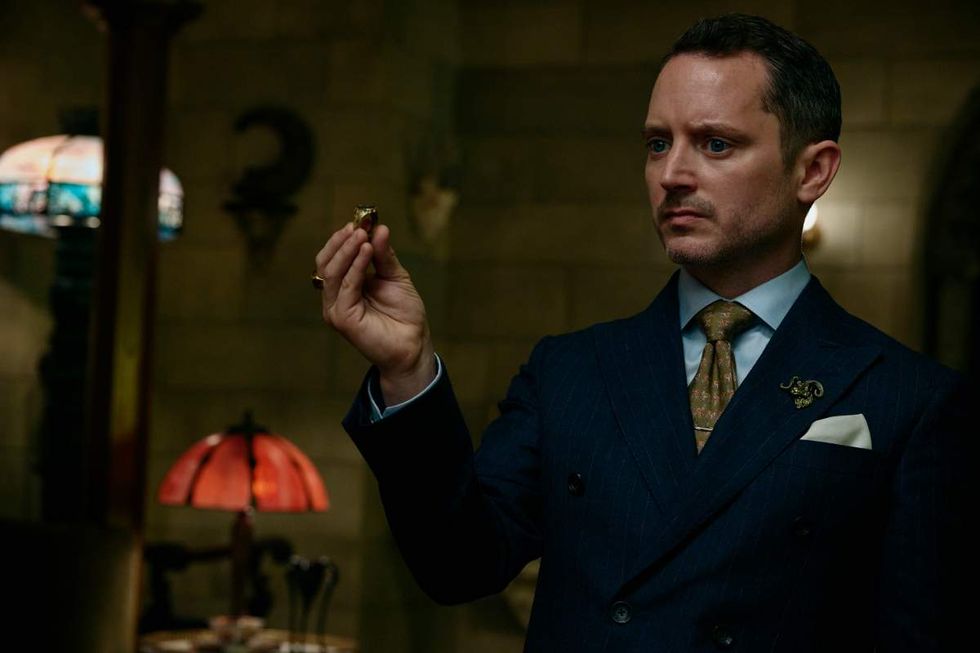 Elijah Wood.Searchlight Pictures/Pief Weyman
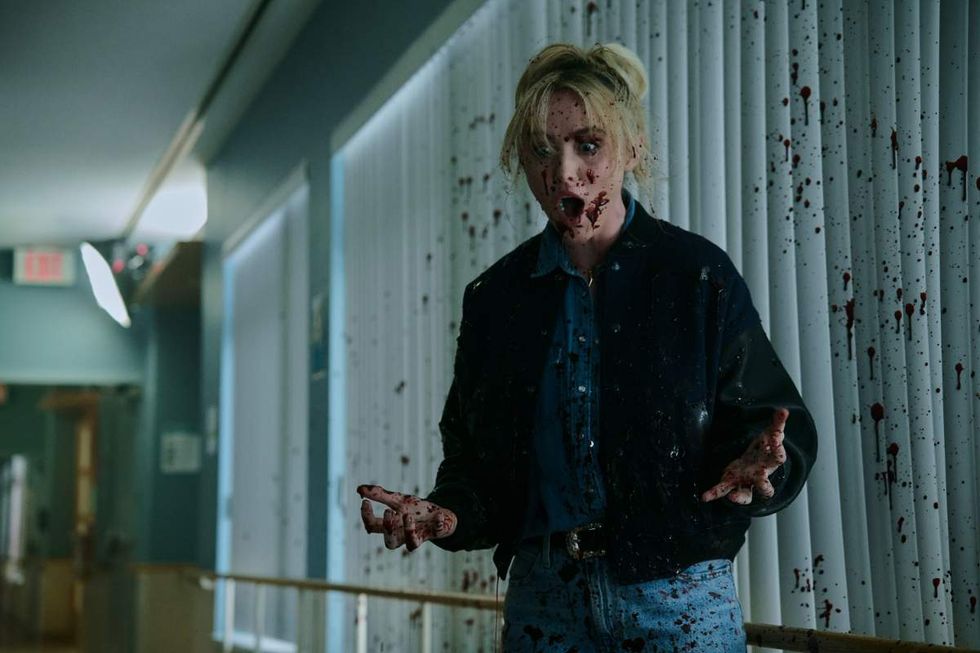 Kathryn Newton.Searchlight Pictures/Pief Weyman