









































Modeling your dating life after a movie about a grumpy swamp-dwelling ogre and his smart-aleck donkey is probably not a great idea, but the popular DreamWorks animated movie has actually inspired a new dating trend that is either smart or toxic, depending on your perspective.
From submarining and banksying to floodlighting and pocketing, Gen Z is just as toxic when it comes to dating as the rest of us — they’re just better at coming up with fun names for their destructive relationship habits. Now, one of the newest toxic dating trends is named after the movie Shrek.
“Shrekking” refers to a dating tactic where people intentionally pick a partner who is less attractive in the hopes that they’ll find someone kinder and with a better personality by dating down than if they had swiped right on beauty and brawn.
In an age of social media, believable beauty filters, and cheaper plastic surgery, superficiality only seems to be getting worse, but “Shrekking” is almost the opposite of superficial until you really try to drill down into why people are choosing partners they deem to be “ugly.” So to get to the bottom of this new dating trend and why people are doing it, PRIDE spoke with Dylan Thomas Cotter — an author, trans activist, former adult entertainer, and Scruff dating app ambassador — and Angie Reyes, a relationship expert and the general manager at Wiselaw.
What is 'Shrekking,' and where did the term originate?

Peopleimages/Shutterstock
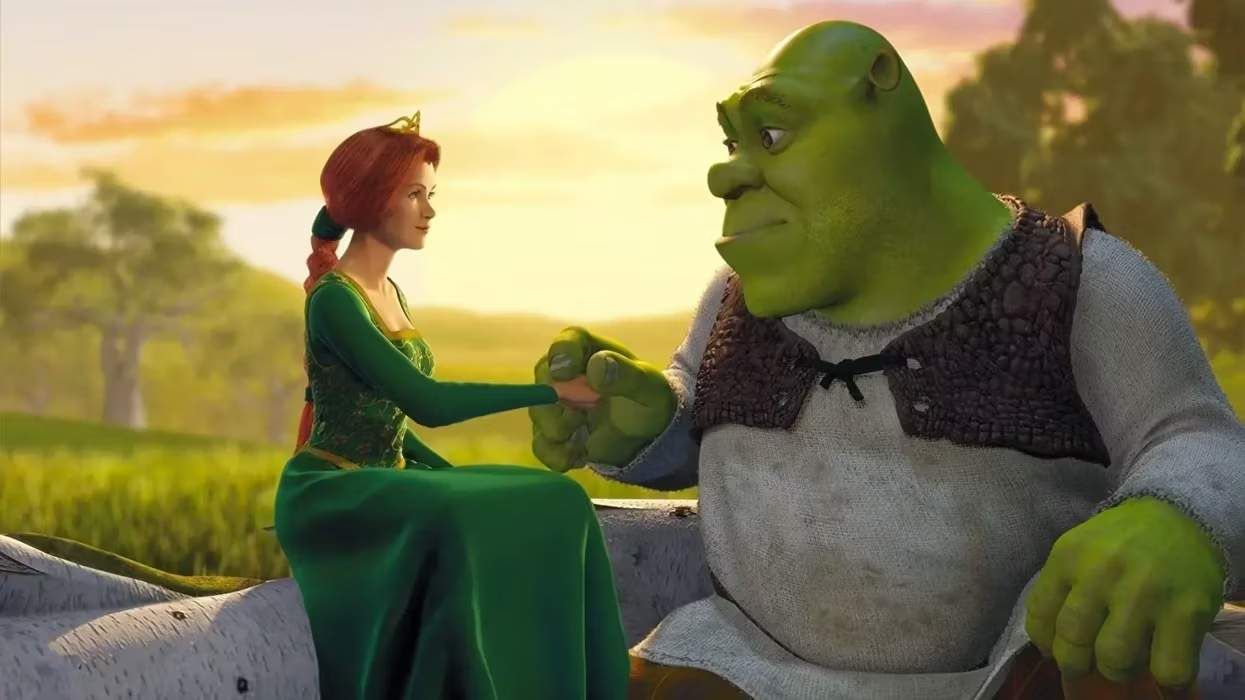
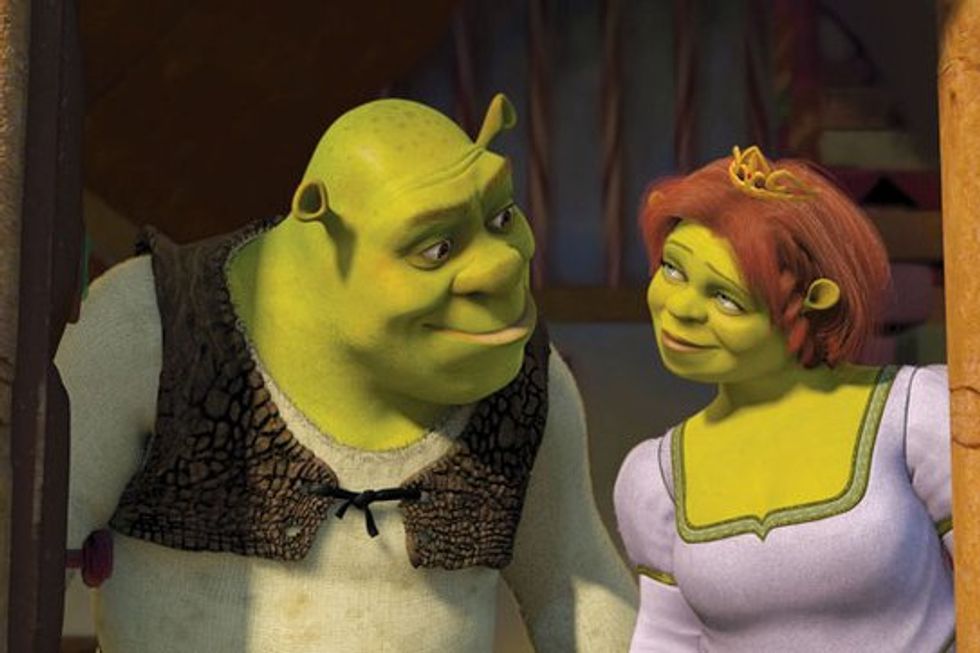
Shrekking is named after the love story at the heart of Shrek, where the beautiful Princess Fiona and a green ogre named Shrek fall in love despite the stark differences in their appearances. In the film, it turns out that Fiona is actually a cursed ogre herself, but in real life, those involved in Shrekking are intentionally trying to date someone they wouldn’t normally be attracted to because they believe they’ll be treated better.
“It’s an inauthentic dating strategy based on the false assumption that people who are not ‘conventionally attractive’ are somehow inherently kinder or have better character,” Cotter tells PRIDE. “Some people think if they ‘date down’ they will avoid being hurt because hurting someone that they perceive as ‘less than’ conventionally attractive will not be as impactful.”
One of the main problems with this toxic dating trend is that the partner who identifies with Princess Fiona often ends up feeling like “they are settling, or giving up something better,” while the Shrek they choose “may be feeling inferior to their ‘more attractive’ partner,” Reyes explains.
Is it common in the LGBTQ+ community?
According to both Cotter and Reyes, Shrekking is probably more common in straight relationships than queer ones. “In the LGBTQ+ community we often struggle in our early lives to then later on finally come out and be authentically who we are. Based on that we are more often true to ourselves in all areas of our lives and have higher standards of ourselves and our partners,” Cotter shares.
Heterosexuals cisgender men are the most likely to engage in the behavior, but he explains that cisgender women may also do it out of self preservation. “The difference here is motivation, heterosexual cisgender women may do this to try to avoid objectification or perhaps to test the emotional capacity of their partners,” Cotter says.
Is it healthy for a relationship?
Shrekking isn’t a healthy relationship dynamic and should be considered a major red flag. “It creates an unevenness that makes it difficult for both partners to see themselves as equals in the relationship, with one feeling like they are doing the other person a favor and another feeling like they should be doing more for their partner, even when they are not appreciated,” Reyes says.
Cotter explains that while Shrekking can seem like a good idea in theory, people choosing their dates this way are “setting themselves and their prospective partner up for potential heartbreak.” To go through with this, the person is “not being true to themselves” and may end up in a relationship with someone they aren’t sexually attracted to. Not only is this a bad idea for the long-term health of the relationship, but it “showcases the insecurity they have with themself and perhaps may also be due to the fear of being rejected by others.”
But beyond that, it’s also cruel. “So the person who does this may think, ‘hey I’ll date someone I am not that attracted to physically and see how it goes because then if it doesn’t work out, I won’t feel so bad.’ That’s highly disrespectful towards the person they are lowering their physical standards to date and aside from it being fake, it’s super mean to put someone’s heart through,” he says.
What does it say about you if you are ‘Shrekking’?
Reyes says that people who choose Shrekking as a means to finding a longterm partner, “are giving up on being in the relationship they feel they deserve for something they feel is more realistic and obtainable.”
Cotter, on the other hand, says Shrekking shows that you are either “manipulative, vain, insecure, desperate, most likely have a hard time being single and are dishonest with yourself and others.” Money can also be a motivating factor when it comes to Shrekking, and people who date that way are sometimes doing it because they are “gold diggers.”
“People who purposely date that way are calculated with dishonorable intentions and ethics typically surrounding material items and wealth,” Cotter says.
If you suspect your partner is 'Shrekking,' what is the best way to handle it?
DreamWorks
Reyes advises opening up communication with your partner if you fear they are Shrekking you and “possibly consider terminating the relationship because the truth is that continuing the relationship would neither be fair to you or to them.”
Cotter agrees, and says that you should “listen to your intuition, if something feels off with this person you are dating” and then “take them to a public setting, sit down and have an open dialogue and flat out ask what their intentions are in dating you and what about you drew them to want to be in a relationship with you.”
And if you feel ike you’re being Shrekked, don’t be afraid to “stand firm and protect your boundaries. If they are playing a game with your emotions by all means you can end that game, walk away,” he says.
What are the signs to be on the lookout for?
If your partner is constantly sending you mixed signals or makes jokes about your appearance, “it may be to disguise their true feelings about your appearance and their potential lack of attraction to you," Cotter cautions.
You should also take note if they try to avoid introducing you to their family and friends. “If this person doesn’t bring you around their social circle on a typical relationship timeline it might be because they are embarrassed of your appearance,” he warns. "If they’re not showing you off it may be because they think you are ‘less than’ who they usually date.”
Reyes says that you should also pay attention to “hesitation to share their needs and desires in ways that tells you that they are holding back and haven't entirely committed to the relationship” because the person doing the Shrekking likely feels like they are too good for the relationship and that their partner doesn’t deserve them.
Should you say something if you see someone being Shrekked?
While being the victim of Shrekking can be awful, you shouldn’t start assuming that everyone in a relationship where one partner isn’t as conventionally attractive as the other is being Shrekked. “It’s important to note that one person’s ‘no’ or ‘ick’ is another person’s ‘hell yes!’ and frankly unless you are dating the person at hand, it is just polite to never assume and/or vocalize your assumptions that someone may be Shrekking their partner,” Cotter explains. “Unless you are the one in the relationship dynamic your opinion of it should be kept to yourself."
Sources cited:
Dylan Thomas Cotter, an author, trans activist, former adult entertainer, Scruff dating app ambassador, and author of Transgender & Triggering The Life of Dylan Thomas Cotter.
Angie Reyes, a relationship expert and the general manager at Wiselaw.








 What is 'benching'? Tetxu/Shutterstock