











































“Narcissistic” is an easy insult that gets hurled around a lot as shorthand for selfish — you’ve probably even used it during an argument — and it’s no surprise considering we live in a society where self-obsession is increasingly the norm.
We’ve all dated or hooked up with people who were incredibly toxic. How many times have you been in a relationship with someone only to have your friends warn you that they are bad news? While many of these people are terrible for other reasons, some of them were probably narcissists.
But acting full of yourself and not taking other people’s needs into account isn’t the same as a diagnosable mental condition. So how do you know if you’re dating someone with Narcissistic Personality Disorder, a garden-variety narcissist, or just a toxic dater? To get to the bottom of this we talked to Eamonn McKay, a therapist and the lead of Trauma Therapy Center of Excellence at Octave; Taryn Sinclaire, a transwoman and trauma-focused therapist; and Jenny Bradley, a queer Board-Certified Family Law Specialist, mediator, and the founder of Triangle Smart Divorce in North Carolina.
What is 'narcissism,' and how common is it?
Narcissism exists on a spectrum, and all of us have some of the characteristics. While some people are egotistical, prideful, or have a massive ego, about one to six percent of the U.S. population actually has a diagnosable mental health disorder. “True narcissism is a deep need for control, admiration, and power, often paired with an inability to take responsibility or show empathy,” Bradley tells PRIDE. “It’s not as common as social media makes it seem, but the traits show up more often than people realize, especially in high-achieving or high-pressure professions where confidence and control are rewarded.”
But to be diagnosed with NPD, you need to meet five of the nine criteria in the DSM-5 (Diagnostic and Statistical Manual of Mental Disorders), including “grandiosity, entitlement, lack of empathy, and a need for admiration,” according to McKay.
Is it more or less common in the LGBTQ+ community?
While the research on the prevalence of NPD and general narcissism in the LGBTQ+ community is limited, both McKay and Sinclaire agree that anecdotally there is a higher rate among queer people.
The exact cause of NPD is somewhat unclear but there is a connection to trauma, which can lead to more queer people being diagnosed with it. “Individuals in the LGBTQ+ community have far higher rates of childhood and adolescent trauma when compared to heterosexual society at large,” Sinclaire says. “This creates very fertile ground for narcissists/NPD to develop in.”
Are LGBTQ+ people more or less likely to be victims of dating one?
Anyone can end up dating a narcissist who will often love bomb partners to draw them in. “For people that don’t feel as loved or appreciated by the people around them, this intense love feels amazing and like what they have been longing for,” Sinclaire says. “Sometimes, this is even the first time that person has felt like someone cares about them so much."
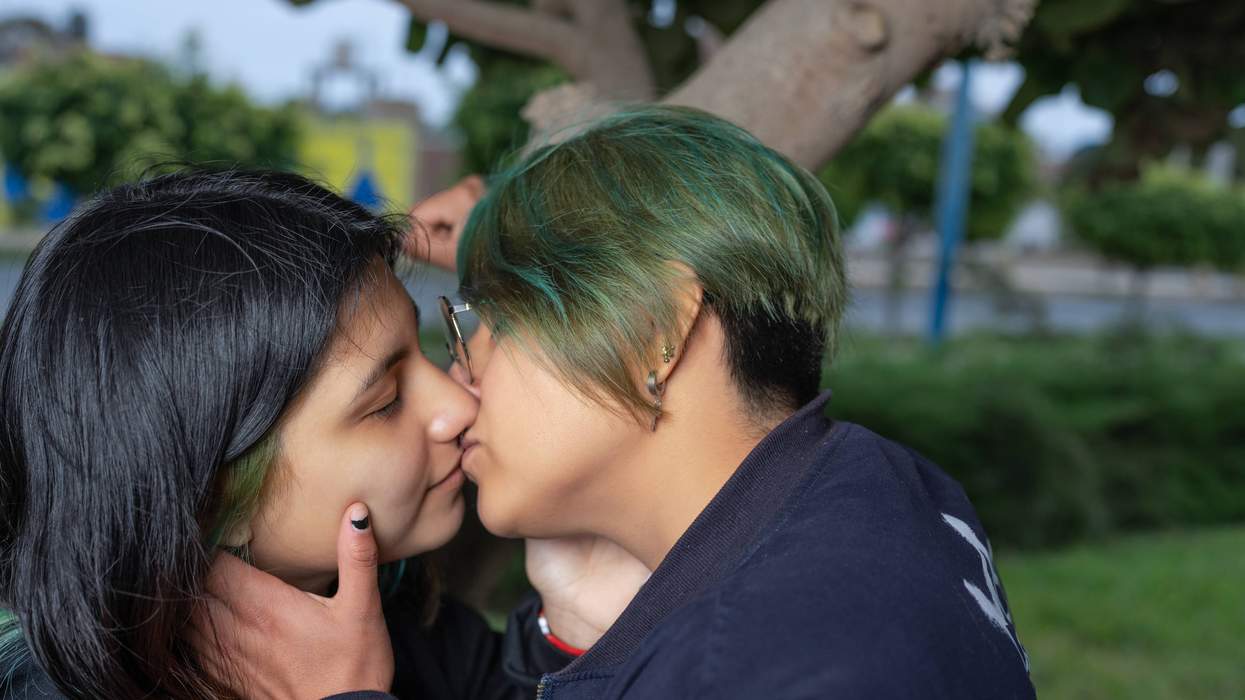
Unfortunately, the negative aspects of the queer experience prime LGBTQ+ people to fall victim to narcissistic abusers. “When you grow up or live in a world that doesn’t always accept you, you sometimes learn to tolerate difficult behavior because you’ve already had to fight so hard for love and belonging,” Bradley explains. “That can make LGBTQ+ people more vulnerable to narcissistic partners, particularly those who seem charming, protective, or confident at first.”
Dealing with being part of a marginalized group, who is mistreated by society and has fewer dating options, you might not have learned how to pick up on the red flags that would keep straight people from dating someone with untreated NPD. “Because of lifelong invisibility and social rejection, LGBTQ+ people can be more vulnerable to narcissistic abuse,” McKay says. “Shame, isolation, and lack of representation make it harder for queer individuals to recognize red flags in relationships.”
If you’re partner is charismatic and charming and hides the darker parts of their personality in the early days of dating, it would be easy to fall into a relationship with a narcissist and then not want to leave because you don’t want to give up the feeling of belonging. “When you grow up or live in a world that doesn’t always accept you, you sometimes learn to tolerate difficult behavior because you’ve already had to fight so hard for love and belonging,” Bradley warns. “That can make LGBTQ+ people more vulnerable to narcissistic partners, particularly those who seem charming, protective, or confident at first.”
What are the impacts of dating a narcissist?
When you first start dating a narcissist, it can actually feel “like a fairytale” because they are so “attentive, generous, and magnetic, ensuring they create a strong bond with you,” McKay says. But eventually you will start to see their true self. “Then the mask slips,” he says. “Love-bombing will turn into blame, gaslighting, and emotional control. As any long-term relationship with a narcissist progresses, the intensity of the insults and behaviors will amplify, making you question your memory or even sanity.”
According to Sinclaire, who specializes in working with Cluster B Personality Disorders like NPD, and is an expert in toxic relationships, dating a narcissist can harm your self-esteem and even lead to physical abuse. “It can be as minor as a disconcerting experience that leaves a person emotionally off kilter to a traumatic time period that requires long term therapy; in extreme circumstances, it can even result in bodily harm or death,” she says.
And no matter how hard you try to fix the relationship, or them, it probably can’t be salvaged. “You start to lose your sense of self,” Bradley explains. "Your reality is constantly questioned. You begin to think that if you just communicate better or try harder, things will calm down. The truth is, narcissists rarely change unless they truly want to, and most don’t, because their world works for them."
Is narcissism always a red flag?
If you are in a relationship with a narcissist, you won’t “walk away unharmed,” McKay says. They will manipulate, demean, and take advantage of you. “They will not care about any harm they bring to you, and will convince themselves and you that you deserve it,” he warns. "All narcissistic relationships are notable for their transactional dynamics, in short, ‘if you don’t give me what I want, you’ll get nothing from me.’”
The early stages of the relationship might actually be great, but it won’t last. “They may love-bomb you early on, but later withhold affection as a form of control,” Bradley says. “If you realize you’re in that kind of relationship, the safest next step is to start creating distance — emotionally, logistically, and legally if needed. Ending things with a narcissist often takes planning, support, and clear boundaries, because they will likely try to pull you back in.”
Narcissists tend to be walking red flags, but according to Sinclaire, the people dating them rarely see it. “The problem is that red flags just look like flags when you are wearing rose colored glasses,” she says. “Most people will see the red flags and make excuses for these behaviors and flags. Each time they do this, they are moving their own boundaries and sinking deeper into the relationship. Thus increasing the amount of time and energy they have spent and making it harder to leave. In my experience, I haven’t met a better PR team than a partner of a narcissist who isn’t ready, or willing, to see it yet.”
The only way to get out unscathed is “if you are interested in a relationship that is emotionally shallow or a one way out pouring of emotional attention,” Sinclaire explains. Just don’t expect emotional intimacy and instead focus on the things someone with NPD is good at. “Narcissists can be excellent financial providers, very physically beautiful, exciting to spend time with, and a pleasure to talk with depending on which one you meet,” she says.
What are the warning signs that you’re dating a narcissist?
If they shower you with lavish gifts, love bomb you, mirror your interests, constantly test your boundaries, gaslight you, avoid accountability, are jealous and possessive, are image obsessed, and have trouble expressing empathy, then you are probably dating someone with NPD. “Narcissists have what we call 'cognitive empathy,' they intellectually know what is expected of them and can provide it, not for long though,” Sinclaire says. “Their emotions often don’t match what we would expect of someone actually experiencing empathy and they will quickly redirect the attention back to themselves.”
Although “narcissism” has entered the popular vernacular in recent years, few people really understand how abusive it can be and how hard it is to detect, especially because they are so proficient at mirroring. “The abusive party will align with you on your hopes, dreams, attitudes, politics, mannerisms, body language, and even pace and tone of speech,” McKay says, and that can lead you to believe that the two of you are perfect for each other.
And once you’re hooked, a narcissist will start to press you to become exclusive faster than you would normally feel comfortable. “One glaring warning sign is that narcissists will try to establish relationships quickly and intensely, and you could find that the pace of the relationship is perhaps uncomfortably fast, or there might be some form of pressure applied to spend as much time together as possible, also known as love bombing,” McKay explains.
What should you do if you realize you’re dating a narcissist?
If you discover you are dating a narcissist and they are unwilling or unable to change, then you’re best bet is to end the relationship, but don’t expect it to be easy. “When you break up with a narcissist, they will usually first try and convince you that they will change and that they see the error of their ways,” Sinclaire says. “Following this, it is often about how much they love you and the importance that you have in their life. If this doesn’t work, they will devalue you and tear you down. Suddenly you are the garbage beneath their feet and don’t deserve them. A breakup can go through multiple cycles of this. Once all of this has settled, narcissists are known for reaching back out periodically for extended periods of time with inane reasons.”
The hard part about ending a relationship with someone with NPD is that there were likely parts of the relationship that were exciting and fun, and you don’t want to give that up, but McKay warns that “narcissists don’t change.”
“They can act differently for a while, but it’s a mask that always cracks,” he says. “The nature of the relationship with a narcissist is such that it is profoundly abusive about 90% of the time. But the other ten percent? Well, that period is so absolutely magical, and sexual, and adventurous, and intensely intimate that it can almost make up for the ninety percent of the time that it is abusive and toxic and dangerous. It’s difficult because you can hold two conflicting thoughts as equal truths, such as ‘they love me so much, but they hurt me all the time.’”
While there is no step-by-step guide for breaking up with a narcissist that can protect you from being emotionally harmed, McKay says to use the “Gray Rock” method, where you try to become as uninteresting to the narcissist in your life as a gray rock, and only engage when necessary.
According to McKay, “up to 90% of survivors of narcissistic abuse experience trauma responses,” so seek out trauma-informed therapy to get through it.
Sources cited:
Eamonn McKay, a therapist and the lead of Trauma Therapy Center of Excellence at Octave.
Taryn Sinclaire, a transwoman and trauma-focused therapist.
Jenny Bradley, a queer Board-Certified Family Law Specialist, mediator, and the founder of Triangle Smart Divorce in North Carolina.














 KOTOIMAGES/Shutterstock

 New Africa/Shutterstock
  Devor Geber/Shutterstock