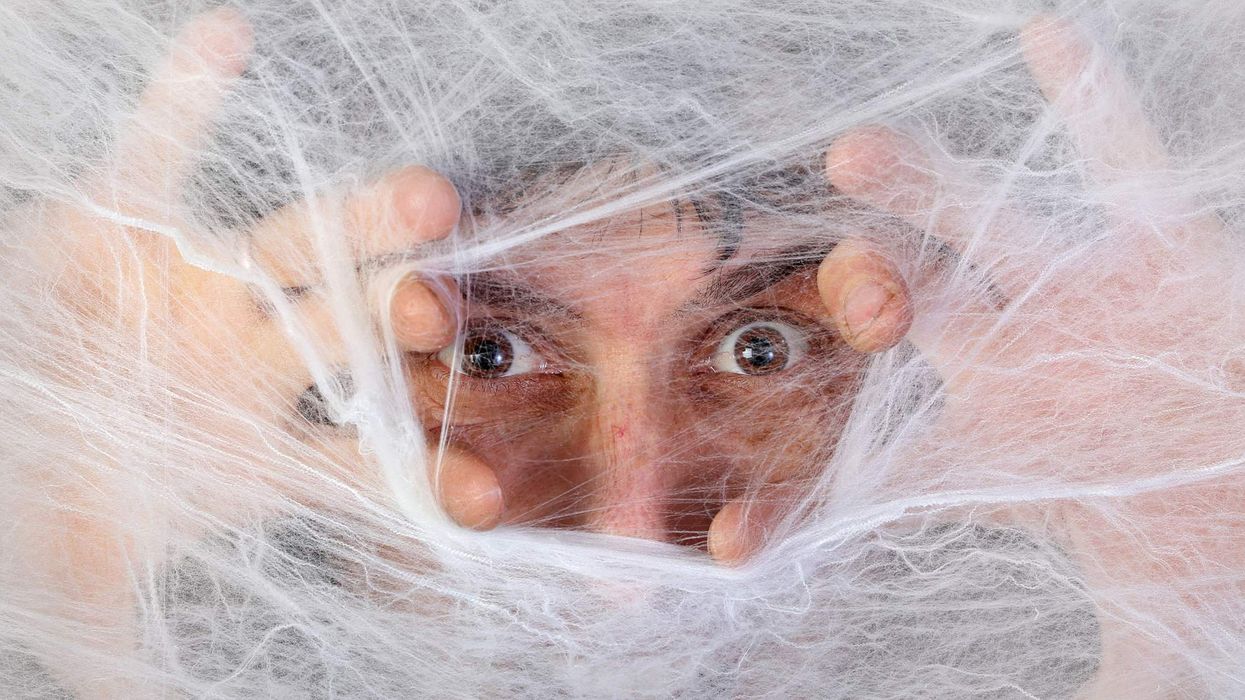












































The world of dating can be tough, between how impersonal dating apps can feel, people using AI instead of chatting with you authentically, and things like ghosting and banksying becoming the new norm.
But “spidder-webbing” may be the most toxic dating trend yet.
“Spider-webbing” is the colloquial name for a collection of manipulative dating techniques that mixes abusive and toxic dating behaviors into a “web” that locks someone into a relationship they would otherwise leave.
To find out more about “spider-webbing” so that you don’t fall prey to this toxic trend, we talked to Sofie Roos, a bisexual licensed sexologist, relationship therapist, and author at relationship magazine Passionerad, and Gabrielle Kassel, a journalist and queer sex educator for DatingAdvice.com.
What is ‘spider-webbing,' and where did the term originate?

Srdjan Randjelovic/Shutterstock
Someone who is “spider-webbing” will use deceitful and manipulative behaviors like “lovebombing, gaslighting, isolation, emotional manipulation like blame shifting, or breadcrumbing” to successfully get “the other person in their net and makes it extremely difficult for them to leave,” Roos tells PRIDE.
Spider-webbing can go on for months or years as one partner systematically detaches the other from their community and support systems while simultaneously chipping away at their confidence so that they become dependent on the abusive partner.
“Much like each string in a web, each individual act might seem small or harmless on its own, but over time, those strands connect to form a structure that can trap someone,” Kassel says. “You don’t always notice what’s happening while you’re in it. Indeed, what makes spider-webbing so harmful is that each ‘incident’ often feels small—a one-off remark, a jokey jab, a request—but over time has this massive impact.”
What are common signs of spider-webbing?
Spider-webbing can include a lot of different manipulation tactics, but if you start cancelling plans, bailing on friends, or stop reaching out to your community because you fear the reaction of your partner, you’re probably the victim of spider-webbing. “If you feel like seeing friends, going to queer spaces, or spending time in community comes is going to have consequences at home—your partner giving you the silent treatment, your partner forces you to defend why you were out so late, your partner acts jealously—you might be spider-webbed,” Kassel explains.
Someone spider-webbing you may also put down your friends, question the advice you get from a therapist, judges you for the time you spend with your friends and expects you to make them the center of your world, but maintains their own friendships and community ties. You may also feel your partner being cold and detached, or attempting to keep you emotionally close and dependent on them while refusing to commit.
“One of the most important things to understand about spider-webbing is that it’s not a one-off bad moment or fight. It’s the cumulative impact of many small actions, comments, and reactions that slowly lead to isolation,” Kassel says. "Any single behavior might seem explainable on its own, but spiderwebbing happens when the behaviors snowball.”
How is spider-webbing different for LGBTQ+ couples?
EF Stock/Shutterstock
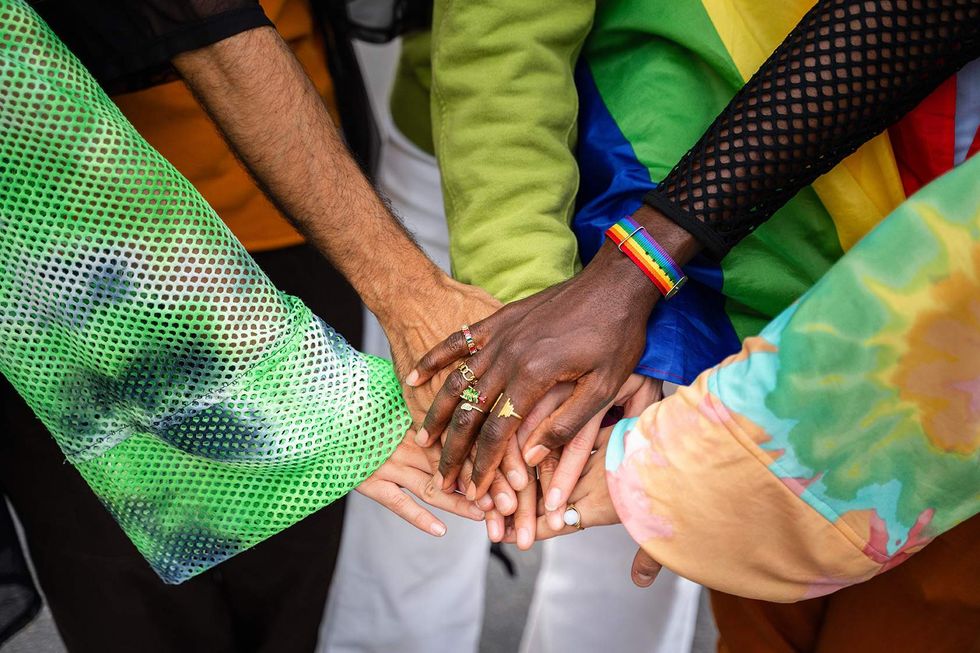
Spider-webbing can happen in any relationship, regardless of sexual orientation or gender identity, but LGBTQ+ people can be manipulated in unique ways that can undermine their ties to the queer community and sense of identity. “Many queer people are partially or fully estranged from their families of origin due to homophobia and transphobia,” Kassel says. “As a result, queer people often rely on chosen family and community for the kinds of support that others might get from biological family. When a partner slowly isolates someone from that community, it can be uniquely destabilizing and even re-traumatizing.”
There is also a queer-specific brand of spider-webbing that can crop up if your partner is struggling with deep-seated internalized homophobia or biphobia, which causes them to do things that will make you feel ashamed of your queerness. They may even manipulate and shame you into shrinking your identity — or visible “queerness” — to make them feel more comfortable, which can be extremely damaging in the long run.
This can also manifest in a monosexual partner (gay or lesbian) worrying that a polysexual partner (bisexual, queer, pansexual, etc) will cheat on them because of the mistaken belief that they can't be happy committing to just one person. This unfounded jealousy can lead to the abusive person forcing their partner to withdraw from friendships and community. “Over time, this can lead to restrictions on friendships and community spaces that disproportionately impact the polysexual queer partner,” Kassel warns.
It can also be uniquely painful to finally find a relationship with another queer person who understands your struggles and identity and then have them pull you away from the found family and community you have built. “It is possible for queer people to go their whole lives feeling like their gender and sexuality is misunderstood,” she says. “Finding a partner and entering a queer relationship with someone who deeply ‘gets’ your gender or sexuality can feel incredibly affirming. The intimacy and closeness of this feeling can be profoundly healing—but it can also become risky when it replaces, rather than complements, broader community and support.”
What can you do if you suspect you are being spider-webbed by your partner?

Krakenimages.com/Shutterstock
If you suspect your partner is spider-webbing you, trust your gut and start to think about ending things. “First off, always trust your gut feeling — it rarely lies,” Roos says. "Most people try to neglect it and find a logical reason for what triggers the bad gut feeling, but don’t do that, because that will just put you at a bigger risk of not getting out of the bad relationship in time.”
The person spider-webbing you may be emotionally immature, or afraid to be alone, or need constant validation, but those problems aren’t your responsibility. Spider-webbing is emotional abuse, and if they don’t stop when you call them out on it, then it’s time to leave.
According to Roos, you may be able to see a way out of the “web” your partner wove if you start asking clear and concise questions about your relationship. “Confusion is often the spider-webber's biggest asset, so by asking clear and straightforward questions about intentions, the future and how they’re feeling, you can shake their lead position and put them more out of balance, which makes it easier for you to see their cracks and get out of the web,” she explains.
Does it spell doom for the relationship?
Spider-webbing doesn’t always mean an end to the relationship, but you do have to talk about it and confront your partner — so long as it feels safe to do so. "Ultimately, you get to decide what level of control, isolation, or emotional labor you’re willing—or unwilling—to accept in a relationship,” Kassel says. “So, no it does not automatically mean doom for your relationship. But it does mean something in the relationship is unhealthy and should be addressed.”
If you can talk to your partner about your concerns and they are able to acknowledge the behavior and take responsibility for how it has impacted you, and are willing to change the abusive patterns they’ve fallen into, then salvaging the relationship may be possible.
“But if the pattern is present and a partner refuses to acknowledge it, minimizes the harm, or frames your need for autonomy as a problem, then it’s not a healthy relationship,” she warns. “At that point, your partner is asking you to tolerate being treated in ways that limit your freedom, impede your sense of self, and degrade the wealth in your life.”
Sources cited:
Sofie Roos, a bisexual licensed sexologist, relationship therapist and author at relationship magazine Passionerad.
Gabrielle Kassel, a journalist and queer sex educator for DatingAdvice.com.