







Katy O’Brian is having a killer year. From starring in action blockbusters Mission: Impossible 8 and The Running Man to the sapphic sports biopic Christy—which is already gaining Oscar buzz—2025 is truly proving to be her year.
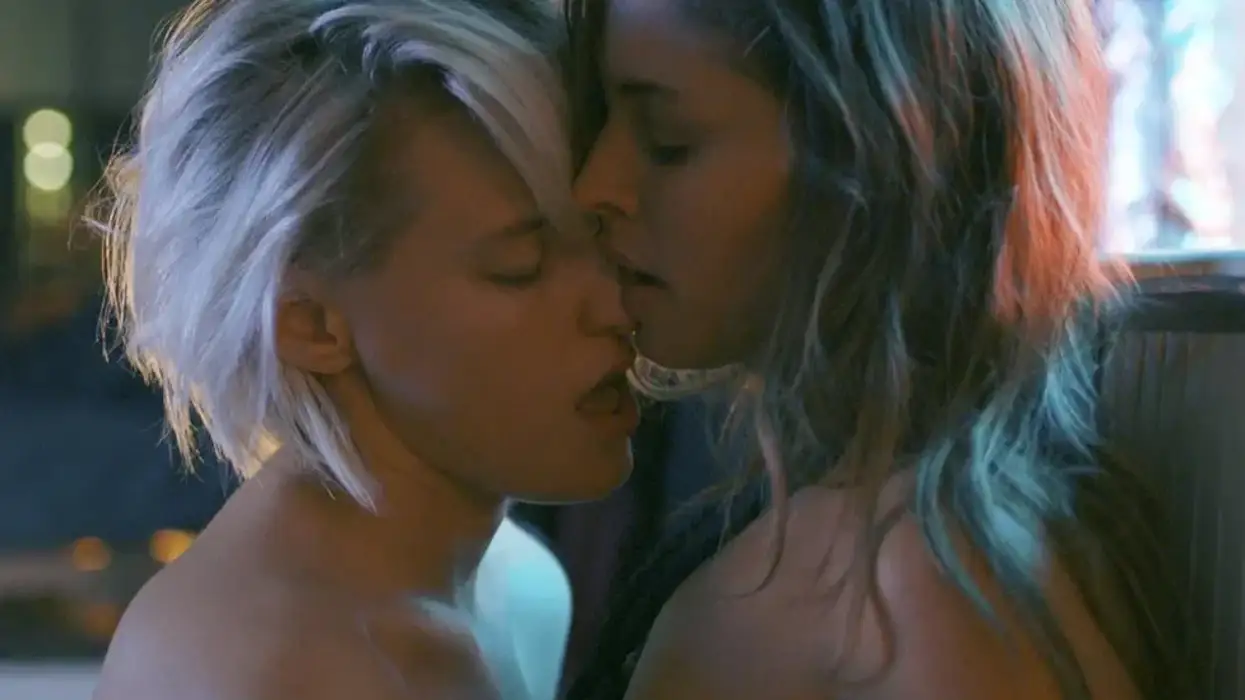
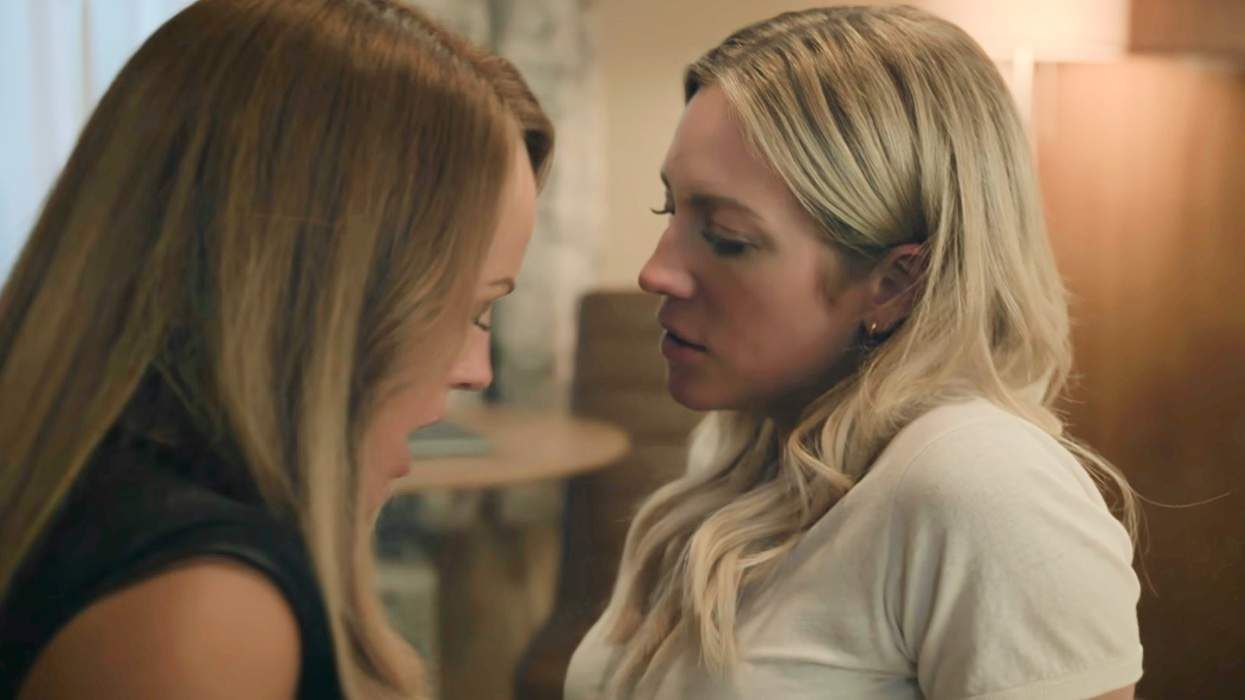
But there’s no title we’re more excited to see her in this year than Queens of the Dead, a queer horror comedy from director Tina Romero that sees her starring as Dre, a party promoter leading a group of queer nightlife entertainers on a quest to survive a zombie apocalypse and reunite with her wife, Lizzy, played by the divine Riki Lindhome.
The film is unapologetically and joyfully queer in every way—from Romero herself to the world it's set in, the themes of solidarity it explores, and its absolutely stacked cast of queer faves, including Jack Haven, Margaret Cho, Cheyenne Jackson, Dominique Jackson, Jaquel Spivey, Nina West, and Tomás Matos.
The film is perfectly timed, not only for the Halloween season, but for a moment in time when we could all use a reminder that queer solidarity can overcome anything—even a horde of the undead, or whatever metaphor they represent.
In the lead-up to the film’s theatrical premiere, PRIDE sat down with O’Brian and Lindhome to talk about the need for our community to come together, the role allies play, and what it’s like to kiss the very first time you meet on set.

This movie actually embraces one of my personal favorite stereotypes, which is that sapphics know how to get it done. Do you agree with that, and if so, do you feel like they're going to be the ones to lead us into battle in the zombie apocalypse, or the metaphorical one that we're facing right now?
KO: I do. I think Margaret’s [character] was a better example of that [when she and her crew pop] in. And I think [my character] Dre was more of the just try-to-keep-everybody-calm, which is valid.
Who's gonna save us? Everybody has to work together … the L, G, B peeps have to really step up for the trans community right now. I think that's like a really big, dire, and immediate kind of thing. We just have to come together as a community and work together—[and] you can't do it without allies, because we're a minority.
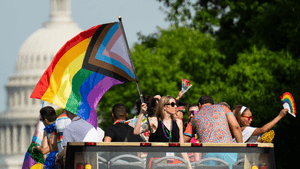
One of the strengths of this film is that it centers queer joy. Not to spoil the movie, but there is an important moment towards the end that involves a parade float. And there is this underlying theme of solidarity.
RL: I think you're just correct. It's all these different types of people having to come together because something bigger is happening. That's pretty much a representation of what's going on with our time right now. Everyone needs to come together because something bigger is happening.
KO: We [start as] a very divided crew, a very disorganized crew, and it kind of just shows that when you really see what's important, you can kind of grow together. I will say that float was such a pain in the ass. We had like 10 minutes to shoot that scene.
RL: It was my first day. The sun was coming up. Everyone's sweating in these huge heels trying to get on there. [Laughs]

Let’s talk about the set! It was so queer, and I’ve heard there were all kinds of shenanigans afoot, like dancing and sing-alongs. Can you recall any special moments from the set?
RL: We did some TikToks at Tribeca. Yeah, we did that — I don't know if I can swear — but that “I'm Serving Cunt.” We all sang that and danced to that, which felt right.
KO: One thing that I loved was that there was great age diversity, too. A few people were maybe in their 20s, and—I'm not gonna dare a guess at everyone else's ages—but it was like a cool, fun [age gap that let us] play with each other and pick up new stuff. I was on the older end, so I was picking up newer jargon and things like that. We found out, like, a poppers company sponsored part of it—like they gave us a lot of money. That was very helpful in getting the film. So we had a lot of people wearing poppers necklaces and things. There was a lot of singing and a lot of theater kids. A lot of really beautiful, random improv songs—you might just assume we should have just done a musical.
Hey, that could be the sequel!
RL: I’ll write the songs. I'm down. Funny zombie [songs]. I’m down.
While we didn’t get a ton of the two of you together on screen, you did play a couple in the film. Do each of you have a memory from working together, or something you really loved about working with the other person you could share?
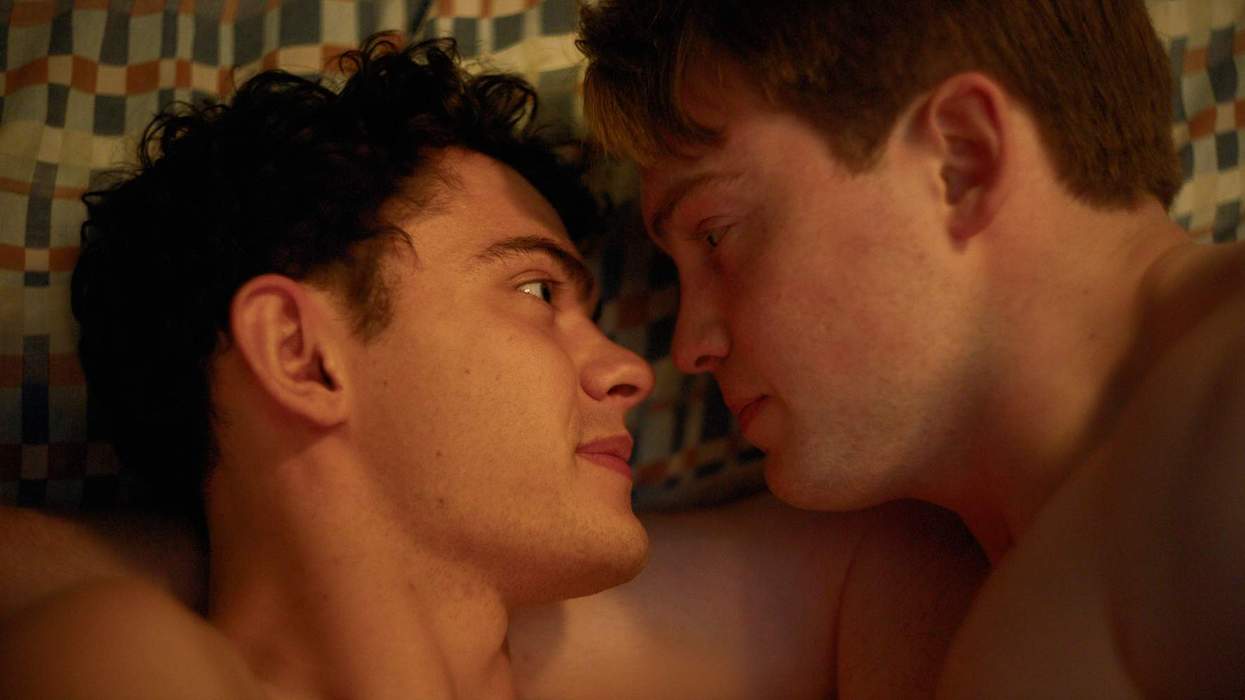
RL: I loved working with Katy. It's always awkward when the first time you meet them, you have to kiss them. It's always strange. But when you just talk to someone and they're just, like, normal — they're just nice — it sort of just, like, puts you at ease. When you see that that person's warm and generous and professional and all that stuff, you just go, “Oh, okay, this will be fine.”
KO: Yeah, I always get nervous with any type of intimacy because I never want to make someone uncomfortable. A lot of that is also just from growing up in Indiana and, like, existing around people. I just wanted to, like, right away, be like, I'm not taking advantage of you. Just FYI.
RL: And I was like, I never thought that. I'm, yeah, I'm scared too.
KO: Yeah, it was just, it had to be a lot, really fast. I'm not even kidding—like 10 minutes.
Well, that feels very lesbian-coded to me.
This interview is lightly edited for length and clarity.