














































It’s getting rough out there, folks!
Another toxic dating trend has entered the chat, and this time, instead of ruining your life over the course of the relationship, the terrible behavior and heartache don’t end when you break up.
It’s called “haunting,” and unlike with “ghosting,” where someone disappears without ever actually breaking up with you, or “ghostlighting,” where the person ghosts you and then returns like nothing ever happened, toxic daters who are into “haunting” will continue to bother you on social media long after the relationship has ended.
This pattern of behavior can really mess with your head because just when you think you’ve moved on, this person pops back up again, liking your posts or stalking your latest Instagram vacation photo dump.
To get to the bottom of this latest Gen Z dating trend, why someone would do it, and whether or not LGBTQ+ daters are more at risk of experiencing it, we reached out to Pasadena, California, therapist and coach John Sovec and LGBTQ+ affirming therapist Stella Ong from LightingWay Counseling & Therapy. Here’s what they had to say.
What is ‘haunting'?
RawPixel.com/Shutterstock
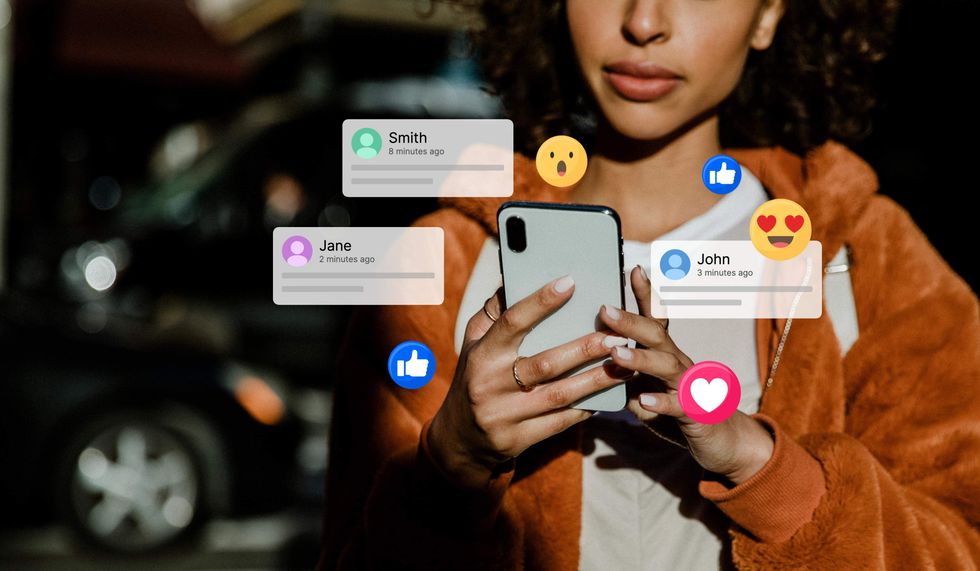
When someone ghosts you, they vanish from your life altogether without so much as a word, but when someone “haunts” you, they continue to interact with you through social media regardless of your desire to still have a connection with them. Basically, haunting “refers to a behavior where an ex still stalks an ex-partner through social media and interacts with it, but they are not looking to rekindle the relationship, be it platonically or romantically,” Ong tells PRIDE.
They may watch your TikToks or Instagram Stories, like your social media posts, without ever contacting you directly or trying to have a meaningful relationship. “It is like the two old guys Waldorf and Stadler of The Muppet Show fame who are always commenting on the rest of the characters in the show without actually having any connection or interaction with them,” Sovec says.
Are LGBTQ+ people more likely to engage in or experience ‘haunting’? If so, why or why not?
While Ong says that haunting doesn’t appear to be more common among LGBTQ+ daters, “smaller dating pools within the LGBTQ+ circles, along with overlapping social circles in queer communities, might make it harder to create clean breaks, which might make this behavior more visible.”
Sovec, on the other hand, says that he has found in his own practice that anecdotally, haunting is “very pervasive in the LGBTQ+ dating world.” And it seems to be a real issue on dating apps, where people like to observe without ever reaching out. “They will read bios, obsessively look through photo albums, but won’t take the next step of actually reaching out,” he warns. “It can come across as a personality test to see what the other person is up to and what their true character is like.”
What is the psychology behind why someone would do this to a person they’ve been dating?
Haunting someone, instead of letting them go, is a selfish desire born out of wanting to maintain control without ever having to be honest or vulnerable with the other person. By haunting them, you leave the person on the back burner, in case you change your mind. ”Psychologically, haunting is often about maintaining control or keeping options open without commitment,” Ong says. “It is a way to stay knowing about someone's life while avoiding the vulnerability of actual connection.”
Straight people engage in haunting too, but Sovec says that for queer daters, the worry about whether or not you're making the right choice in a relationship can be even more acute. “It also plays into the pathology of always looking for the next and best,” he explains. “Rather than be comfortable with their current situation, many LGBTQ+ people live in a perpetual dating cycle of 'what if.’ ‘What if I made the wrong decision?’ ‘What if someone better is out there?’ ‘What if I was not enough?’ This perpetual internal dialogue and questioning can play on the psyche and leave a person feeling less than and not sufficient.”
What are the warning signs that you're being ‘haunted’?

Antonio Guillem/Shutterstock
Keep an eye out for an ex who is always watching your Instagram Stories, who likes your posts, who sporadically comments on posts when the interaction is unnecessary, or expends energy showing off how happy they are without you on their own social media accounts.
Outside of social media, if they stay in contact with friends you introduced them to, or if they hold onto belongings you left at their house and refuse to return them, then you are probably being haunted.
If you realize you are a victim of the haunting dating trend, what should you do?
Ghosting is a cruel and cowardly way to break up with someone, but haunting takes the end of a relationship and turns it into something uncomfortable and insidious. If you discover you are being haunted by an ex, you can try to ignore them and forget they exist, but if that proves too difficult, start blocking them liberally.
“If you are being haunted, you have permission to set your own boundaries, such as muting, unfollowing the other person, or block if needed,” Ong explains.
If you realize you are the one doing it, what do you do?
If you’re the one who can’t completely let go of an ex and are spending way too much of your time tracking them online and stalking their social media accounts to find out anything you can about what they are up to, then it’s time to put your phone down and walk away for a while. “Look around you and come back to the present moment. Maybe take a walk, do a chore around the house, do a little yoga stretch. This time to reset and recenter will allow you to pause the behavior,” Sovec recommends.
Once you’ve reset and recentered, if you find yourself itching to check your ex’s socials, it might be time to do some deeper introspection and reconnect with other ways you could be spending your time. “Then if you get curious again and feel like going back into the apps, ask yourself this simple question: ‘Is there something else I would rather be doing right now?’ This allows us to reconnect to our wise mind and realize that yes, there is something else I would rather be doing for myself and my well-being,” he says.
The TLDR? Go outside and touch grass.
Sources cited:
John Sovec, a Pasadena, California-based therapist and coach.
Stella Ong, an LGBTQ+ affirming therapist from LightingWay Counseling & Therapy.


















 KOTOIMAGES/Shutterstock

 New Africa/Shutterstock
  Devor Geber/Shutterstock