

























 Bisexual female characters we can't get enough of. Marvel Studios; Netflix; ABC Network
 It's always been an uphill struggle to get folks to remember that sexuality is based on more than just who a person happens to be in a relationship with at precisely that moment—something that's also been true of fiction over the years. Fortunately, bisexual representation in media has improved in recent years, even ditching some of the worst tropes and instead providing fans with some amazing characters to latch onto (OK, some of them are still pretty chaotic).
With that in mind, here are some of our forever sapphic faves...
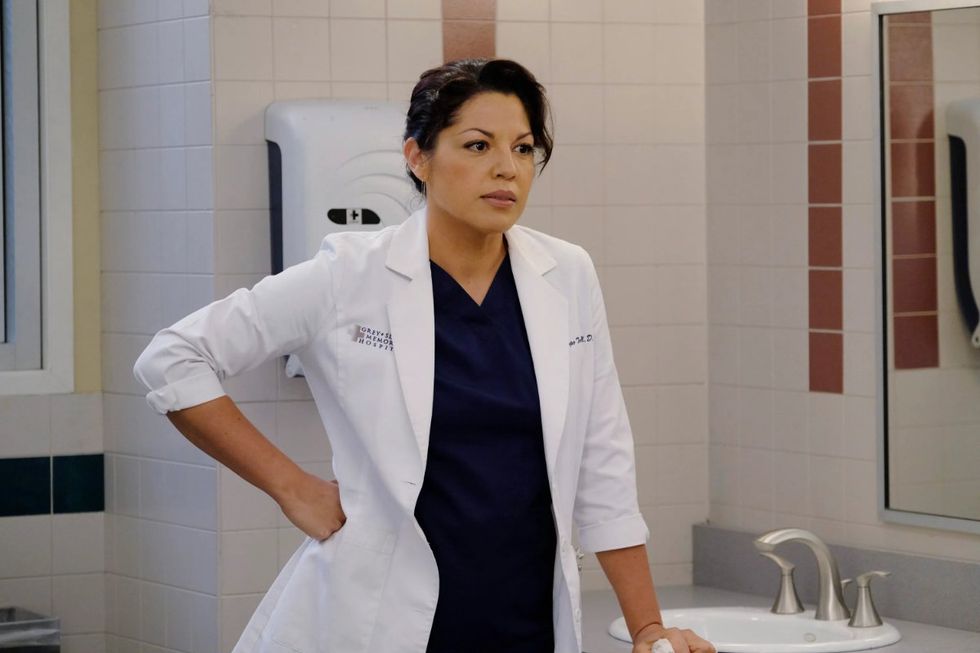
Dr. Callie Torres / Grey’s Anatomy
Dr. Callie Torres
ABC Network
Dr. Callie Torres (Sara Ramirez) is one of the longest-running LGBTQ+ characters in American TV history, appearing in 11 seasons of Grey’s Anatomy and 239 episodes. Torres’s attraction to women was first explored in season four when she started dating Dr. Erica Hahn (Brooke Smith). She finally came out in season five and has been depicted as having relationships with both men and women over the course of the show. This was groundbreaking representation of bisexuality that you rarely see, especially on primetime network television.
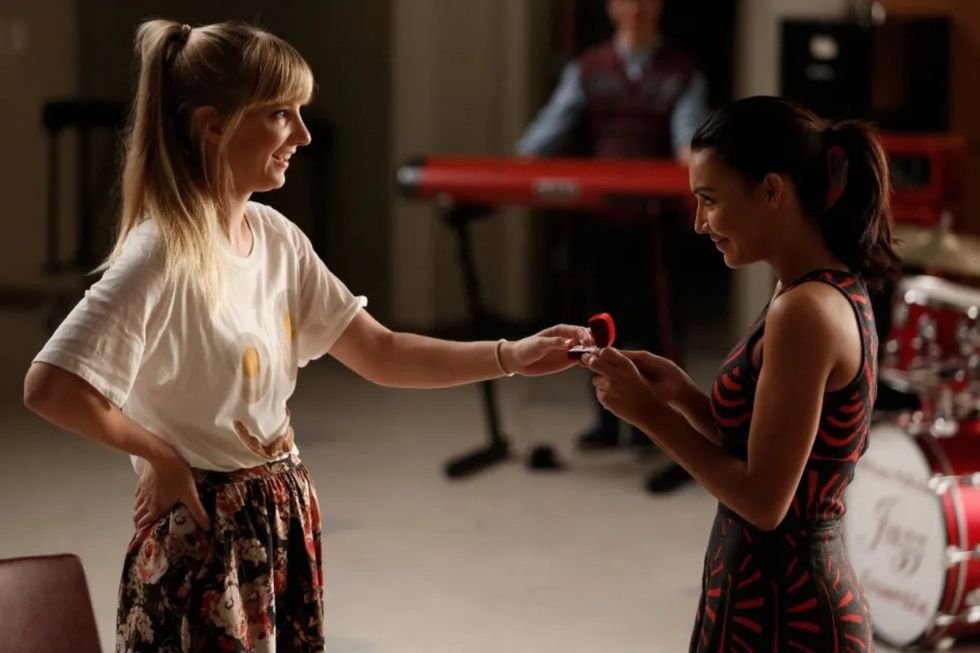
Brittany Pierce / Glee
Brittany Pierce
FOX
Say what you want about whether or not Glee holds up today, but it was a huge step forward in LGBTQ+ representation, and Brittany Pierce (Heather Morris) was a major part of that. Brittany was openly bisexual and was shown dating men like Artie and Sam Evans, and Santana Lopez (Naya Rivera), whom she ultimately married on the show. Brittany was one of the first openly bi characters on mainstream television, and her relationship with Santana offered teen sapphics something to look up to.
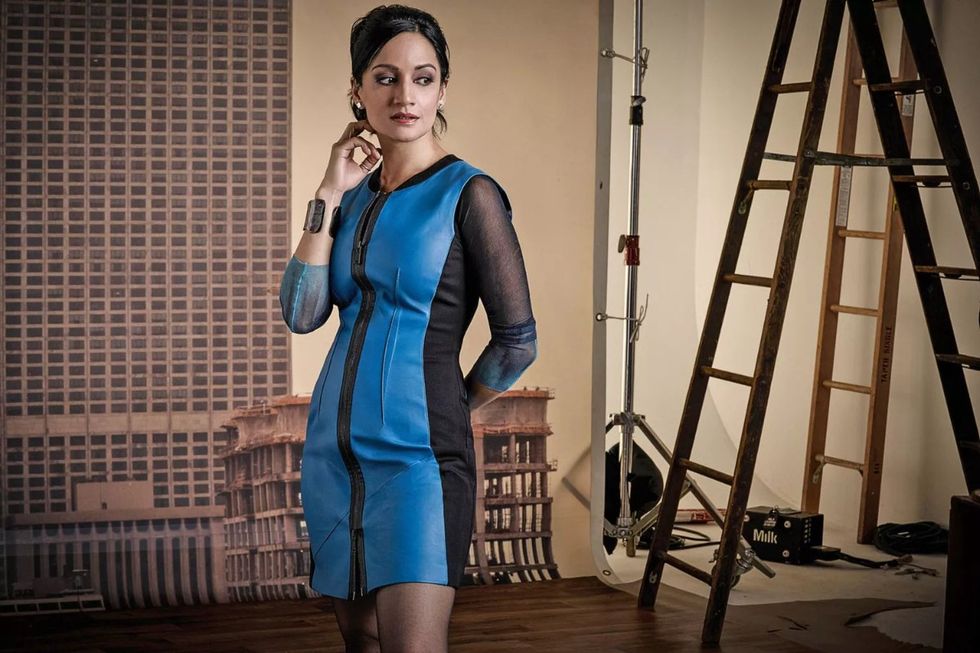
Kalinda Sharma / The Good Wife
Kalinda Sharma
Justin Stephens/CBS
When The Good Wife first aired, Kalinda Sharma (Archie Panjabi) was the only openly queer South Asian woman on American television, a huge turning point for representation. Her character was beautiful, sarcastic, and managed to be likable while also being shown as powerful, intelligent, and even combative at times — a hard tightrope to walk for any female character but especially for a queer woman of color.
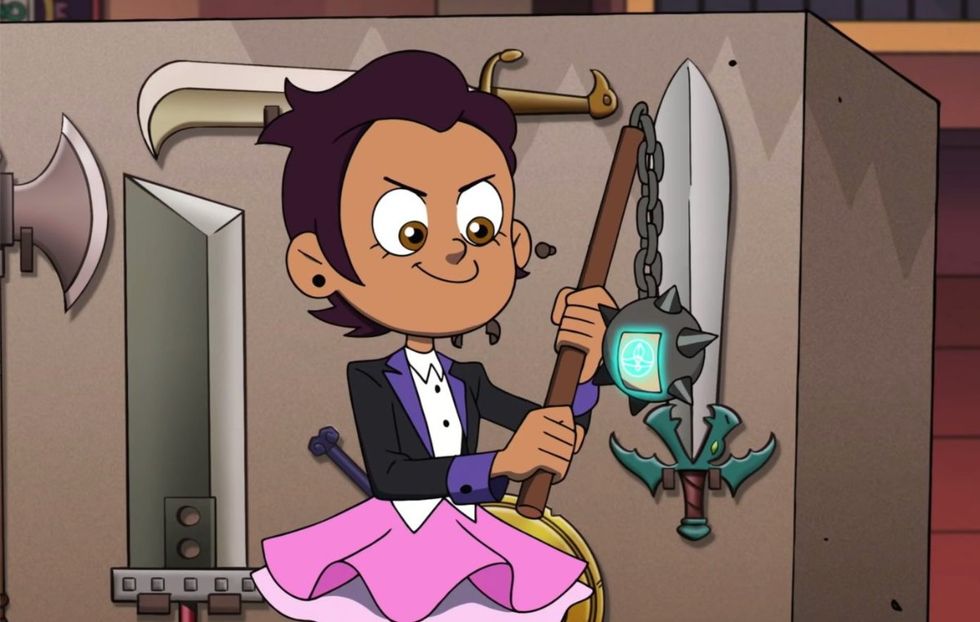
Luz / Owl House
Luz
Disney Channel
When creator Dana Terrace confirmed that Owl House main character Luz is bisexual, she became Disney’s first bisexual female lead character. The 14-year-old Dominican-American character, who is voiced by Sarah-Nicole Robles, shows some interest in boys, but ends up having a relationship with the openly lesbian character Amity (voiced by pansexual actress Mae Whitman). Right-wing parents may have freaked out over the queer representation and the witchy plot lines, but the real fans couldn’t get enough of it.
Queen Maeve / The Boys
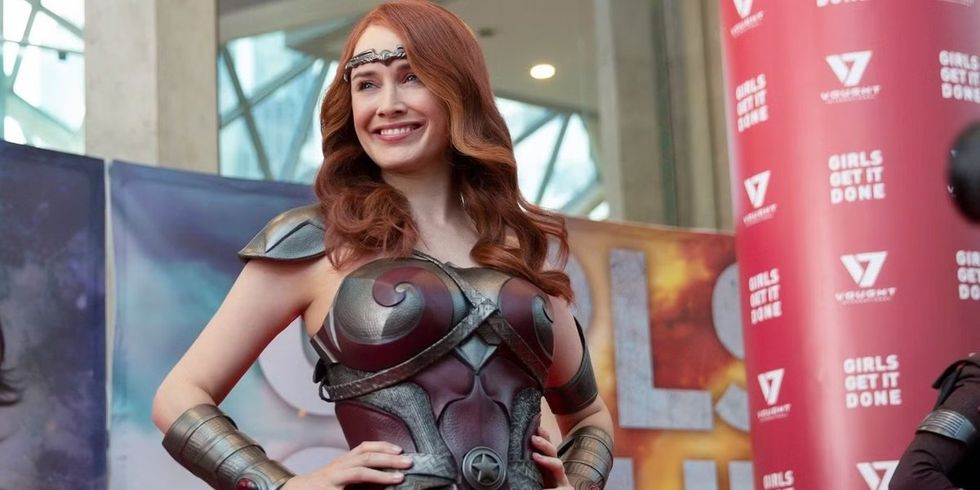
Queen Maeve
Amazon Studios
Queen Maeve (Dominique McElligott) is a bisexual superhero who is shown to be in a relationship with her girlfriend Elena in the first two seasons. However, she is forced to hide their relationship from the jealous and homicidal Homelander, whom she fears will harm Elena. Many could relate to her struggles and miss her on the show following her season 3 exit.
Jackie / Love Lies Bleeding
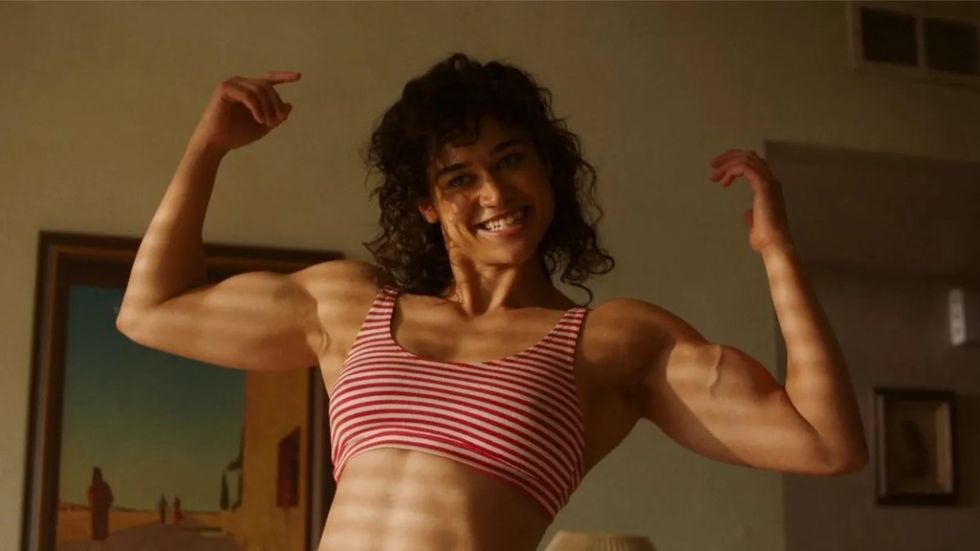
Jackie
A24
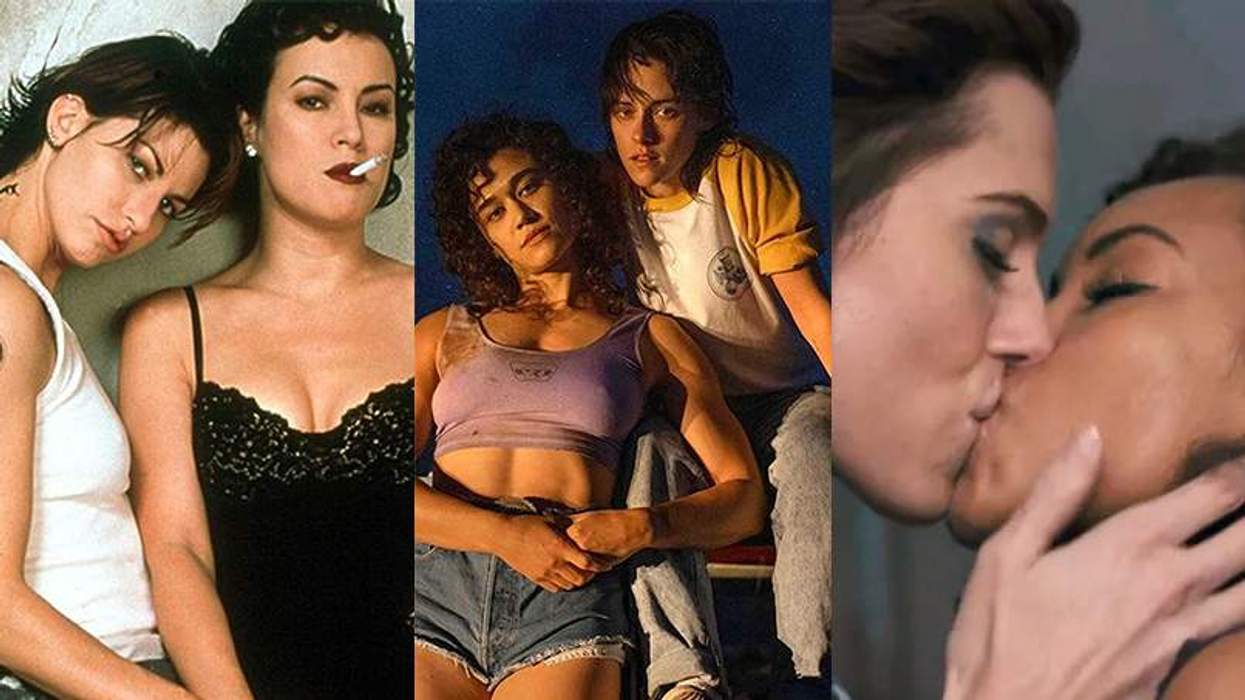
Katy O’Brian and Kristen Stewart captured sapphic imaginations with their starring roles in Rose Glass’s erotic thriller Love Lies Bleeding. Following in the footsteps of films like Bound, Love Lies Bleeding shows us queer women behaving badly — basically, it’s Be Gay, Do Crime: The Movie. But beyond the steroid use and murder, there is a meaningful relationship between Lou (Stewart) and bisexual muscle mommy Jackie (O’Brian).
Margo Banks and Sophie O’Neil / The Hunting Wives
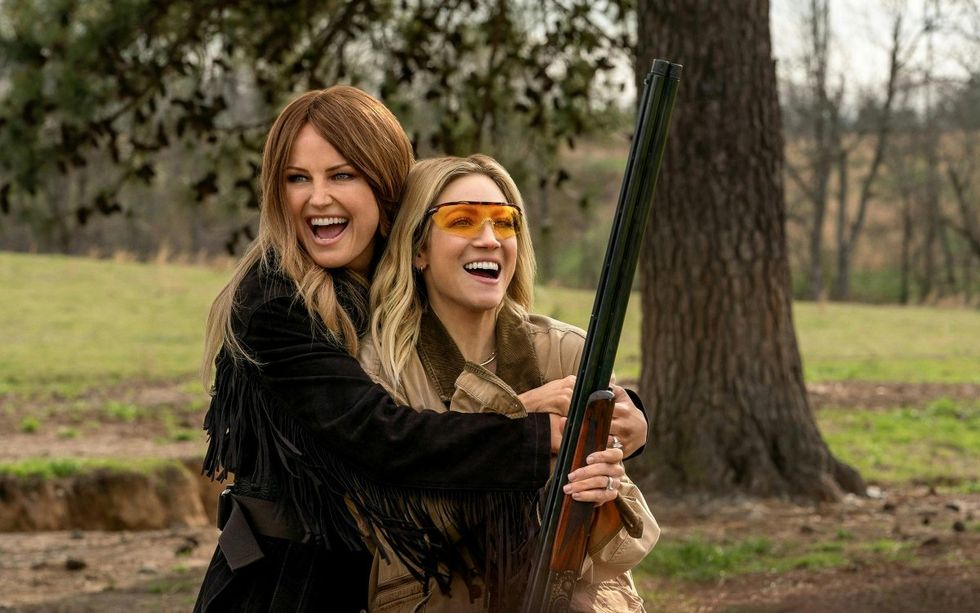
Margo Banks and Sophie O’Neil
Netflix
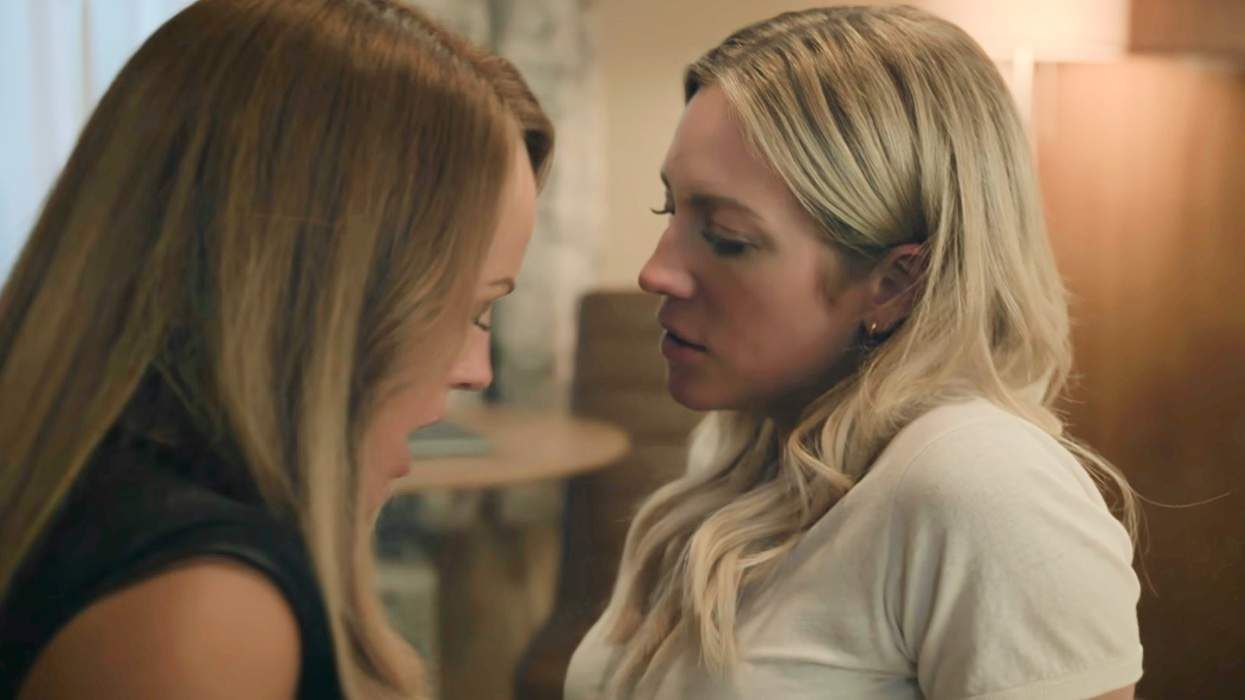
The Hunting Wives took the internet by storm and caused a bi-panic across social media. At the heart of the erotic thriller murder mystery are the characters Margo Banks (Malin Ackerman) and Sophie O’Neil (Brittany Snow), both married to men, but who wind up having an affair with each other. It’s hot and steamy and full of Republican women behaving badly. The show just got renewed for a second season, so now is the perfect time to start binging if you missed it when it first dropped.
Jennifer and Needy / Jennifer’s Body
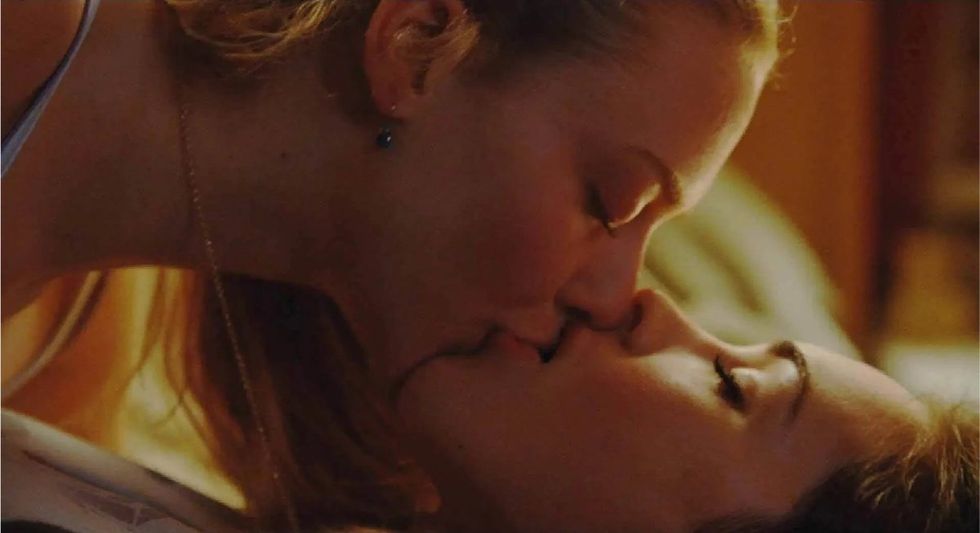
Jennifer and Needy
20th Century Studios
This Diablo Cody–written and Karyn Kusama–directed feminist horror flick was grossly misunderstood when it first premiered, but has been reevaluated in recent years — proving that occasionally, the internet gets things wrong before it's right. Critics at the time may have focused on overly sexualizing Megan Fox’s portrayal of Jennifer, but both she and her best friend Needy (Amanda Seyfried) are strong examples of teen girls trying to figure out their sexuality. Jennifer’s Body was ahead of its time when it comes to realistic bi representation. And if we’re honest, we’re still living for that kiss all these years later.
Valkyrie / MCU
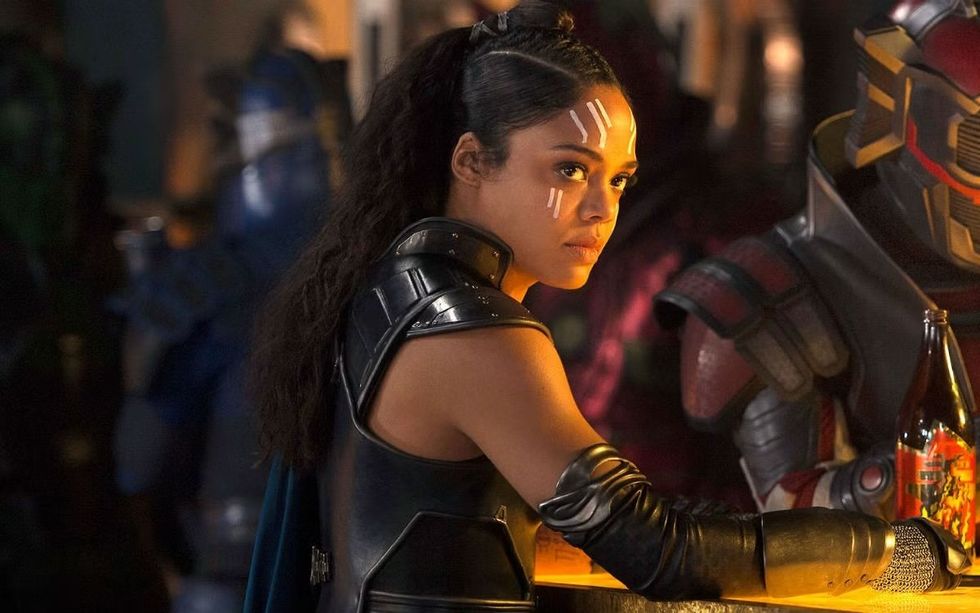
Valkyrie
Marvel Studios
Tessa Thompson’s Valkyrie may be the first openly LGBTQ+ superhero in the Marvel Cinematic Universe, but all we’ve really gotten so far are vague allusions to her bisexuality. Thompson fought to include more of her character’s sapphic attractions in Thor: Ragnarok but was sadly overruled, so it was only subtly hinted at in that film and in Thor: Love and Thunder. What a boring choice. Still our undying love for Tessa lands her on this list!
Dina / The Last of Us
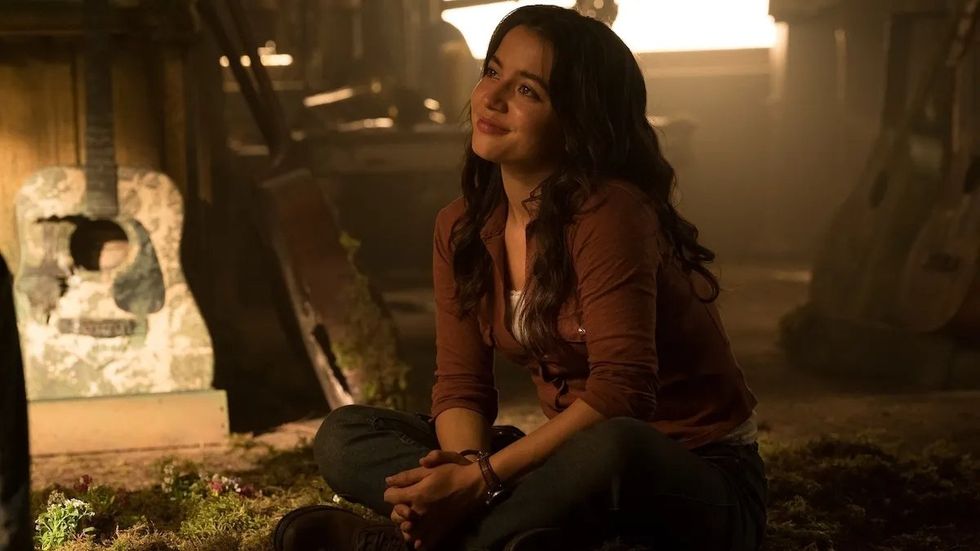
Dina
Liane Hentscher/HBO
Not only has The Last of Us given us nonbinary actor Bella Ramsey in the lead role playing a lesbian, but Ellie is also dating bisexual queen Dina. And the show doesn’t shy away from her bisexuality — before getting together with Ellie, Dina dated Jesse (the father of her baby). The show may be devastatingly sad (we miss you, Pedro Pascal!), but it succeeds in offering the kind of bi representation we rarely get on television.
Rosa Diaz / Brooklyn Nine-Nine

NBC
Rosa Diaz (Stephanie Beatriz) had a memorable coming out journey on Brooklyn Nine-Nine, reflecting the realities of family members not always being so accepting of queer sexuality. For being one of the funniest shows on TV, the series approached Rosa's story in a thoughtful way that sidestepped a lot of biphobic pitfalls and still means a lot to people today.
Sara Lance / Legends of Tomorrow & Arrow

The CW
When Sara Lance (Caity Lotz) first showed up on Arrow, it was a major deal, as queer characters had even less ground on superhero shows than they do now. Her trajectory was a little touch and go for awhile there, but Sara ultimately wound up leading the Waverider crew on Legends of Tomorrow. And even though the show ended abruptly, watching her come into her own over the course of both shows was truly a delight.
Harley Quinn / DC

Warner Bros.
While we only got a blink-and-you-miss-it reference to Harley Quinn's bisexuality in Birds of Prey, both the comics and the animated series have blessed us by taking the chaotic clown from essentially an elevated henchman unappreciated by the Joker to the love interest of Poison Ivy. Harley's the bisexual badass we can't get enough of in any iteration—and if Margot Robbie wants to keep pushing for a live action adaptation that highlights her romance with Ivy, we're so here for it.
Maze / Lucifer

Fox
The titular character of Lucifer is bisexual himself, although some fans feel that wasn't explored as much in the Fox series as it should have been. Fortunately, after the show moved to Netflix, Lucifer's righthand woman, Maze (Lesley-Ann Brandt), had her own realization that she had fallen head-over-heels for the most unlikely candidate. Never has a cover of "Wonderwall" sounded so good.
Ava Silva / Warrior Nun

Netflix
Warrior Nun fans are still smarting from the show's cancelation after just two seasons. Creator Simon Barry's promise that the show will wrap up in the form of a movie trilogy is still light on details, but everyone is hopeful it means we'll get to see more of the budding romance between Ava (Alba Baptista) and Sister Beatrice Kristina (Tonteri-Young). Either way, despite being a recent and short-lived series, it's clear this one made an impression on people.
Max / Black Sails

Starz
Despite the inclination to refer to Our Flag Means Death as "the gay pirate show," there's no denying that Black Sails beat them to that honor by eight years. The gritty Starz show included a variety of queer characters, and saw Jessica Parker Kennedy's Max go on quite the journey over the course of the series. It wasn't always easy to watch, and some gays did get buried along the way, but rooting for Max was an easy—and rewarding—thing to do.
Bo Dennis / Lost Girl

Showcase
While American shows were still squabbling over whether to include explicit bi representation at all, Canadian television dove right into giving us a sexy supernatural show with an unapologetically bisexual lead in succubus Bo Dennis (Anna Silk). Lost Girl had its ups and downs, but it was never short on queer representation, and featured other memorable bisexual characters as well, such as Tamsin (Rachel Skarsten) and Vex (Paul Amos), ultimately making it a must-see for any sapphics into the supernatural.
Maureen Johnson / Rent

Columbia Pictures
Say what you will about Rent in any iteration, but it's undeniable that it had an impact on culture—and especially musical theater kids. Idina Menzel originated the role of Maureen on Broadway and in the later feature film adaptation, and while Maureen isn't necessarily the most lovable character to ever grace the stage, she's also completely unforgettable—take her or leave her.
Nova Bordelon / Queen Sugar

Oprah Winfrey Network
Rutina Wesley got another chance at playing a bisexual badass in Queen Sugar after True Blood did her so dirty. How successful that was depends on who you talk to, but having a queer Black lead on a show that ran for seven seasons is nothing to scoff at. And having her played by Wesley just feels like a gift, especially to every still-recovering True Blood fan.
Alice Pieszecki / The L Word & The L Word: Generation Q

Showtime
What would a list about bisexual female characters be without mentioning Alice Pieszecki (Leisha Hailey)? The original L Word didn't always present bisexuality in the greatest light, but Alice was steadfast in her determination to maintain her identity, making her a rare, visible, and explicitly labeled bisexual on TV in the aughts. And while nothing may ever make up for the fan-favorite ship that was lost to us in the original, and we'll always wonder what Alice's own intended spin-off would have looked like, it was still great to see her on our screens once again with Generation Q.
Jenny Schecter / The L Word

Showtime
Love her or hate her (and rest assured, there are those of us who will defend her to the death), you just can't talk about the impact of The L Word and leave out Jenny Schecter (Mia Kirshner). The polarizing character lost more and more favor with the LGBTQ+ community as the series went on, but without Jenny and her endlessly self-destructive chaos, The L Word would have been a dramatically different show. And with more "good" queer representation in film and TV these days, maybe we're almost ready to have a conversation about how messy rep like Jenny can be important too—maybe.
Amanita Caplan / Sense8

Netflix
Sense8 is another casualty of Netflix's rapid cancelation policy, and one fans have yet to get over. Boasting a large ensemble cast and multiple LGBTQ+ characters, the show had a real gem in the relationship between Freema Agyeman's Amanita and Jamie Clayton's Nomi. It was particularly notable that the source of any conflict they faced was generally external, while their relationship thrived and their devotion to one another was clear—and that didn't erase Amanita's sexuality, either.
Paige Michalchuk / Degrassi: The Next Generation

CTV
There may not be a single high school-related plot on the planet that wasn't covered by Degrassi: The Next Generation at some point in time, including the opportunity for popular girl Paige Michalchuk (Lauren Collins) to learn something new about her sexuality when she fell for a girl from the wrong side of the tracks (Alex, played by Deanna Casaluce). Although like for most couples on the show, it didn't work out between Paige and Alex, it remained a pivotal coming-of-age story for many of Degrassi's dedicated viewers.
Marissa Cooper / The O.C.

Fox
The O.C.'s treatment of Marissa Cooper (Mischa Barton) remains controversial, in more ways than one. But Marissa's fling with Olivia Wilde's character, another Alex from the aughts, was a big deal at a time when network executives were very, very nervous about any queer inclusion. Even if the relationship was treated in a way that was questioned at the time and would make LGBTQ+ fans collectively furious in the present, the debate over whether Marissa's bisexuality "counts" needs to come to an end. That relationship, brief as it may have been, was an awakening for many a bi girl back in the day, and Marissa will always have a place in bisexual TV canon.